



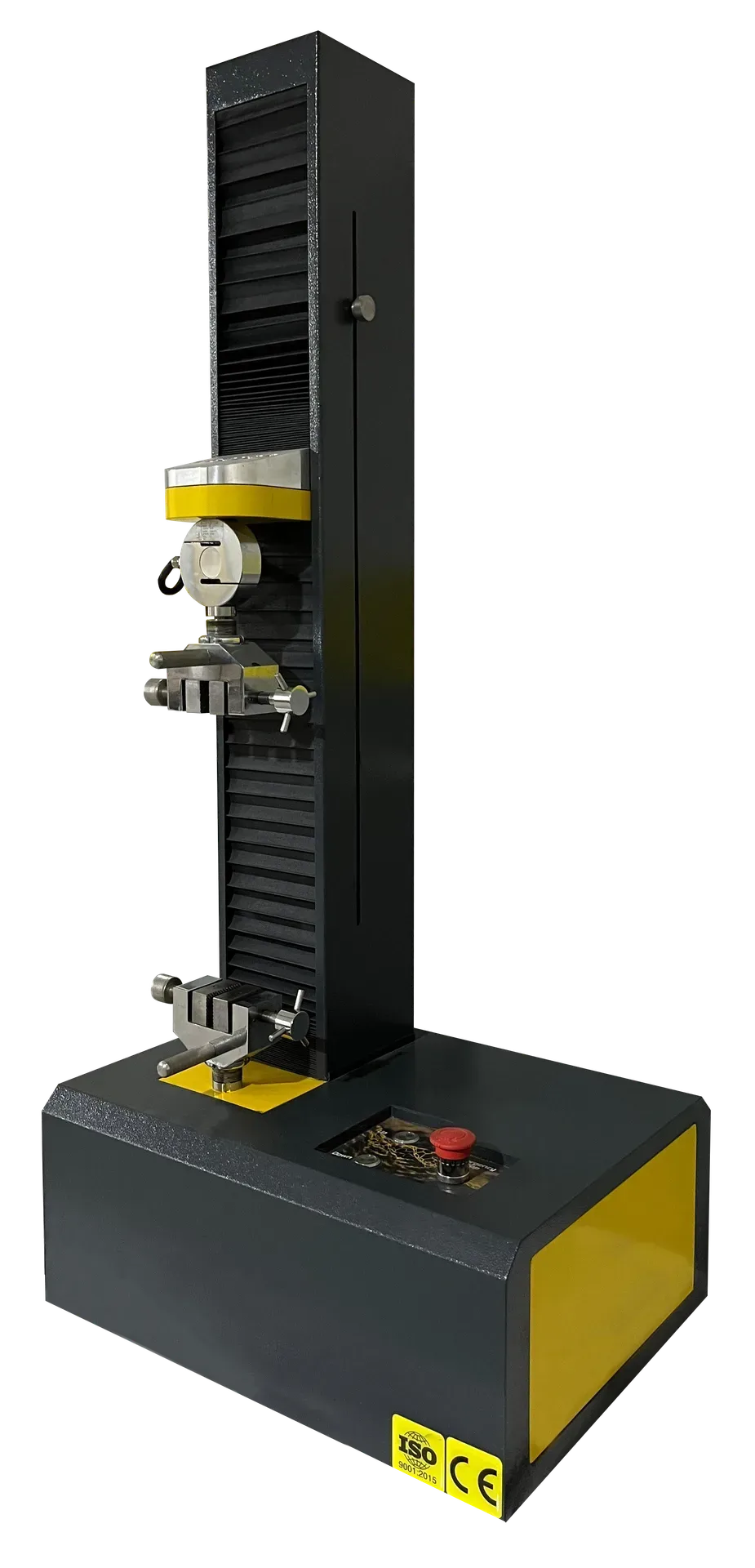
Benchtop Universal Testing Machine (0.5–2 kN)
Vector Tesla Series single-column benchtop universal testing machine for high-precision, low-force material testing — ASTM E4 / ISO 7500-1 Class 0.5.
- iso-7500-1
- astm-e4
- +3 more
View details →
Indentation hardness determined by measuring residual depth after a defined preliminary force, total test force, and recovery interval, expressed on scales such as HRC, HRB, and HRA.
Indentation hardness determined by measuring residual depth after a defined preliminary force, total test force, and recovery interval, expressed on scales such as HRC, HRB, and HRA.
Formula
HR = N − h / s
For a given Rockwell scale, N is a reference constant, h is the permanent increase of indentation depth (mm) after removal of the total test force, and s is the depth increment corresponding to one hardness unit (scale-specific per ISO 6508-1 and ASTM E18).
The Rockwell hardness test is the most widely used indentation method for metals and many hardened engineering components. A spheroconical diamond indenter (for harder materials) or hardened steel ball (for softer materials) is pressed into the surface under a preliminary force to seat the indenter, then the total test force is applied for a specified dwell time. After removal of the total force, the depth of the residual indentation relative to a reference position is measured and converted to a hardness number using scale-specific constants.
Common scales include HRC (diamond cone, 150 kgf total force), HRB (1/16 in ball, 100 kgf), and HRA (diamond cone, 60 kgf). The choice of scale depends on expected hardness, thickness, and microstructure; standards provide minimum thickness and spacing rules to avoid anvil influence and edge effects.
Unlike Brinell or Vickers, Rockwell does not require optical measurement of impression size on production lines, which makes it fast and repeatable for QC. Automated testers apply forces via closed-loop load cells and measure depth with LVDT or encoder systems calibrated with reference blocks traceable to national hardness scales.
For thin coatings and superficial layers, Rockwell superficial scales (15N, 30N, 45N with 15, 30, or 45 kgf total force) reduce penetration depth. Results must always be reported with the scale symbol; converting between scales is only approximate and requires validated correlation for a given material and processing route.
Laboratories validate Rockwell systems using certified reference blocks and indirect verification procedures defined in ISO 6508-1 and ASTM E18, including daily checks before production testing.
Vector Tesla Series single-column benchtop universal testing machine for high-precision, low-force material testing — ASTM E4 / ISO 7500-1 Class 0.5.
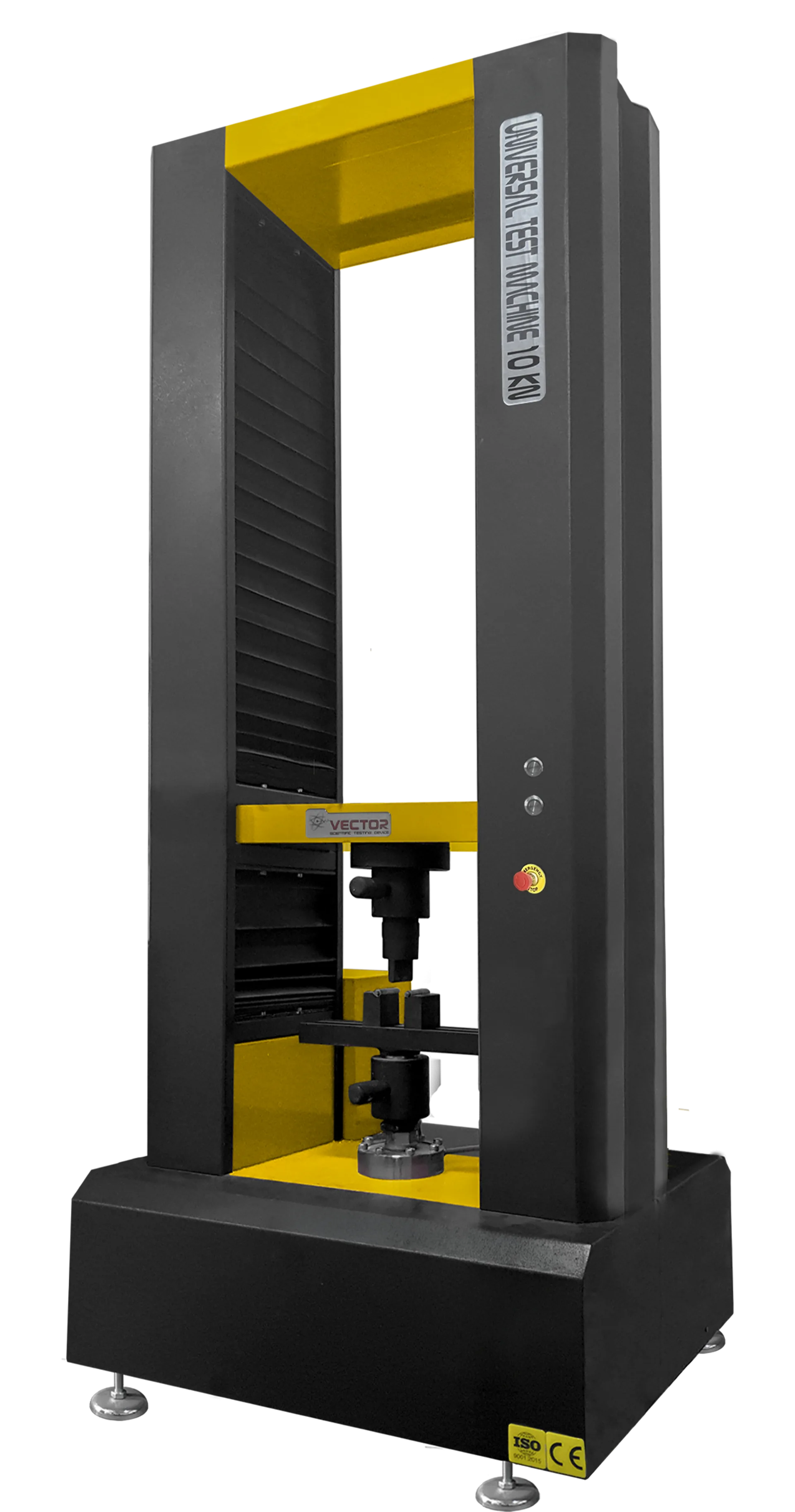
Vector Tesla Series dual-column floor-standing universal testing machine for industrial QA and R&D at 5–50 kN — ASTM E4 / ISO 7500-1 Class 0.5.
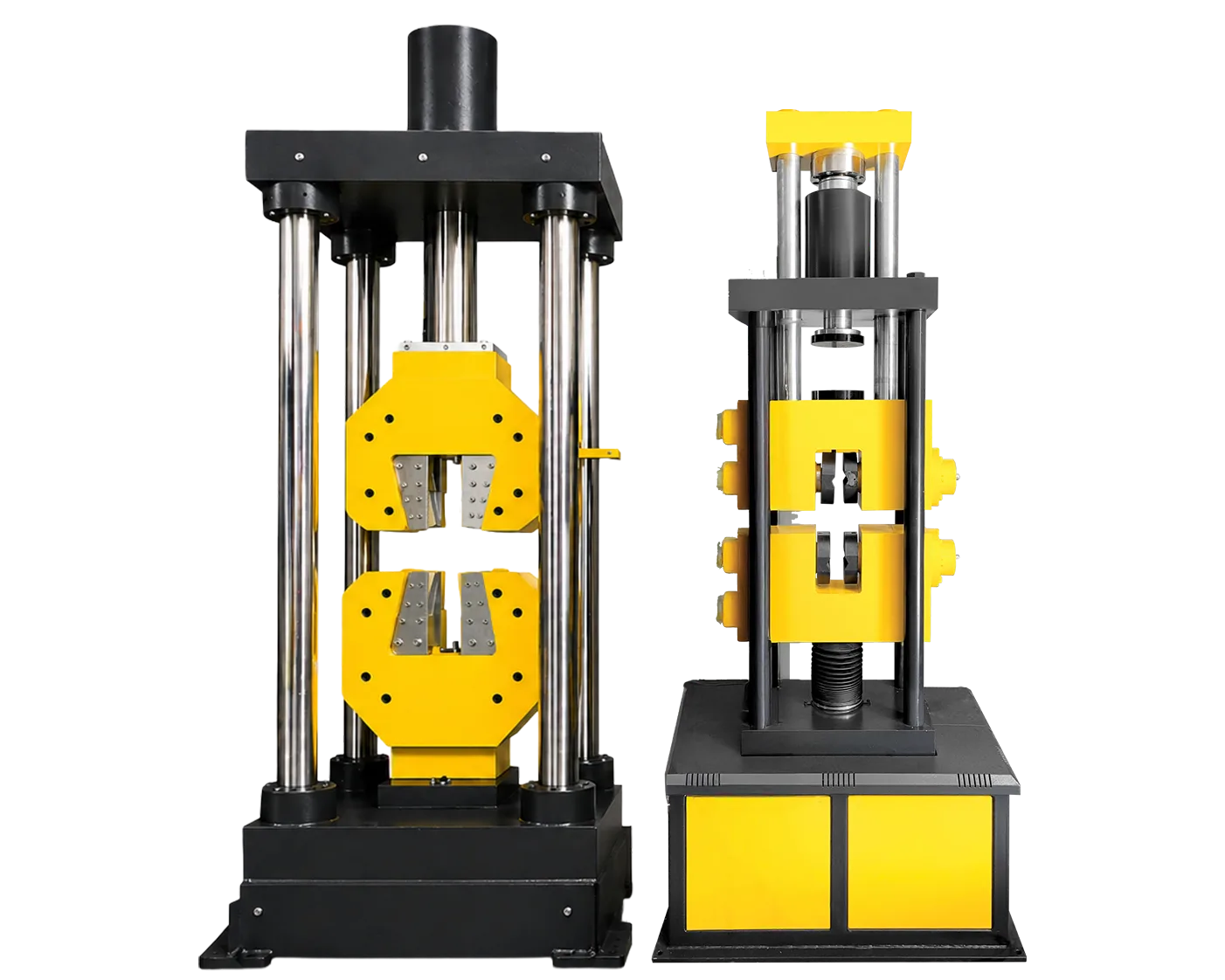
Vector Tesla Series VTR-50 servo-hydraulic UTM — 300 to 5000 kN for tensile, compression and flexural testing on metals, concrete and structural composites.
Convert between HRC, HRB, Brinell HB, Vickers HV, and Shore D using common empirical correlations (ASTM E140 family).
Open calculator →Vickers Hardness
Microindentation hardness from a square-based diamond pyramid indenter, reported as HV from the impression diagonal length and applied force.
Brinell Hardness
Indentation hardness from a hardened steel or tungsten carbide ball indenter and applied force, evaluated by measuring the impression diameter and computing HBW or legacy BHN.
Microhardness
Low-force Vickers or Knoop indentation to measure hardness in small volumes—thin films, coatings, weld HAZ, and microstructural constituents.