



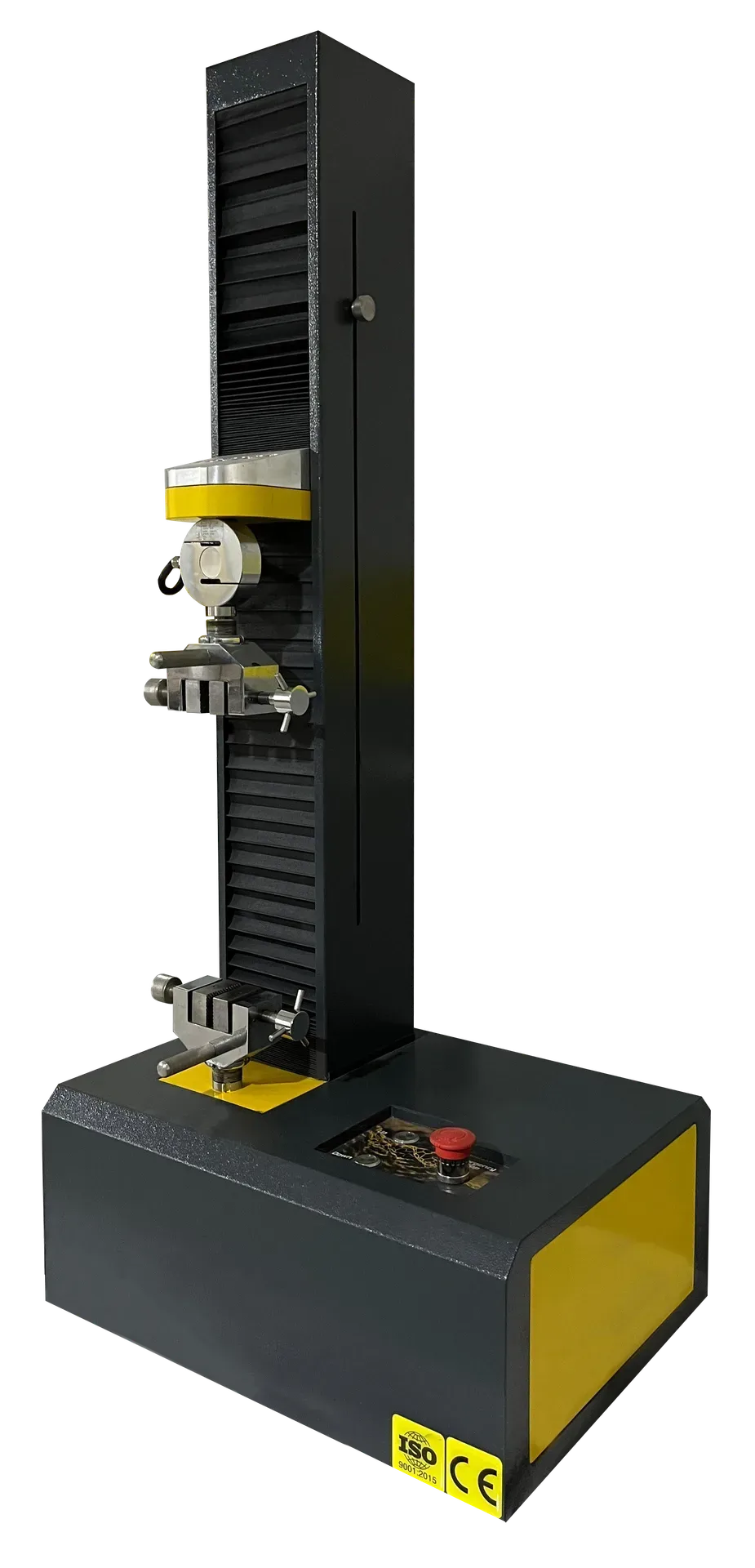
Benchtop Universal Testing Machine (0.5–2 kN)
Vector Tesla Series single-column benchtop universal testing machine for high-precision, low-force material testing — ASTM E4 / ISO 7500-1 Class 0.5.
- iso-7500-1
- astm-e4
- +3 more
View details →
Rebound or spring-indentation hardness of elastomers and plastics using durometer scales, most commonly Shore A for flexible rubbers and Shore D for rigid polymers.
Rebound or spring-indentation hardness of elastomers and plastics using durometer scales, most commonly Shore A for flexible rubbers and Shore D for rigid polymers.
Shore hardness describes the elastic resistance of polymers and elastomers to indentation under a calibrated spring force. Unlike metals-focused Rockwell or Vickers scales, Shore durometers use truncated cone or 35° frustum indenters per scale definitions, and the readout reflects a combination of instantaneous elastic recovery and viscoelastic creep.
Shore A is used for flexible rubbers, soft TPEs, and many gasket materials; Shore D targets harder plastics such as rigid PVC or nylon at room temperature. Other scales (00, C, etc.) extend the range. Results are unitless “Shore A” or “Shore D” values on a 0–100 scale and must always cite the scale.
Because polymers are time- and temperature-dependent, dwell time, indenter approach rate, and ambient temperature must be controlled. Thick, flat coupons are required; thin films on rigid substrates can read artificially high due to backing support. Multiple measurements should avoid proximity to edges and prior indentations.
Shore values do not map linearly to modulus or tensile strength; they are best used for batch QC, compound comparisons, and specification compliance rather than quantitative structural analysis. For critical seals or medical elastomers, complement Shore testing with compression set, tensile, and dynamic mechanical analysis as appropriate.
Vector Tesla Series single-column benchtop universal testing machine for high-precision, low-force material testing — ASTM E4 / ISO 7500-1 Class 0.5.
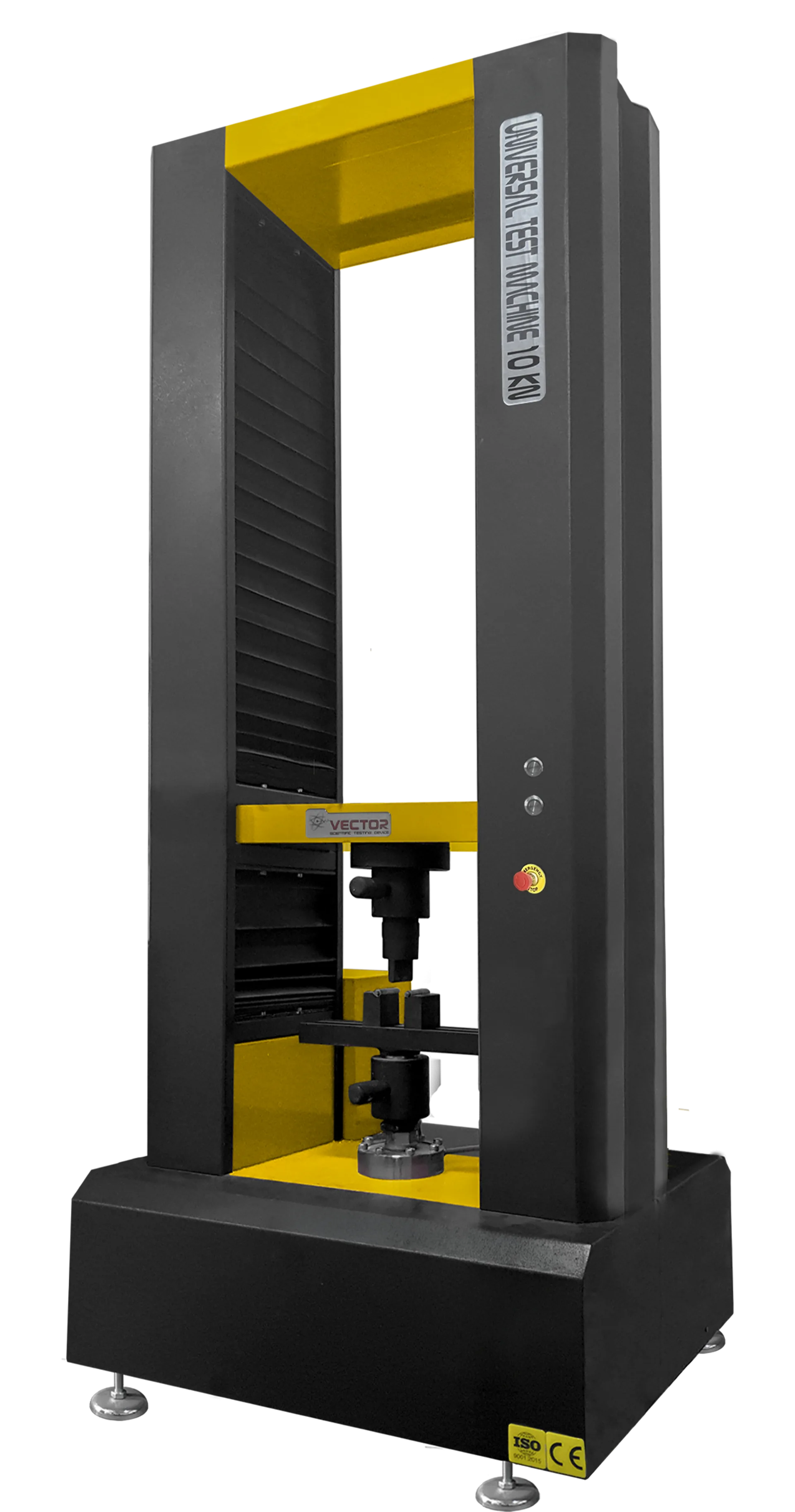
Vector Tesla Series dual-column floor-standing universal testing machine for industrial QA and R&D at 5–50 kN — ASTM E4 / ISO 7500-1 Class 0.5.
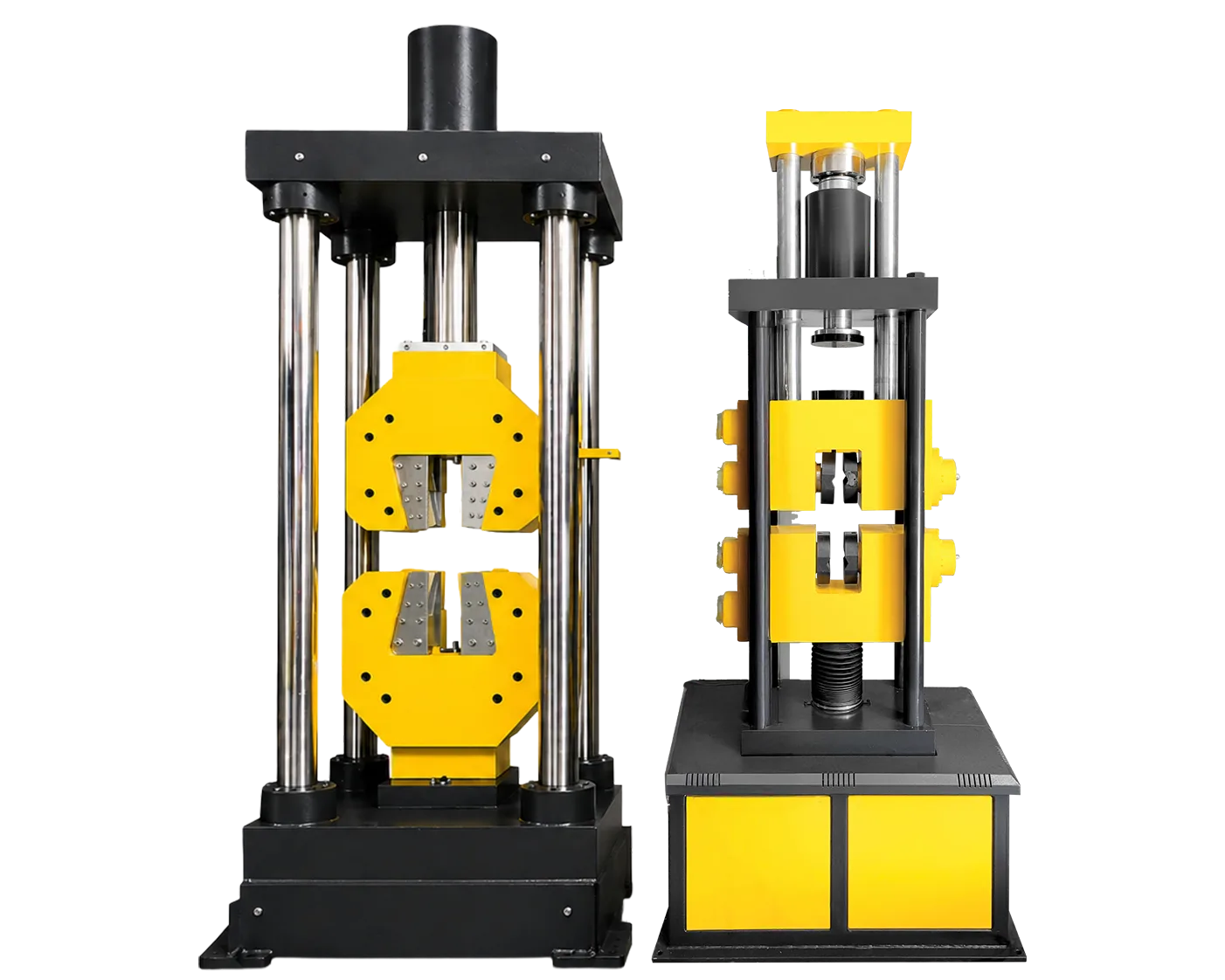
Vector Tesla Series VTR-50 servo-hydraulic UTM — 300 to 5000 kN for tensile, compression and flexural testing on metals, concrete and structural composites.
Convert between HRC, HRB, Brinell HB, Vickers HV, and Shore D using common empirical correlations (ASTM E140 family).
Open calculator →