



Material testing
Creep testing systems
Constant load. Long holds. Real service life. See when a dedicated Creep Testing Machine beats a UTM — then open Vector VTR-13-050.
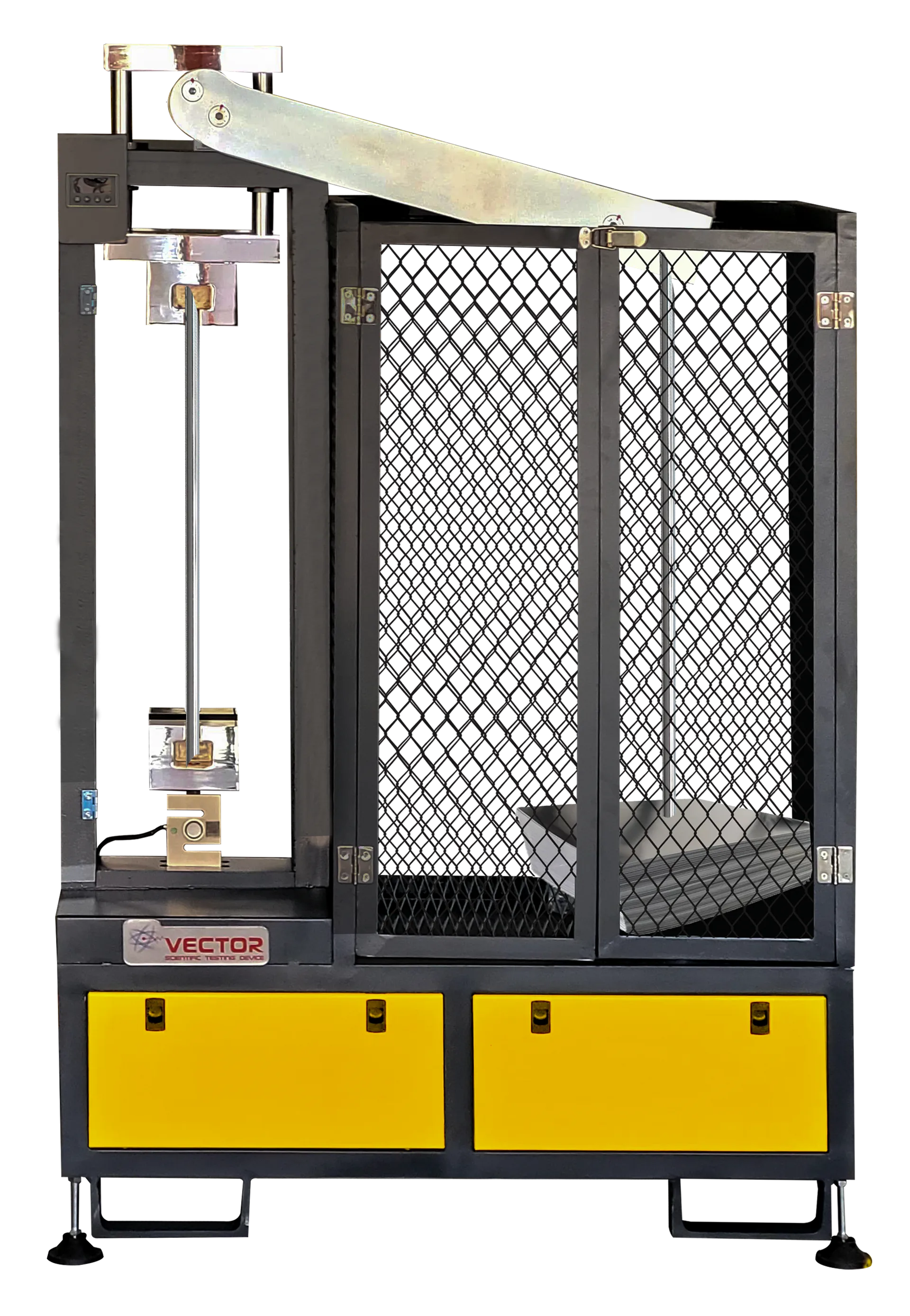
What is creep testing?
Creep is slow deformation under constant force — hours to years, not a quick tensile pull.
Hold, don’t yank
Force stays nearly constant while strain, temperature, and break events are logged over time.
Time is the specimen
Results are strain–time curves and time-to-rupture — design data for parts that carry load for years.
Built for the long haul
Dead-weight lever-arm frames + optional furnaces keep conditions stable for ISO 204 / ASTM E139 style methods.
If your QA book says “sustained load” or “creep rupture,” you are no longer in short-cycle UTM territory.
What is a Creep Testing Machine used for?
Four jobs that keep showing up in aerospace, energy, and fastener labs:
ISO 204 · ASTM E139
Creep & stress rupture
Constant-load strain–time and rupture life at ambient or high temperature — with gauge-length extensometry.
ASTM F519
Hydrogen embrittlement
Sustained tension on notched bars for plating / process acceptance on high-strength fasteners.
Preload loss
Stress relaxation
Fix displacement or strain, watch load drop — fasteners, springs, seals that must keep clamp force.
ASTM E1457
Creep crack growth
Fracture-mechanics holds on a modular floor frame with the right grips and instrumentation.
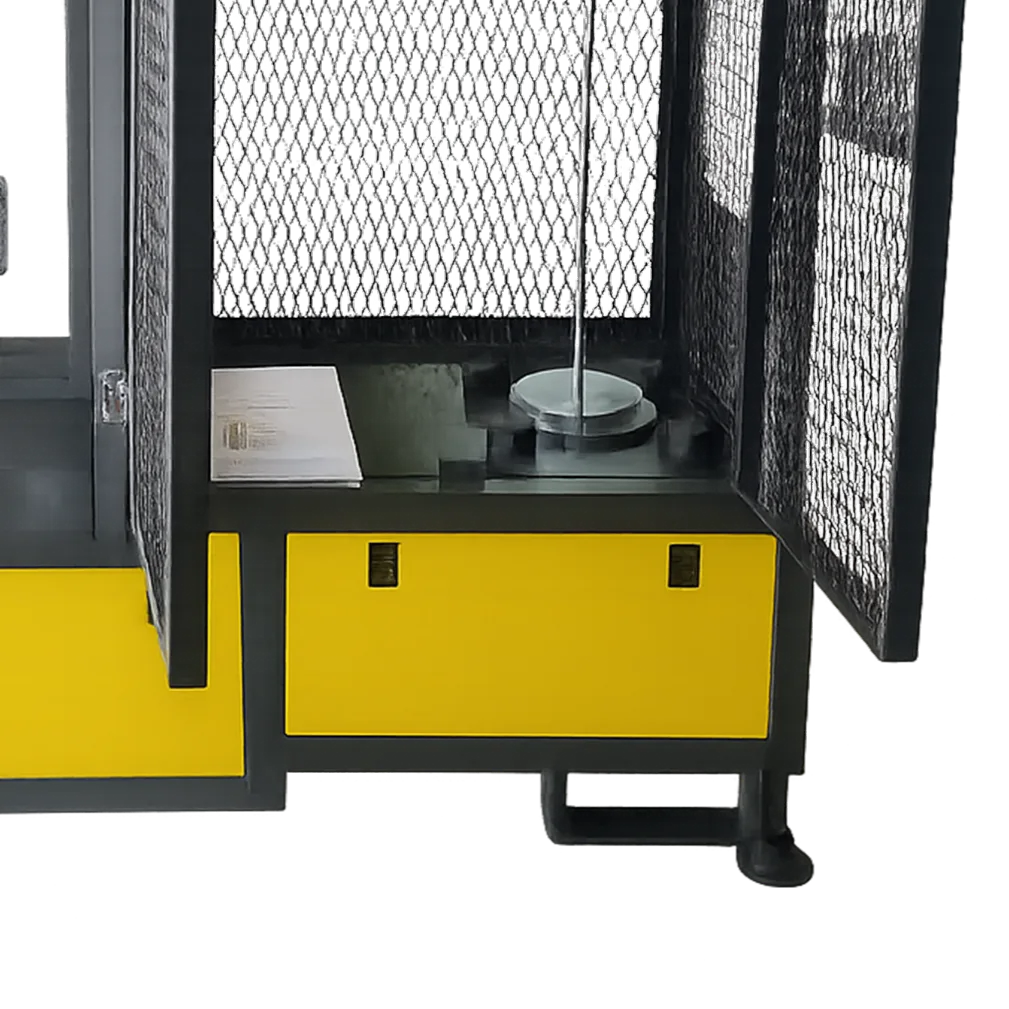
Creep Testing Machine vs UTM
Same materials lab — different jobs. Scan the split:
| Creep frame | Universal testing machine | |
|---|---|---|
| Duration | Days → years under load | Seconds → minutes per pull |
| Loading | Dead-weight / lever — stable force | Servo ramps — force or position control |
| Environment | Long soaks, furnaces, HE setups | Fast methods; chambered UTMs exist for short holds |
| Output | Strain vs time, rupture life, HE pass/fail | Stress–strain, UTS, modulus, peel / bend |
| Choose when… | Spec says constant-load life or HE sustained tension | Spec says tensile, compression, flex, peel QC |
Rule of thumb: short certificate pull → UTM. Multi-hour constant force → Creep Testing Machine.
Where it shows up
If the part sees long tensile stress or harsh chemistry, creep / HE work is never far away.
- Aerospace Fasteners, landing-gear steels, plating acceptance (F519)
- Power & pressure High-temp alloys, boiler and piping materials
- Oil & gas Sustained-load qualification of critical alloys
- Automotive High-strength fasteners and coatings under HE review
- Materials R&D Alloy / heat-treat studies, long polymer screening at temp
Standards that drive the machine
Method codes decide geometry, temperature, extensometry, and the report. Configure the frame around them.
ISO 204
Uniaxial creep in tension — the global metals creep / rupture method.
ASTM E139
Creep, creep-rupture, and stress-rupture practice for metallic materials.
ASTM F519
Mechanical HE evaluation of plating and service environments.
ASTM E1457
Creep crack growth rates — instrumentation on a suitable frame.
Vector’s answer: dedicated creep systems
Floor-standing dead-weight lever-arm platforms for creep, rupture, relaxation, crack growth, and hydrogen embrittlement — built for stable long holds, not short UTM duty cycles.
Start with the VTR-13-050 Creep Testing Machine: modular envelope, safety enclosure options, and application support to map your codes and specimens before build.
- Constant-force architecture for multi-day programmes
- Configurable for ISO / ASTM sustained-load methods
- Quote path: open the product page → request configuration
Quick answers
What does a creep test measure?
Strain (and often rupture time) under constant load and controlled temperature over a long hold — not a single UTM tensile curve.
How long do programmes run?
Hours for HE screening up to hundreds or thousands of hours for high-temperature rupture. Stability and logging beat peak speed.
Can a UTM replace a creep frame?
Short holds are sometimes tried on UTMs. Dedicated dead-weight frames win when standards need true constant force for extended periods.
Creep vs stress rupture?
Creep tracks deformation vs time; stress rupture tracks time-to-failure at stress and temperature. Same class of machine often runs both.
Where are Vector product details?
On the VTR-13-050 page — configuration, standards coverage, and quote. This landing is the category story.