



Mining & mineral processing
Primary crushing of drill core, ROM ore, and concentrate splits before ring mills, disc mills, or bottle rolls — preparing material for XRF, ICP, fire assay, or AAS.
Vector VTR-1011 Nysos heavy-duty jaw crusher — up to 300 kg/h throughput, 45:1 crushing ratio and interchangeable manganese, stainless or tungsten carbide jaws.
The Vector VTR-1011 Nysos jaw crusher is a floor-standing primary crusher for laboratories and industrial sample-prep lines that need repeatable coarse reduction before milling, pulverising, XRF pellet pressing, fusion, or digestion.
It accepts feed up to 90 mm, delivers up to about 300 kg/h throughput depending on material, and offers a stepless gap from 0–30 mm with wear compensation and zero-point adjustment so output size stays consistent over the service life of the jaws. Three jaw material options — manganese steel, stainless steel, and tungsten carbide — let you align the crusher with your analytical sensitivity, from routine bulk reduction to trace-element work where metallic carryover must stay minimal.
A jaw crusher sits at the front of almost every hard-sample workflow: uniform primary crushing improves efficiency downstream and helps ensure test data reflects the true bulk material. The Nysos combines that role with a CE-marked safety concept, a cleanable crushing chamber, wide-gap geometry to limit bridging, and an integrated dust-extraction port for safer, neater operation.
Browse the standards library
Nysos is supplied as CE-marked machinery in line with European safety requirements for laboratory and industrial crushing equipment. Where your quality system references specific test methods, pair the crusher with the appropriate preparation and analytical standards from our library.
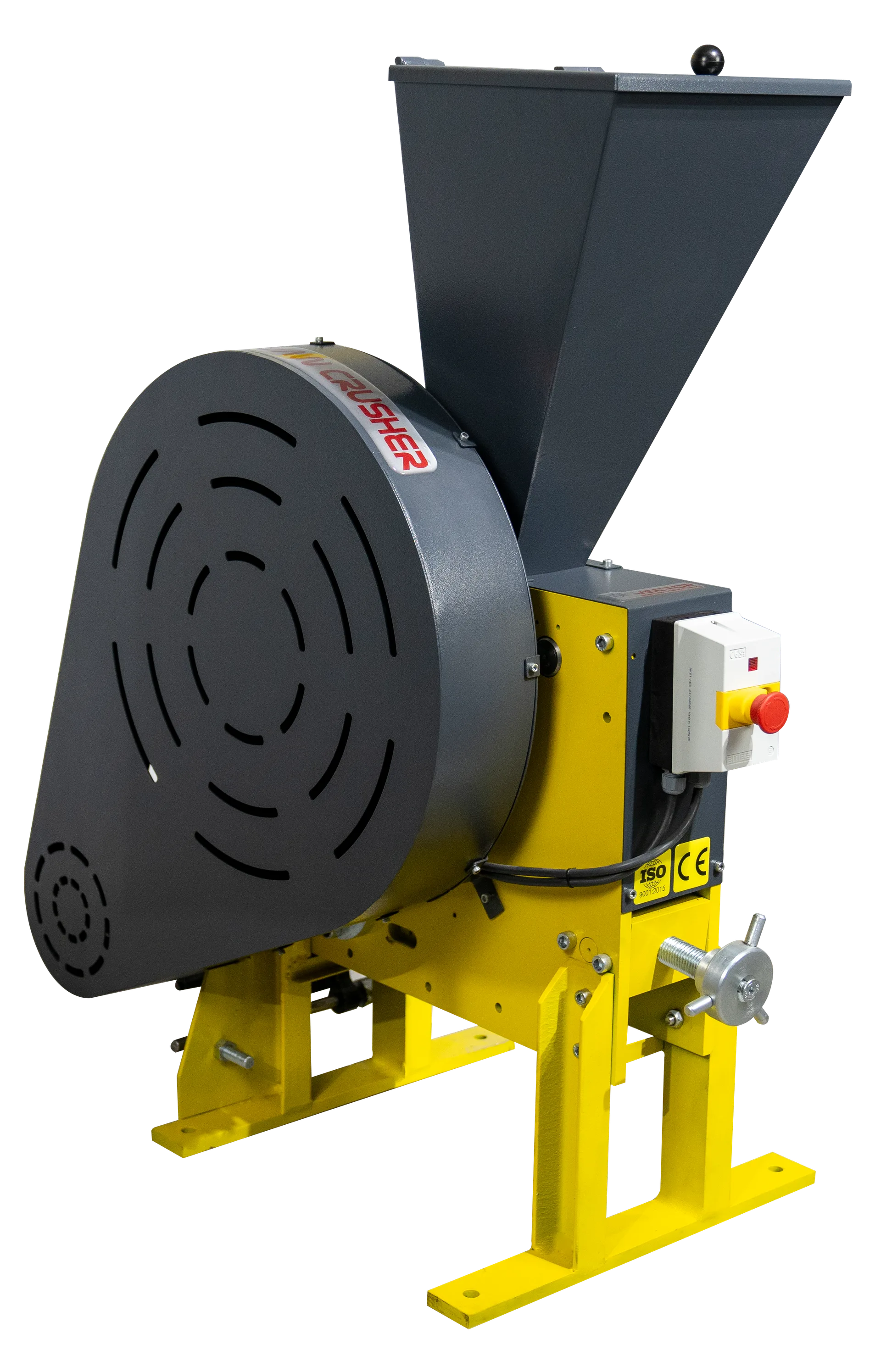
See the Nysos jaw crusher in operation — primary reduction for cores, ores, and aggregates before milling or pellet prep.

From exploration geology to process QC, the Nysos supports first-stage reduction wherever hard or brittle inorganic samples enter the laboratory chain.
Primary crushing of drill core, ROM ore, and concentrate splits before ring mills, disc mills, or bottle rolls — preparing material for XRF, ICP, fire assay, or AAS.
Coarse reduction of slag, ferro-alloys, sinters, and process intermediates ahead of fine grinding or automated splits for batch certification.
Cement clinker, limestone, aggregates, and masonry waste reduced to a controlled top size for Blaine, calorimetry, or chemical QC routes.
Rock and core samples, ceramics, glass cullet, and oxide powders prepared for petrography, XRD, or further comminution in vibratory mills.
Coke, coal, industrial residues, and solid environmental samples crushed to a manageable top size before grinding or leaching steps.
Teaching size reduction, throughput, and gap-setting concepts on a robust floor unit that mirrors industrial practice while staying laboratory-manageable.
Engineered for duty-cycle crushing with operator safety, analytical flexibility, and straightforward maintenance.
Hard, medium-hard, and brittle inorganics — ores, quartz, limestone, granite, slag, clinker, coal, ceramics, and more — in one platform instead of juggling multiple dedicated crushers.
Continuous gap setting from 0–30 mm with wear compensation and zero-point readjustment so particle size distribution stays stable as jaws wear in service.
Continuous-duty motorisation and a 5 L discharge collector suit both single-sample work and higher-volume batch campaigns with minimal changeover time.
Manganese steel for abrasion resistance, stainless steel for iron-sensitive or hygiene-conscious streams, tungsten carbide when trace-element blanks from steel jaws are unacceptable.
Accessible crushing chamber for brushing and air purge between runs, geometry that limits bridging, and a dust-extraction connection to capture fines and improve workplace hygiene.
Reinforced steel frame and a 2.2 kW drive sized for sustained operation; wear parts are field-replaceable to keep downtime predictable.
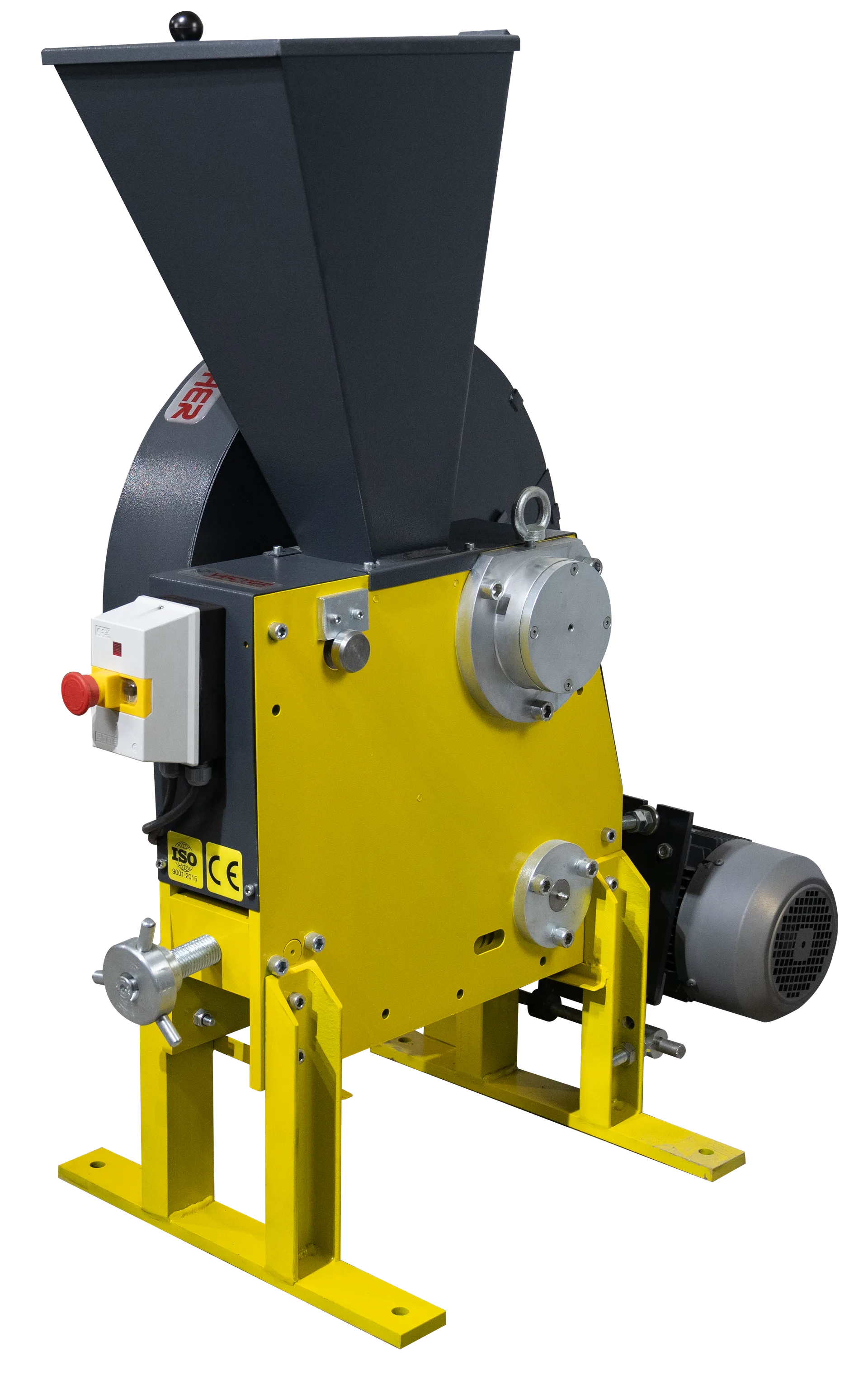
Primary crushing sets the particle distribution that disc mills, pulverisers, and presses inherit. When that first stage is inconsistent, variability propagates into XRF, ICP, fire assay, and fusion results — not only through size effects but also through trace contamination from wear debris.
Geometry & cleaning — wide-gap layout and an easy-to-clean chamber reduce retention and carryover between consecutive samples.
Jaw selection — switch to stainless or tungsten carbide jaws when manganese or carbon steel backgrounds would interfere with the elements you report.
Trace work — tungsten carbide is the usual choice for sensitive trace protocols; avoid it when tungsten or cobalt in the sample matrix is itself an analyte of interest.
Match the jaw insert to your material abrasiveness and to the elements that must stay background-free in the next analytical step.
Default choice for ores, slag, coal, and clinker where throughput and wear life matter more than a manganese contribution to the matrix.
For streams where iron or manganese pick-up from standard steel would skew results — pharmaceutical intermediates, food-adjacent minerals, and controlled QC lanes.
Lowest practical metallic contamination from the jaws themselves; preferred for many XRF and ICP preparation routes when W/Co in the specimen is not a target analyte.
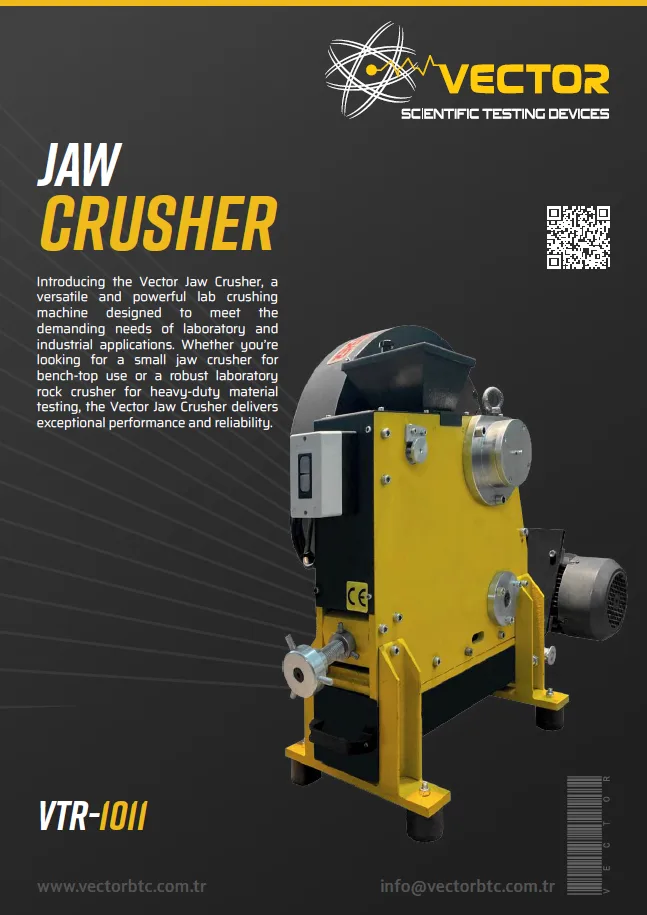
Product brochure for the Vector VTR-1011 Nysos jaw crusher — specifications, jaw options, and typical laboratory applications.
Brochure (PDF)Vector Nysos series
Applications support
Share your standard, sample type, and lab workflow — we'll recommend a verified configuration you can quote against.
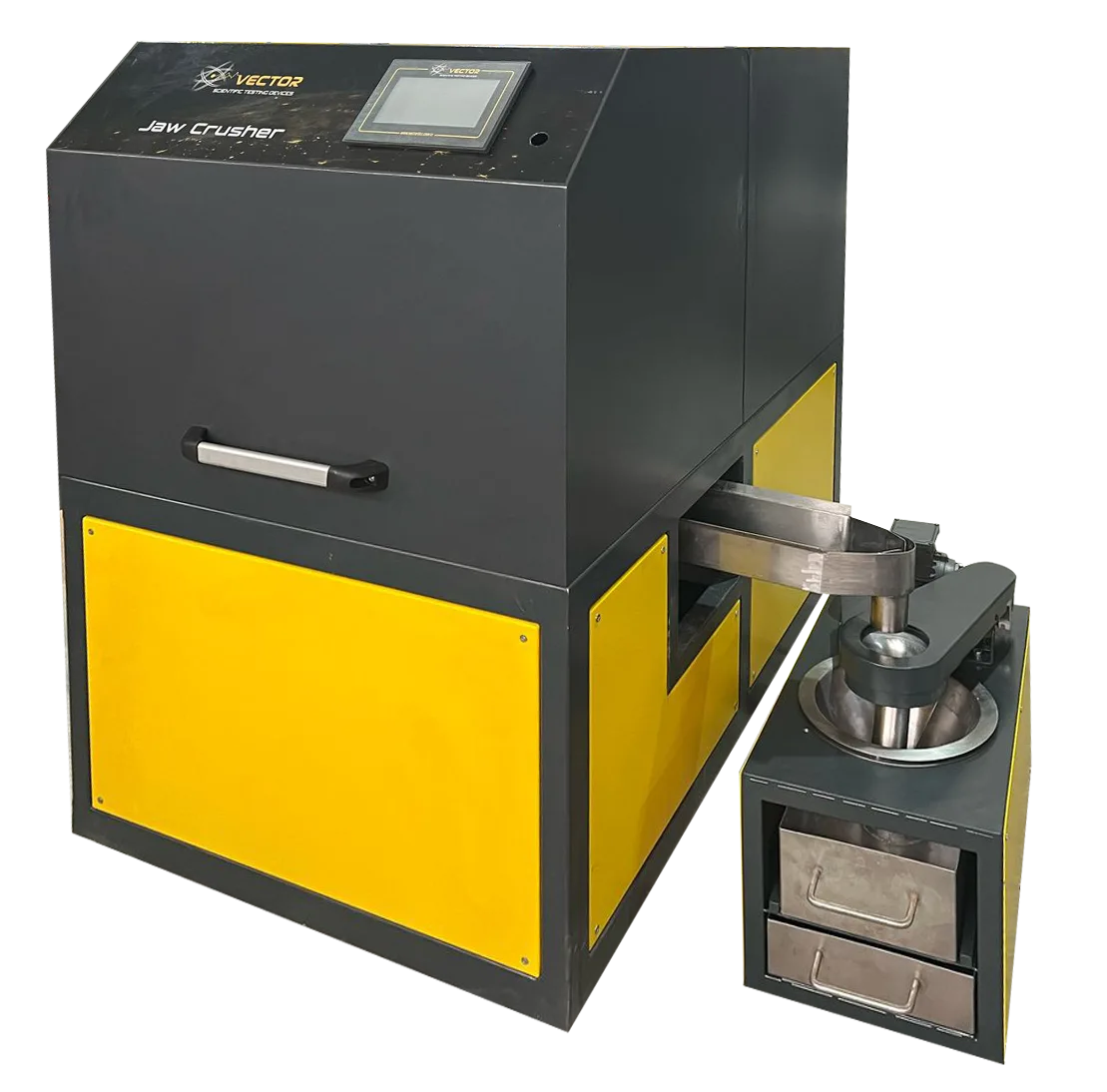
Vector VTR-1011-XL Thor continuous-feed jaw crusher — 270 × 90 mm jaws, up to 110 mm feed, 150–300 kg/h throughput, Mohs ≤ 8 and 7″ touchscreen HMI with jam detection.
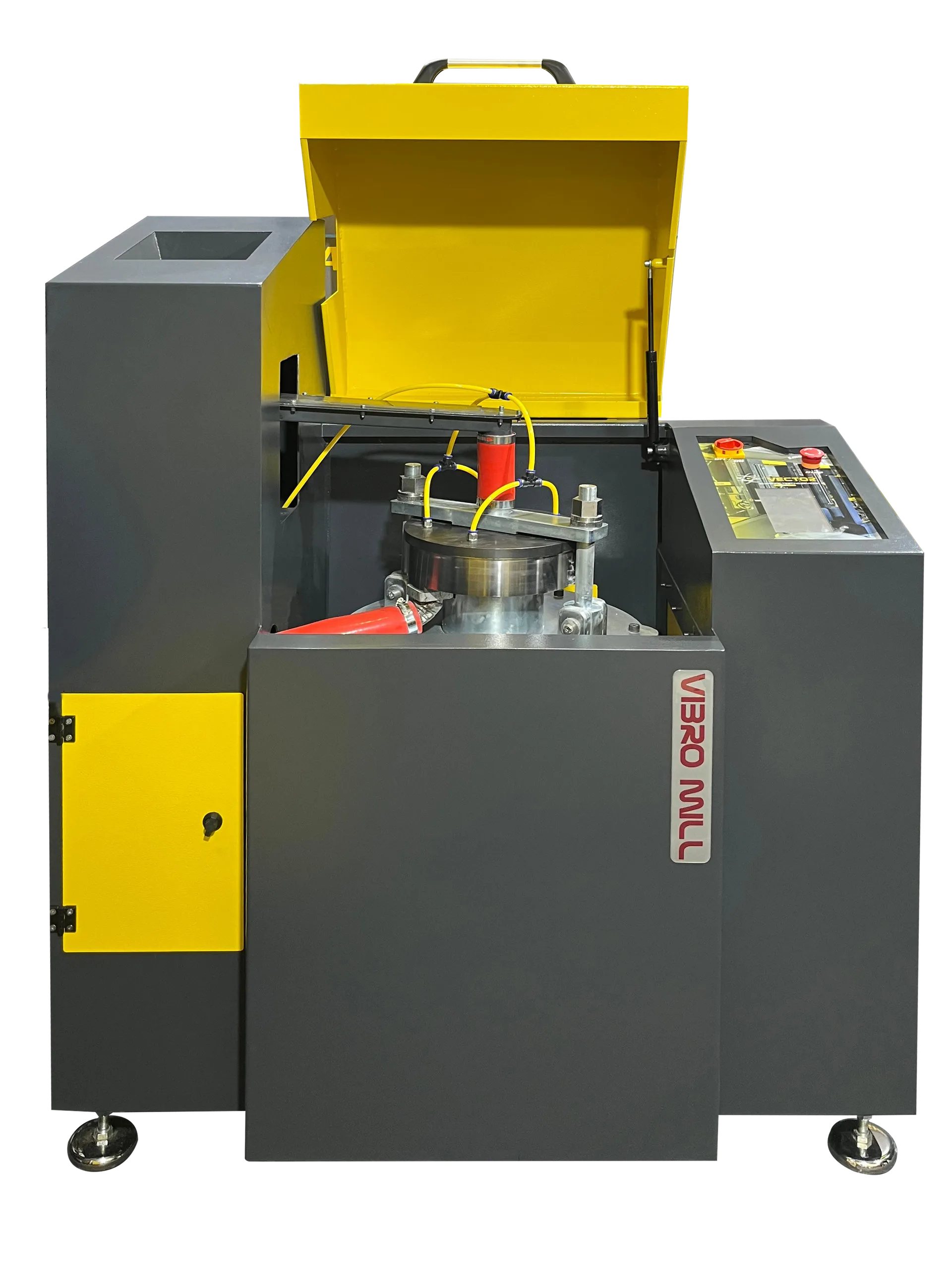
Vector VTR-1012-C Gaia continuous vibratory disc mill with automatic feed and proportional divider — meters 2–3 mm feed and discharges fines below 0.5 mm nonstop.
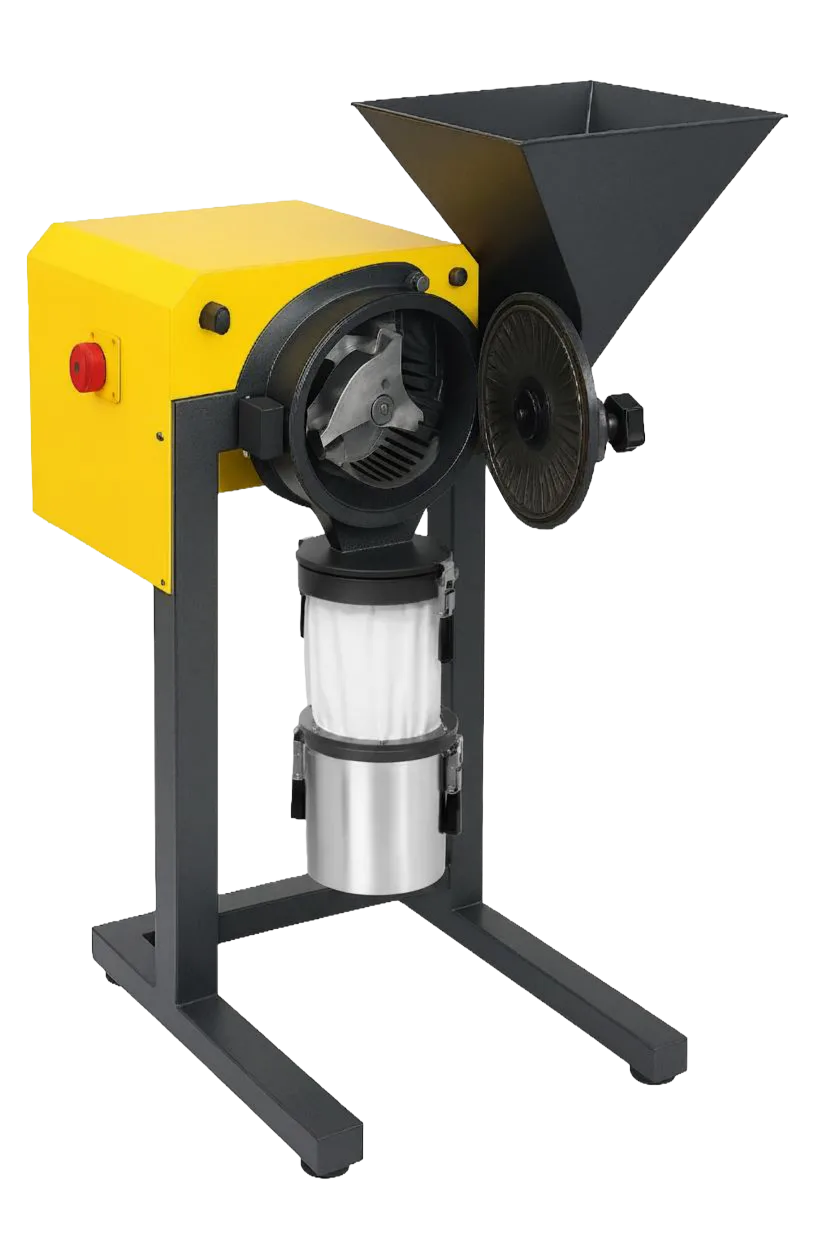
Vector VTR-18-001 cross beater mill for coarse and fine reduction of brittle materials up to Mohs 6 — adjustable speed, batch or continuous with optional cyclone.