



Vicat setting time and consistency testing — automatic and manual systems
Cement Setting Time Testing
Vicat testers for cement quality control, research, and reference laboratories per EN 196-3 and ASTM C191 — from manual reference benches to six-, eight-, and twelve-station automatic lines with VicatMaster software.
Our Vicat testers
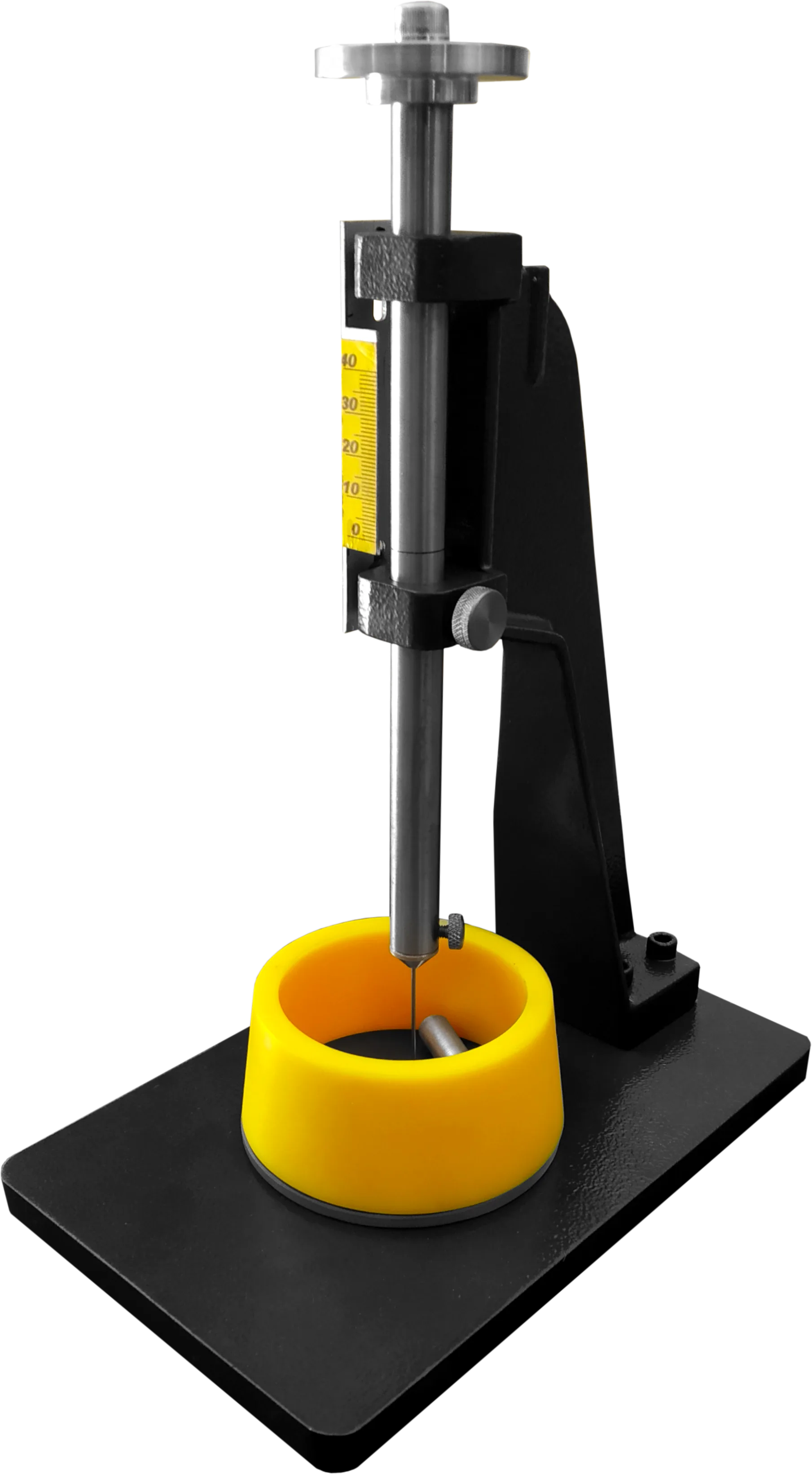
VTR-1020
Manual Vicat
Precision needle and mould fixtures — classical manual procedures for reference measurements, training, and automatic Vicat correlation.
View product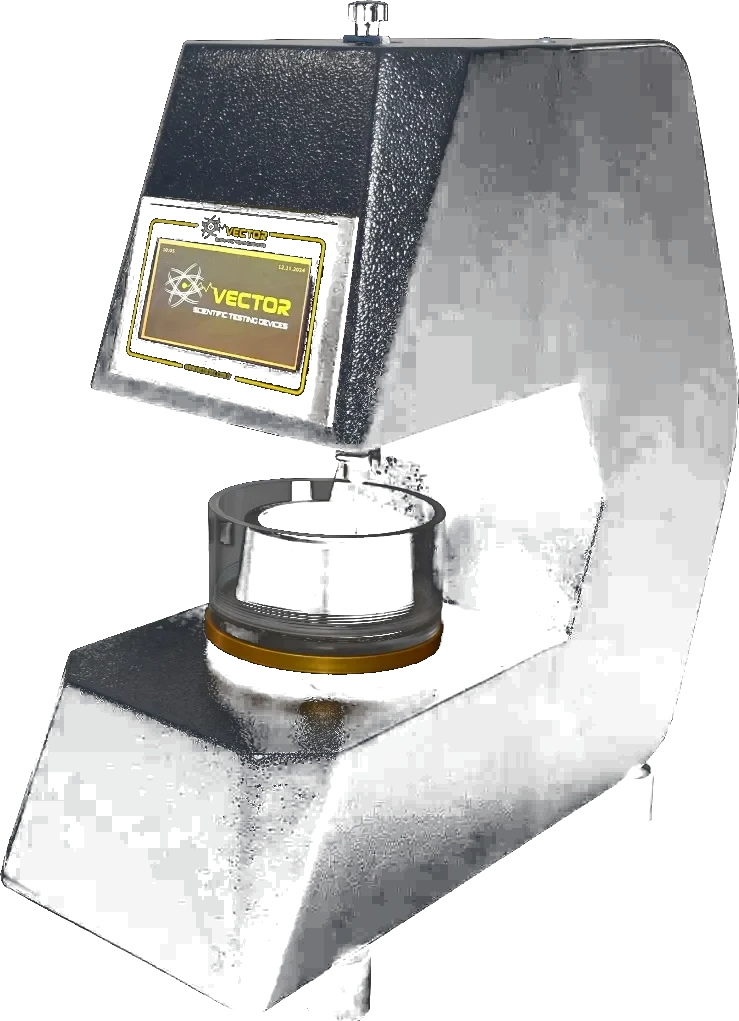
VTR-1021
Automatic Single Vicat
Compact single-mould automatic station — standardized needle kinematics for satellite labs and limited bench space.
View product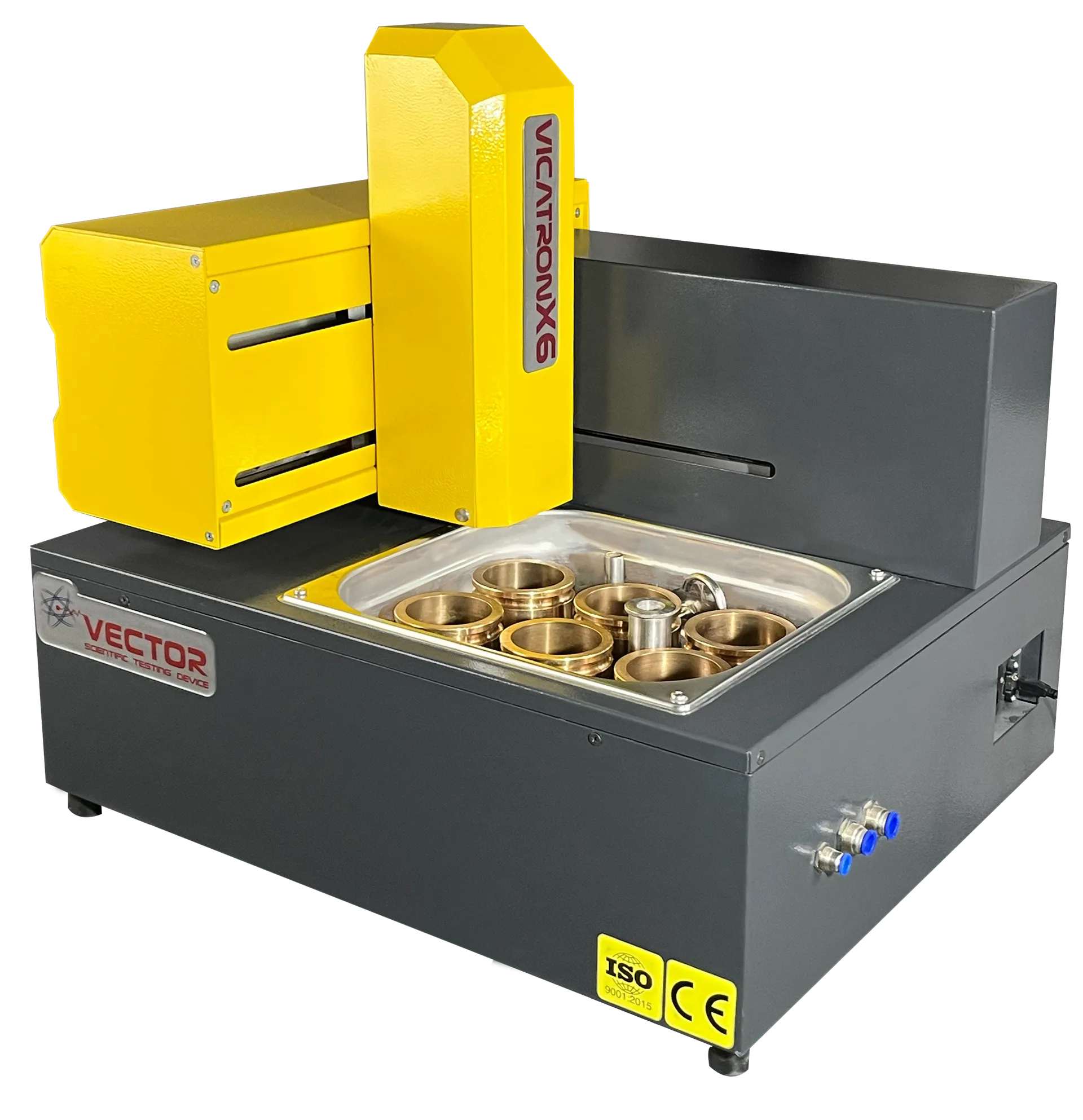
VTR-1022
Automatic Vicat X6
Six-station automatic Vicat — programmable needle control and depth measurement for standard consistency, initial, and final set.
View product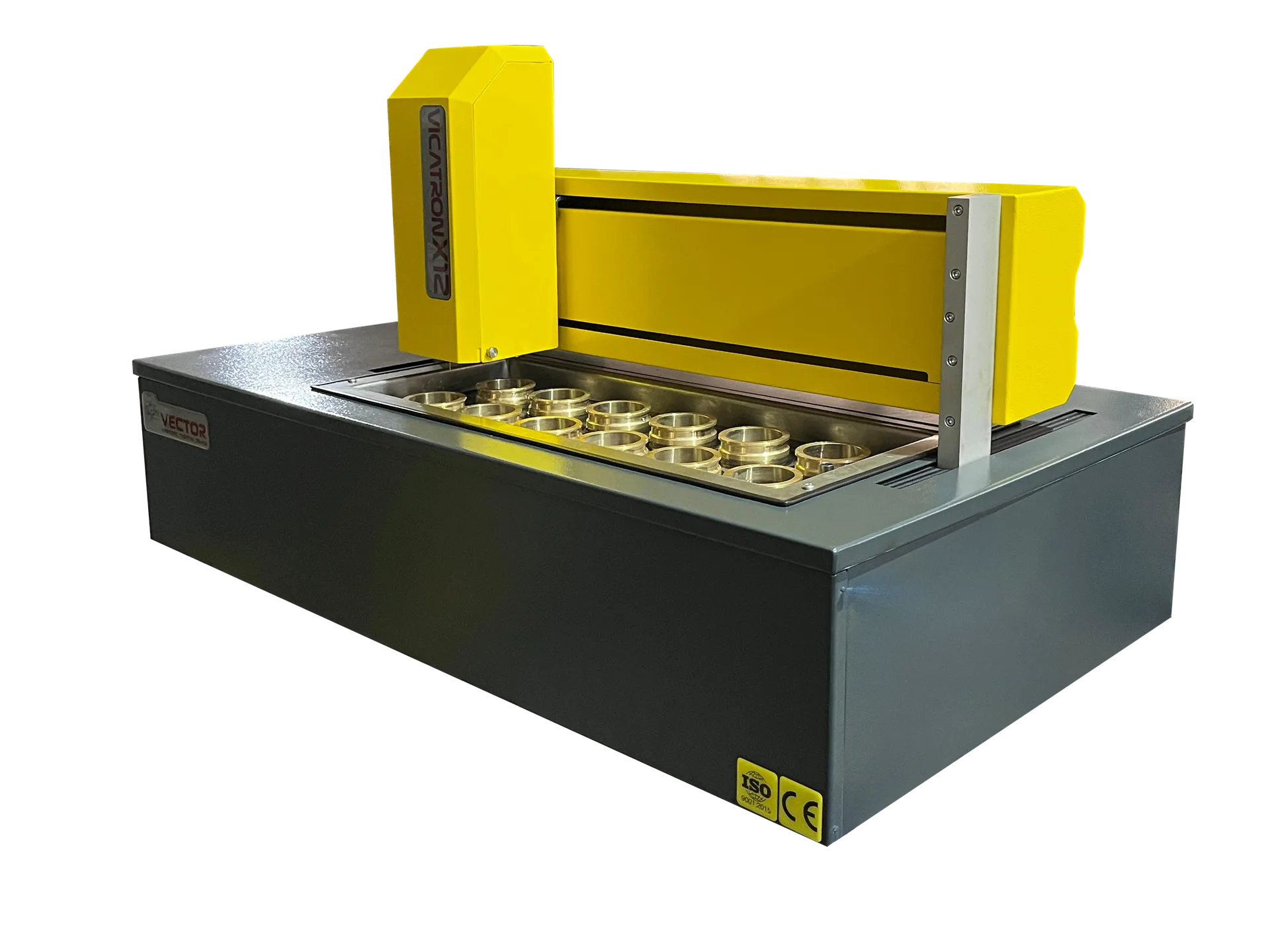
VTR-1023
Automatic Vicat X12
Twelve-station automatic Vicat X12 — parallel setting-time and consistency testing per EN 196-3 and ASTM C191 on busy cement QC lines.
View product
Understanding Cement Setting Time Testing
Cement setting time testing is a fundamental method used to evaluate the early hydration behavior of cement. The test determines the initial and final setting times, which directly affect workability, strength development, and construction performance.
In professional cement laboratories, accurate results depend not only on Vicat testing, but also on proper sample preparation equipment and controlled testing environments. Modern laboratories integrate paste mixing, conditioning, and traceable timing before reporting standardized results.
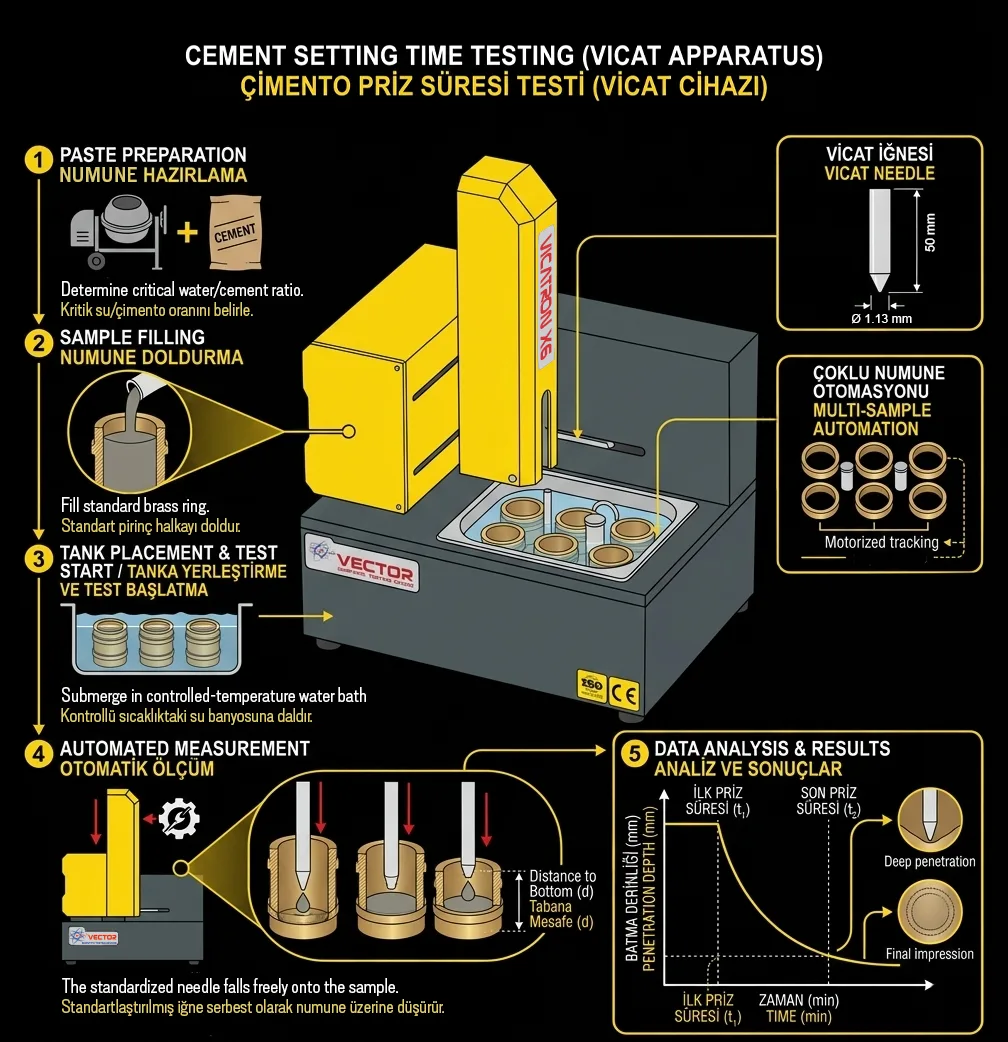
How the Industry Performs Vicat Cement Tests
Today's cement laboratories rely on automated systems to ensure repeatable and operator-independent results. Instead of manual needle drops, laboratories use automatic Vicat apparatus systems that monitor penetration depth and time continuously.
However, Vicat testing is typically part of a broader material testing workflow. Cement laboratories also perform compressive strength testing, fineness measurement, and mix design evaluation to fully characterize cement behavior.
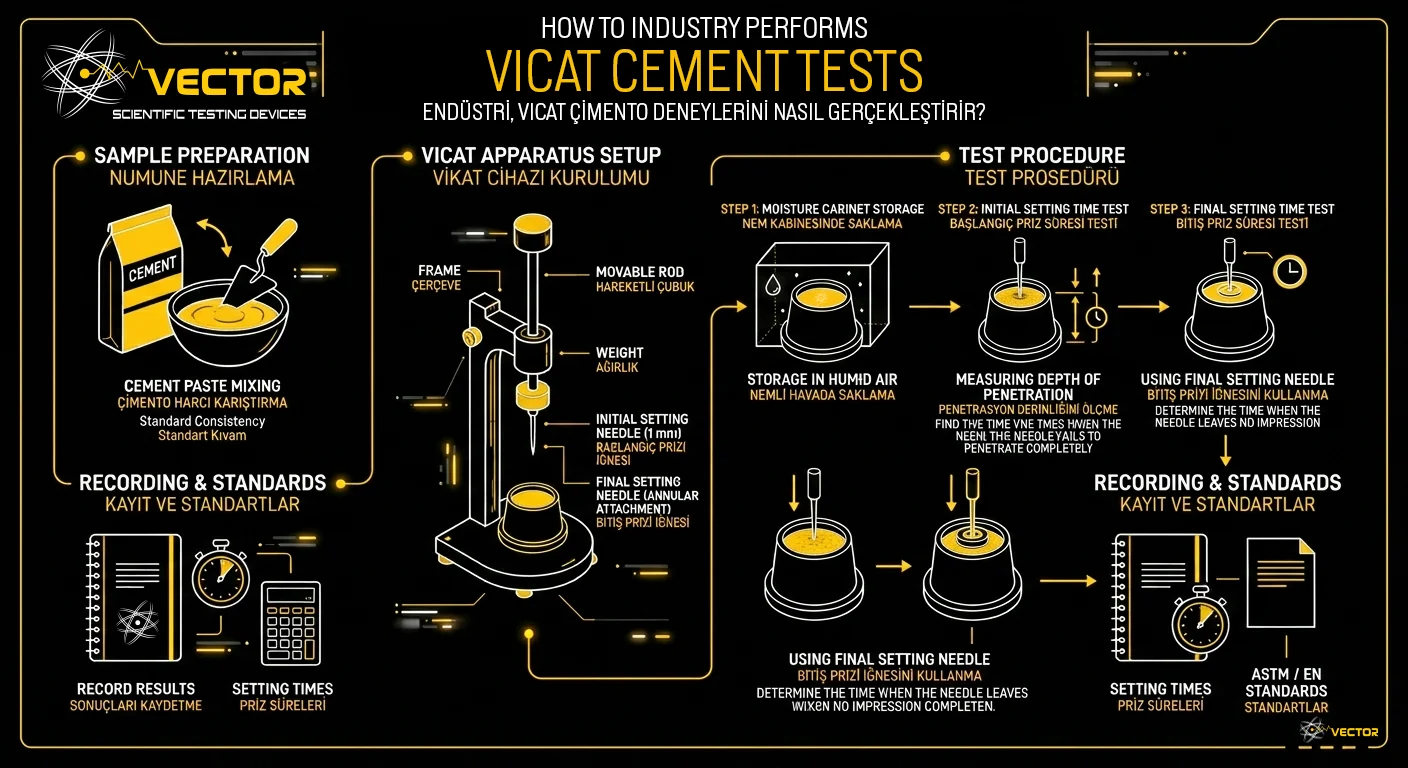
Vector's Approach to Cement and Material Testing
Vector designs integrated material testing solutions that support cement laboratories from raw sample preparation to final mechanical analysis. Alongside automatic Vicat cement setting time testers, Vector provides universal testing machines, impact testing devices, and sample preparation systems for complete laboratory workflows.
By combining Vicat testing with mechanical testing equipment, laboratories can evaluate both early-age behavior and long-term performance of cement-based materials.
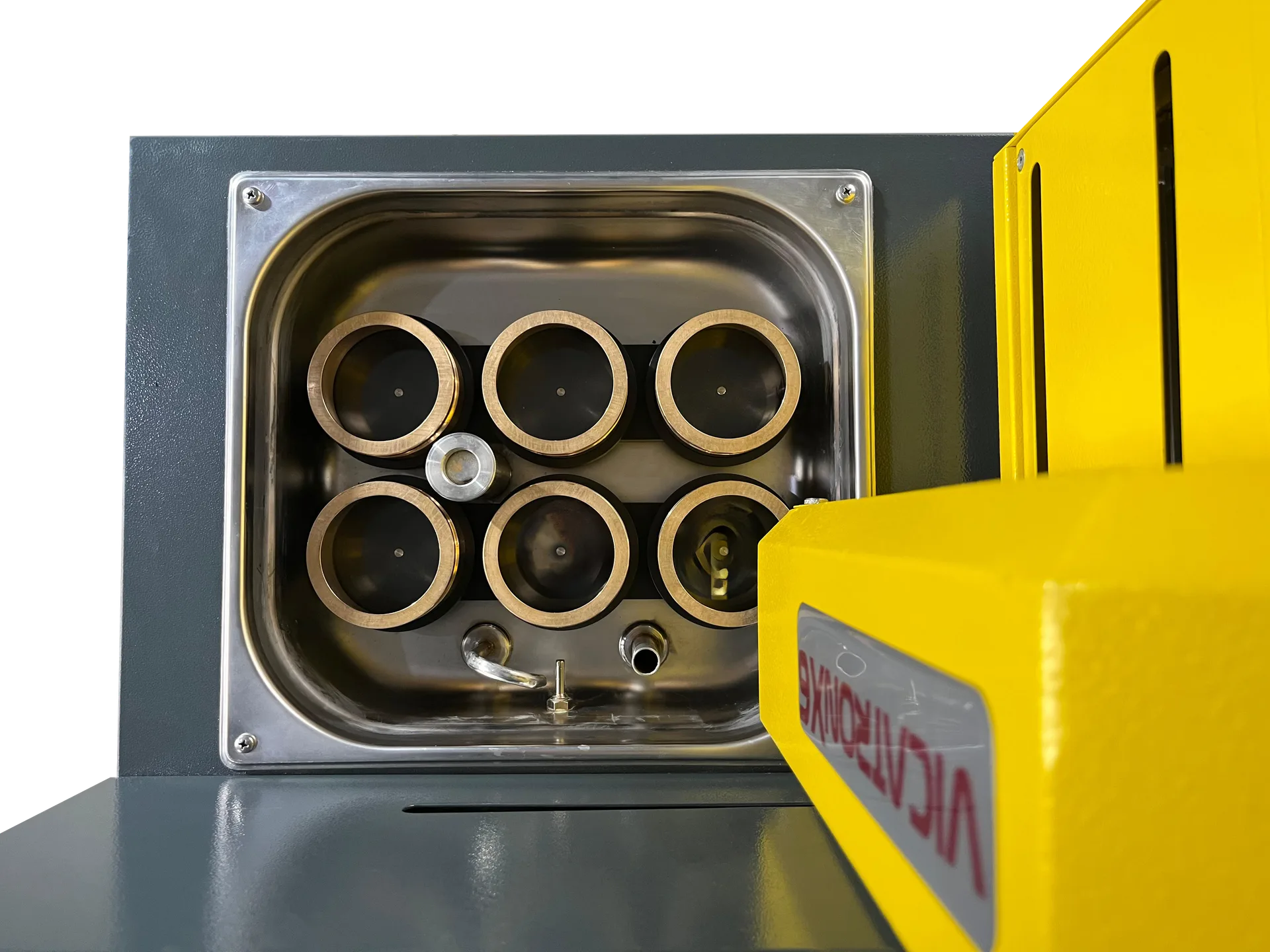
Key Advantages of Automatic Vicat Cement Testing Systems
Automatic Vicat testing systems improve efficiency and data reliability in cement laboratories. When combined with other cement testing equipment, these systems help ensure full compliance with EN 196-3 and ASTM C191 standards.
Laboratories benefit from centralized data management, reduced manual handling, and seamless integration with other testing devices.
- Six-, eight-, and twelve-station models share the same operating principles — scale capacity without changing workflow.
- Wet or dry operation depending on whether a pool water conditioning unit is installed.
- USB-linked VicatMaster PC software with mould queue, strike scheduling, and stamped PDF reports.
- Mix start time recorded as time zero; configurable test start delay avoids idle strikes before the set window.
Applications Across Cement and Construction Laboratories
Automatic Vicat apparatus systems are widely used in cement plants, construction material laboratories, and research institutions. In many cases, Vicat testing is performed alongside sample preparation machines, mechanical testing systems, and laboratory crushers and mills.
VicatMaster Software — Scheduling, Confirmation, and Reports
Vector automatic Vicat lines are controlled through VicatMaster on a Windows PC connected via USB. The interface separates configuration (Settings) from day-to-day operation (Test panel with Home, Start, and Stop).
Strike timing adapts to paste stiffening: a depth-interval table (up to ten ranges) sets how many minutes elapse until the next penetration — for example, tighter sampling as readings approach initial or final set thresholds.
- Ring pattern: configurable outer, middle, and inner circle strikes plus a centre hit; optional start-from-centre sequencing.
- Repeat strikes when a reading nears initial or final set — helps lock a true set point and reduce false calls.
- Per-mould sample name, mix start time, delay, and initial/final set limits; active mould queue with countdown timers.
- PDF and Excel outputs to a VicatMaster folder; an interim PDF is saved after each strike to limit data loss.
- Company, operator, and standard text appear on reports only — they do not change machine behaviour.
Controlled Water Bath and Level Installation
For EN 196-3 and ASTM C191 wet-cure workflows, an optional pool water conditioning unit circulates water through the instrument pool while a digital controller holds the set temperature — typically 20 °C for routine cement work.
Pool temperature is measured at the centre of the bath (not at the conditioning unit alone) and logged with each penetration. Correct levelling on a rigid bench is required before commissioning; an out-of-level frame skews depth readings.
- Incoming and outgoing circulation hoses connect to numbered sockets on the Vicat frame; a separate drain hose empties the pool when required.
- Keep water and electrical parts separated during filling and maintenance; drain and clean pool and conditioning tank about every three months.
- Observe water clarity periodically — cement fines and limescale shorten pump life if left unchecked.
From Mould Filling to Needle Care
Each Vicat mould supplied with automatic systems uses a three-part assembly — base plate, glass insert, and brass ring — filled and trimmed per the active standard. Record the mix start time for every mould; that moment is the reference for initial and final set.
Load filled moulds into numbered pool positions only when the machine is stopped. Remove and clean moulds promptly after final set; hardened paste is far harder to remove the next day.
- Replace needles when oxidised or damaged; typical service life is about one year with proper sponge cleaning.
- Cleaning sponges are reversible — replace both faces when worn.
- Annual calibration and service by Vector personnel keeps Z depth and XY positioning within specification.
Standards and calculation support
Vector publishes method summaries for the Vicat standards our instruments support, plus an online interpolation calculator for initial and final set reporting.