



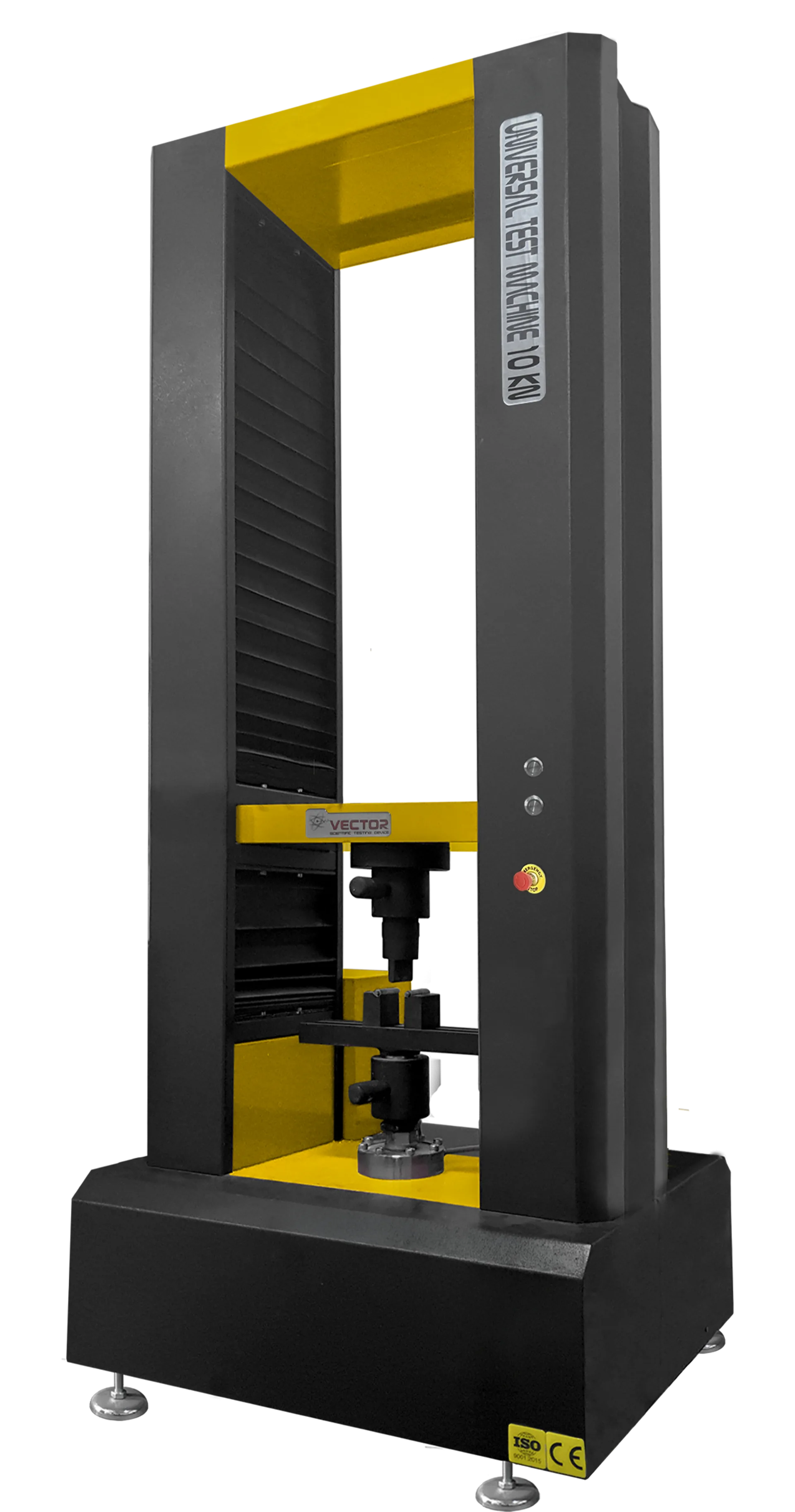
Universal Testing Machine (5–50 kN)
Vector Tesla Series dual-column floor-standing universal testing machine for industrial QA and R&D at 5–50 kN — ASTM E4 / ISO 7500-1 Class 0.5.
- iso-7500-1
- astm-e4
- +3 more
View details →
Percent decrease in minimum cross-sectional area after tensile fracture relative to the original area; a ductility indicator reported alongside elongation at break.
Percent decrease in minimum cross-sectional area after tensile fracture relative to the original area; a ductility indicator reported alongside elongation at break.
Formula
Z = 100 × (A0 − Au) / A0
A0 is original cross-sectional area and Au is minimum area at fracture. Z is reported as a percentage per ISO 6892-1 / ASTM E8.
Reduction of area (Z) quantifies how much the fracture cross-section has necked down compared with the original specimen area. High Z generally indicates ductile fracture; very low Z can signal brittle failure modes.
After a tensile test to fracture, measure the minimum diameter or area at the neck and compare with the original gauge section. Some workflows use post-fracture micrometer readings; others estimate from fracture appearance for screening only.
ISO 6892-1 and ASTM E8 include Z for round and flat specimens when the fracture is suitable. Report specimen type and measurement method because irregular fractures bias area estimates.
Measuring away from the minimum neck, including shear lips inconsistently, and mixing engineering strain with area-based ductility metrics without context.
Vector Tesla Series dual-column floor-standing universal testing machine for industrial QA and R&D at 5–50 kN — ASTM E4 / ISO 7500-1 Class 0.5.
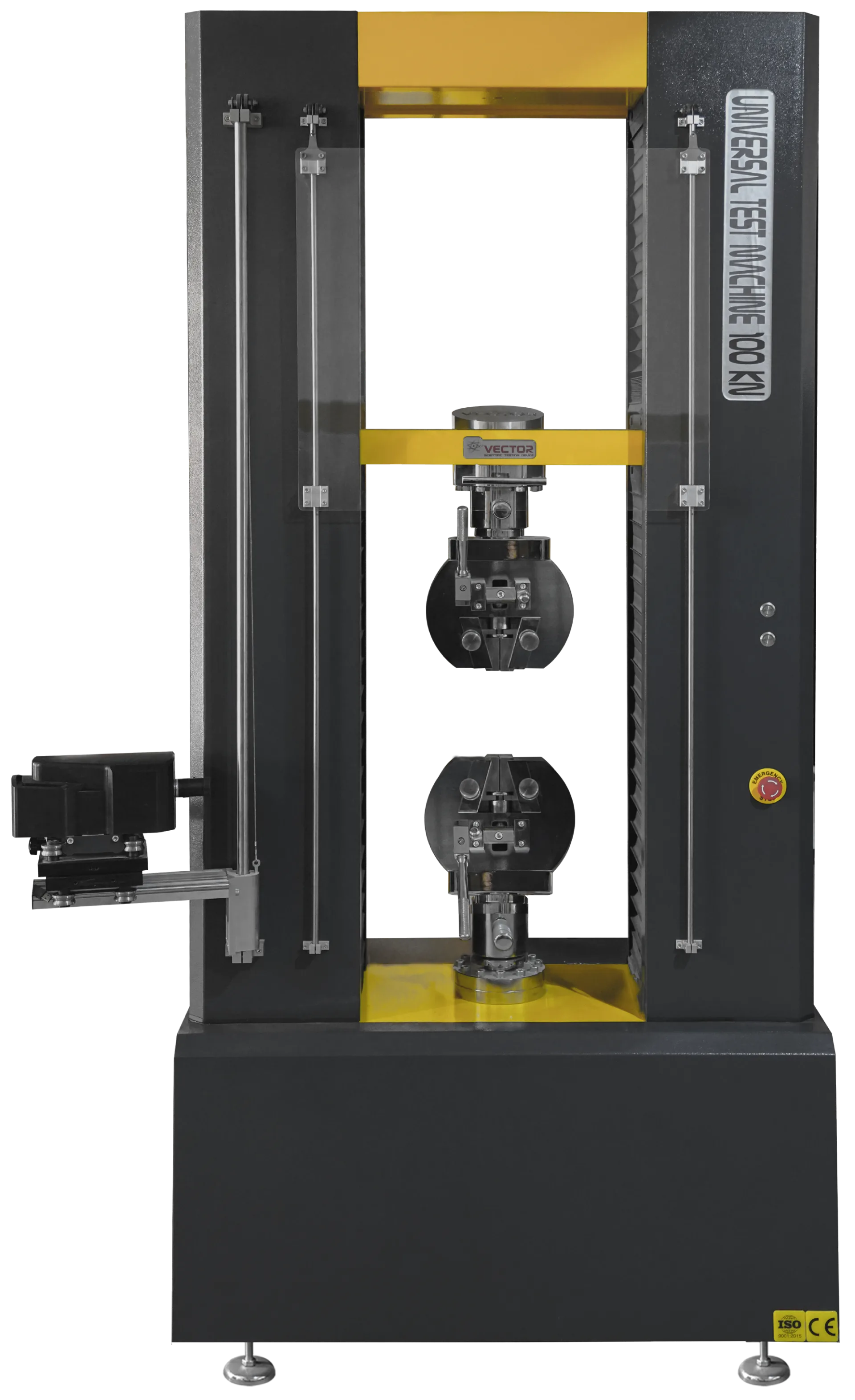
Vector Tesla Series heavy-duty dual-column UTM for tensile, compression, flexure and shear up to 300 kN — ASTM E4 / ISO 7500-1 Class 0.5 accuracy.
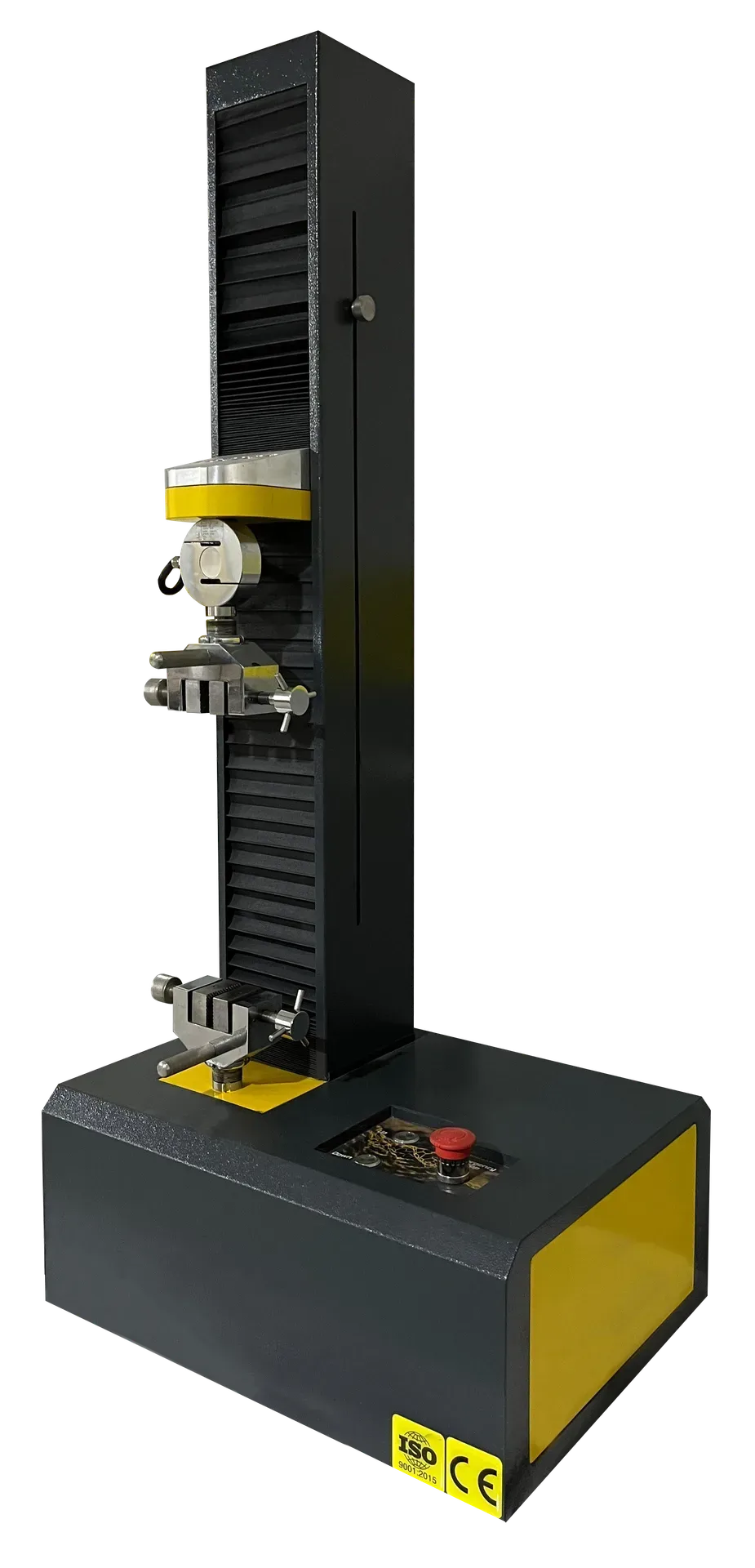
Vector Tesla Series single-column benchtop universal testing machine for high-precision, low-force material testing — ASTM E4 / ISO 7500-1 Class 0.5.
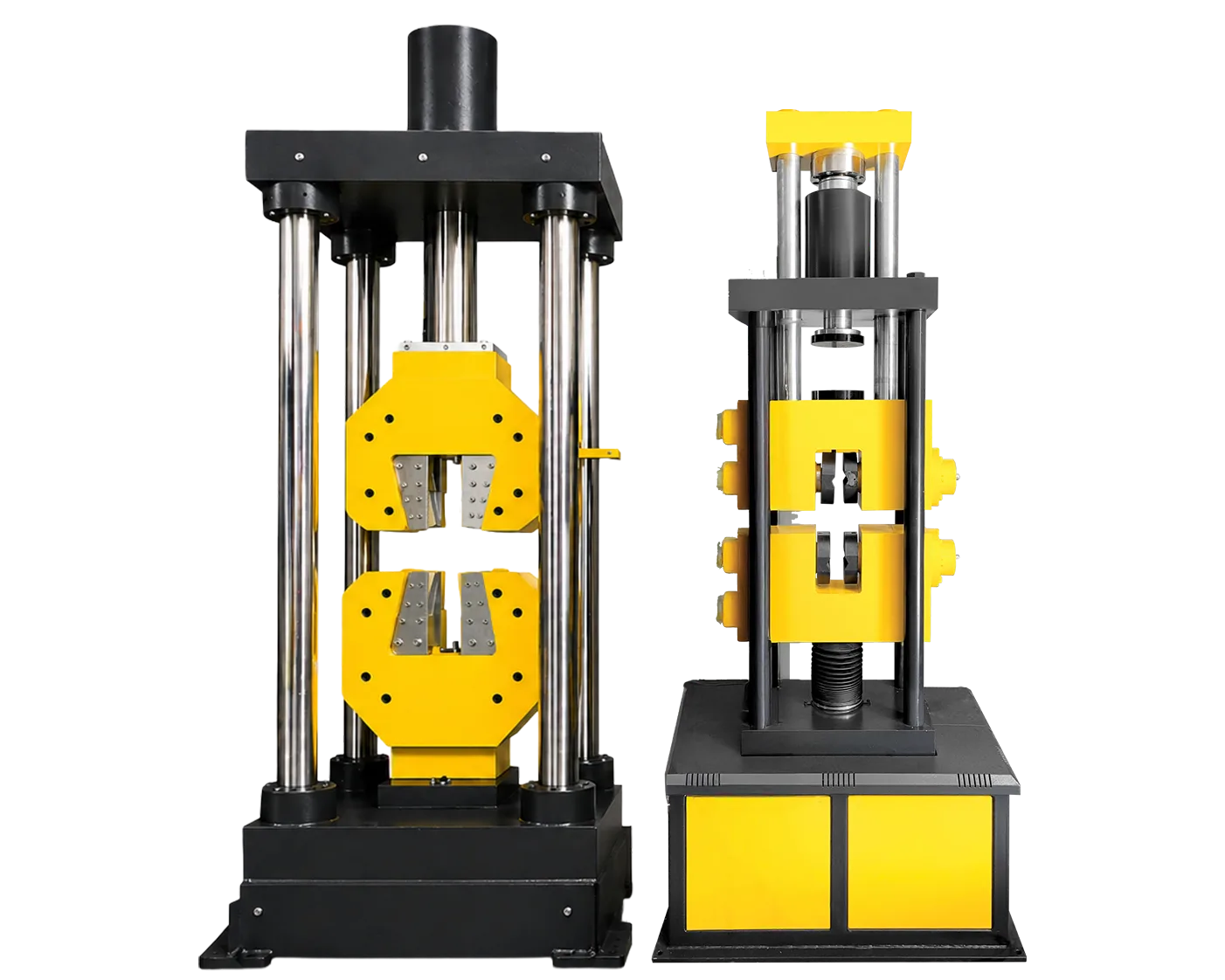
Vector Tesla Series VTR-50 servo-hydraulic UTM — 300 to 5000 kN for tensile, compression and flexural testing on metals, concrete and structural composites.
Compute yield strength Rp, tensile strength Rm, elongation A, and optional reduction of area Z from force and geometry inputs.
Open calculator →Elongation at Break
Permanent tensile strain after fracture, usually reported as percentage elongation A using original gauge length L0; depends strongly on L0/specimen proportionality.
Ultimate Tensile Strength
Maximum engineering stress σUTS = Fmax/A0 reached in a monotonic tensile test, also called tensile strength Rm in ISO metals vocabulary; necking causes true stress to exceed engineering stress afterward.
Proof Stress
Stress at a specified plastic strain offset on the engineering stress–strain curve when a distinct yield point is absent; Rp0.2 at 0.2% offset is the most common metals reporting convention.