



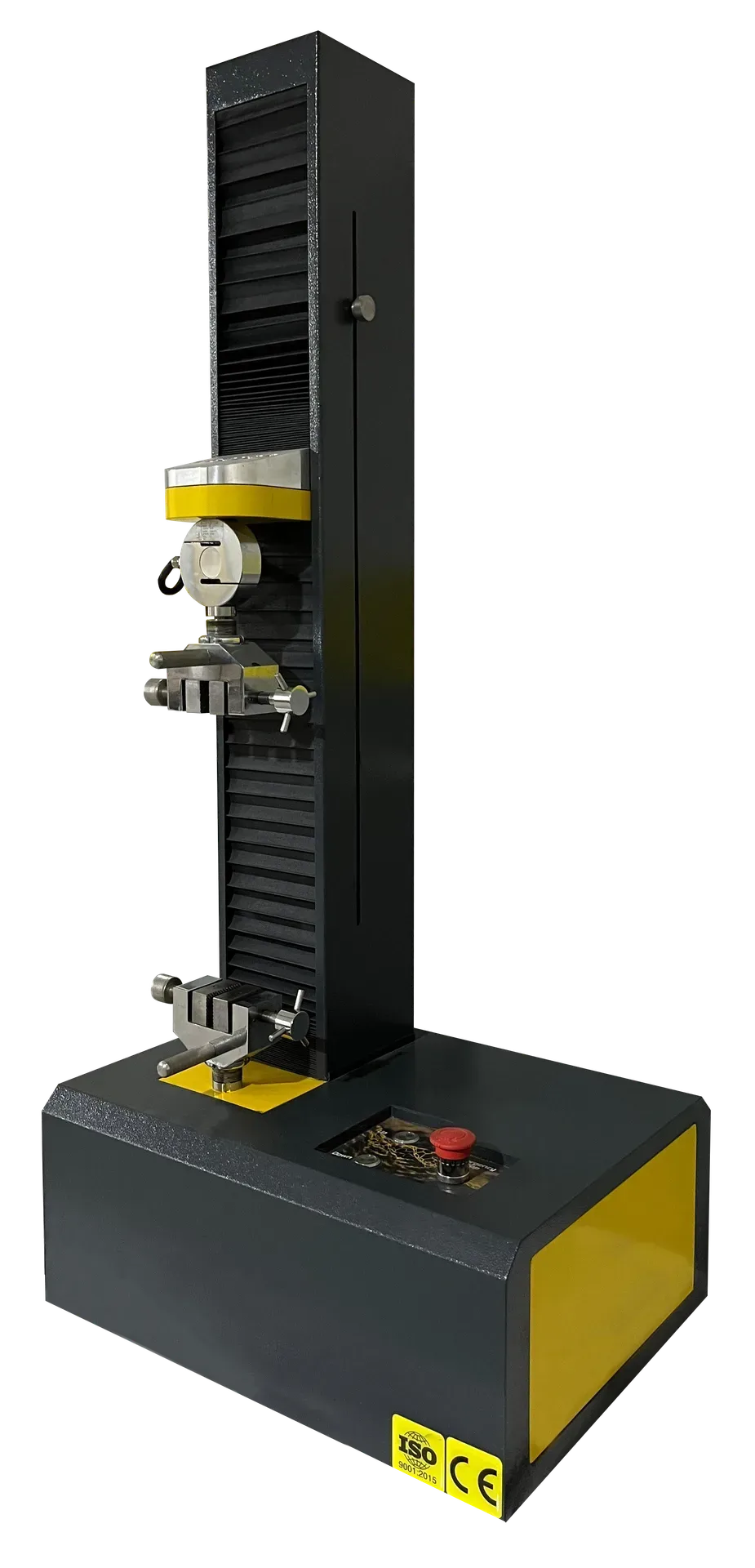
Benchtop Universal Testing Machine (0.5–2 kN)
Vector Tesla Series single-column benchtop universal testing machine for high-precision, low-force material testing — ASTM E4 / ISO 7500-1 Class 0.5.
- iso-7500-1
- astm-e4
- +3 more
View details →
Indentation hardness from a hardened steel or tungsten carbide ball indenter and applied force, evaluated by measuring the impression diameter and computing HBW or legacy BHN.
Indentation hardness from a hardened steel or tungsten carbide ball indenter and applied force, evaluated by measuring the impression diameter and computing HBW or legacy BHN.
Formula
HBW = 0.102 × 2F / (πD(D − √(D² − d²)))
F is test force in newtons, D is indenter diameter (mm), and d is mean impression diameter (mm). The constant 0.102 arises from unit conversion to the conventional HBW reporting format in ISO 6506-1.
Brinell hardness characterizes materials that are too coarse, too soft, or too heterogeneous for reliable Rockwell or superficial testing on small impressions. A spherical indenter spreads load over a relatively large area, averaging over multiple grains and second phases, which makes Brinell attractive for castings, forgings, and as-cast aluminum.
After applying the test force for the specified time, operators measure two perpendicular diameters of the spherical cap impression and average them. HBW denotes Brinell hardness using a tungsten carbide ball; older HBS (steel ball) designations should not be mixed with modern results because ball deformation changes the stress field.
Because impressions are large, Brinell requires thick, well-supported specimens and flat, machined surfaces. Edge distance and spacing between adjacent impressions must satisfy minimum multiples of indentation diameter to avoid work-hardened zones influencing neighboring tests.
Automated Brinell systems use integrated optics or scanning to measure diameter repeatably and reduce parallax error. For very soft metals, lower test forces and larger balls may be specified to keep impression diameters within the valid range defined in ISO 6506-1.
Brinell results correlate with tensile strength for some steels through empirical relationships, but such conversions are material-specific and must never replace direct tensile tests for structural design.
Vector Tesla Series single-column benchtop universal testing machine for high-precision, low-force material testing — ASTM E4 / ISO 7500-1 Class 0.5.
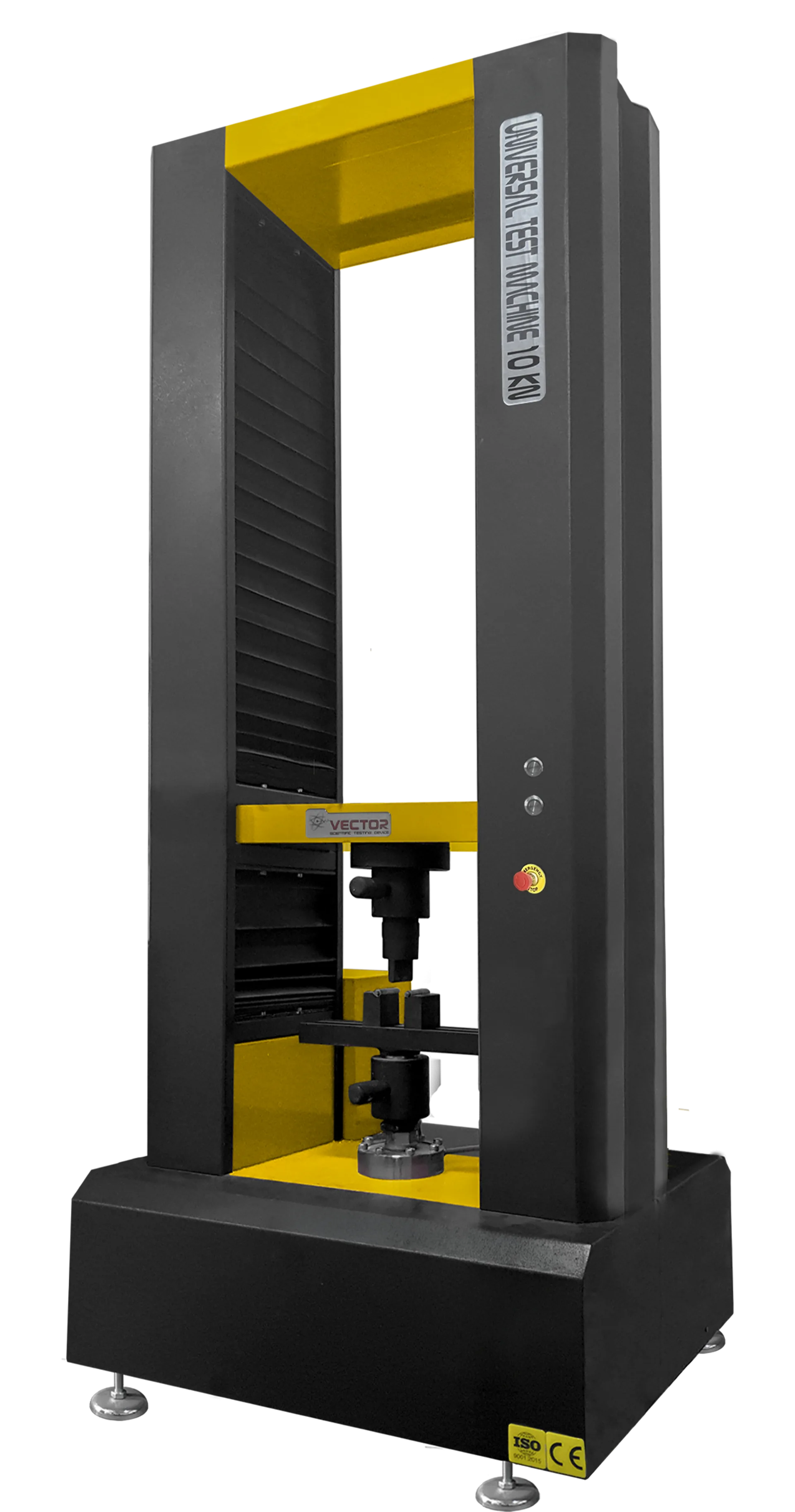
Vector Tesla Series dual-column floor-standing universal testing machine for industrial QA and R&D at 5–50 kN — ASTM E4 / ISO 7500-1 Class 0.5.
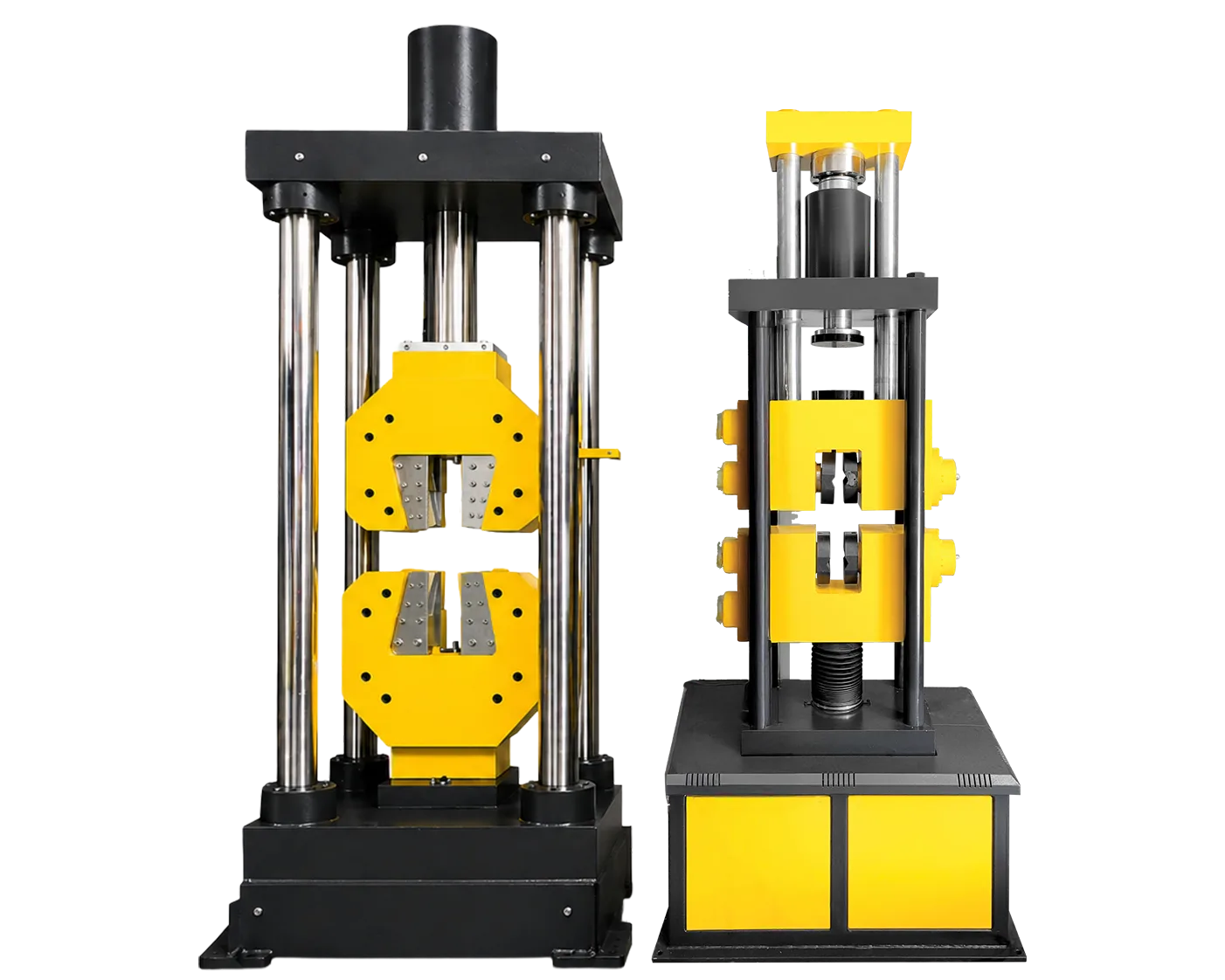
Vector Tesla Series VTR-50 servo-hydraulic UTM — 300 to 5000 kN for tensile, compression and flexural testing on metals, concrete and structural composites.
Convert between HRC, HRB, Brinell HB, Vickers HV, and Shore D using common empirical correlations (ASTM E140 family).
Open calculator →Rockwell Hardness
Indentation hardness determined by measuring residual depth after a defined preliminary force, total test force, and recovery interval, expressed on scales such as HRC, HRB, and HRA.
Vickers Hardness
Microindentation hardness from a square-based diamond pyramid indenter, reported as HV from the impression diagonal length and applied force.