



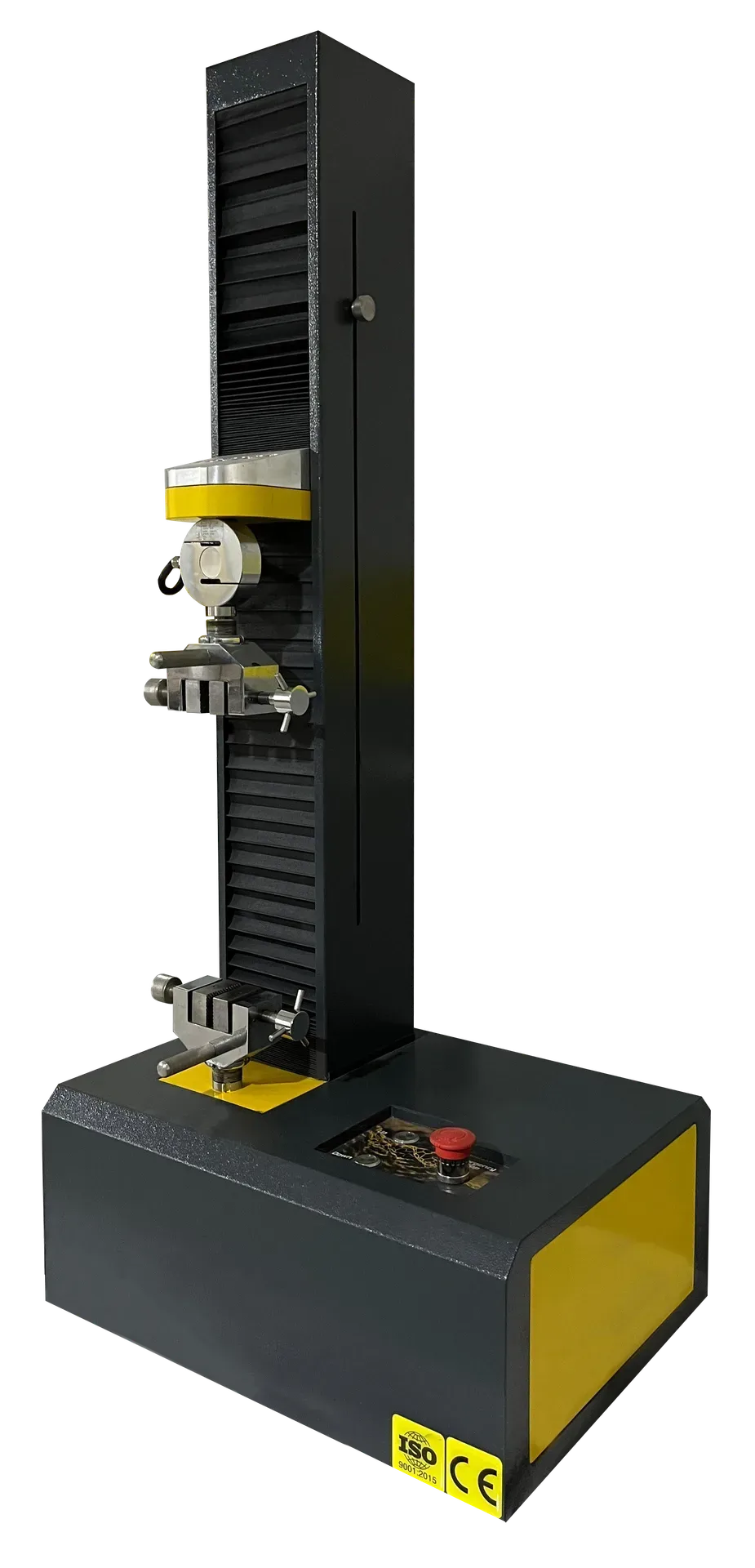
Benchtop Universal Testing Machine (0.5–2 kN)
Vector Tesla Series single-column benchtop universal testing machine for high-precision, low-force material testing — ASTM E4 / ISO 7500-1 Class 0.5.
- iso-7500-1
- astm-e4
- +3 more
View details →
Low-force Vickers or Knoop indentation to measure hardness in small volumes—thin films, coatings, weld HAZ, and microstructural constituents.
Low-force Vickers or Knoop indentation to measure hardness in small volumes—thin films, coatings, weld HAZ, and microstructural constituents.
Formula
HV = 0.1891 × F / d² (same as Vickers, low F)
At microhardness forces (typically millinewtons to newtons range per ASTM E384), the Vickers relation still applies with F and d in consistent units; surface polish and diagonal measurement uncertainty dominate error budgets.
Microhardness is not a separate material property but a test regime in which Vickers or Knoop indenters apply forces small enough that impression diagonals remain on the order of tens of micrometres. It answers questions that macro tests cannot: hardness of electroplated layers, laser-clad tracks, decarburized skin, or individual phases in multiphase alloys.
Knoop uses an elongated pyramid to produce an asymmetric impression; the long diagonal is measured to compute HK. Knoop can be advantageous on brittle materials or very thin films because it drives less subsurface plastic zone along the short axis, though interpretation still requires validated procedures.
Sample preparation is critical: 1 µm or finer final polish is common, and etching may be required to locate microstructural targets. Thermal drift during long dwells can falsify results; modern instruments correct using reference materials or environmental enclosures.
Because impressions are small, elastic springback and edge effects inflate scatter. Operators should report force, dwell, indenter type, and imaging method. Compliance to ASTM E384 or ISO 6507 annexes for low-force testing ensures comparability across laboratories.
Vector Tesla Series single-column benchtop universal testing machine for high-precision, low-force material testing — ASTM E4 / ISO 7500-1 Class 0.5.
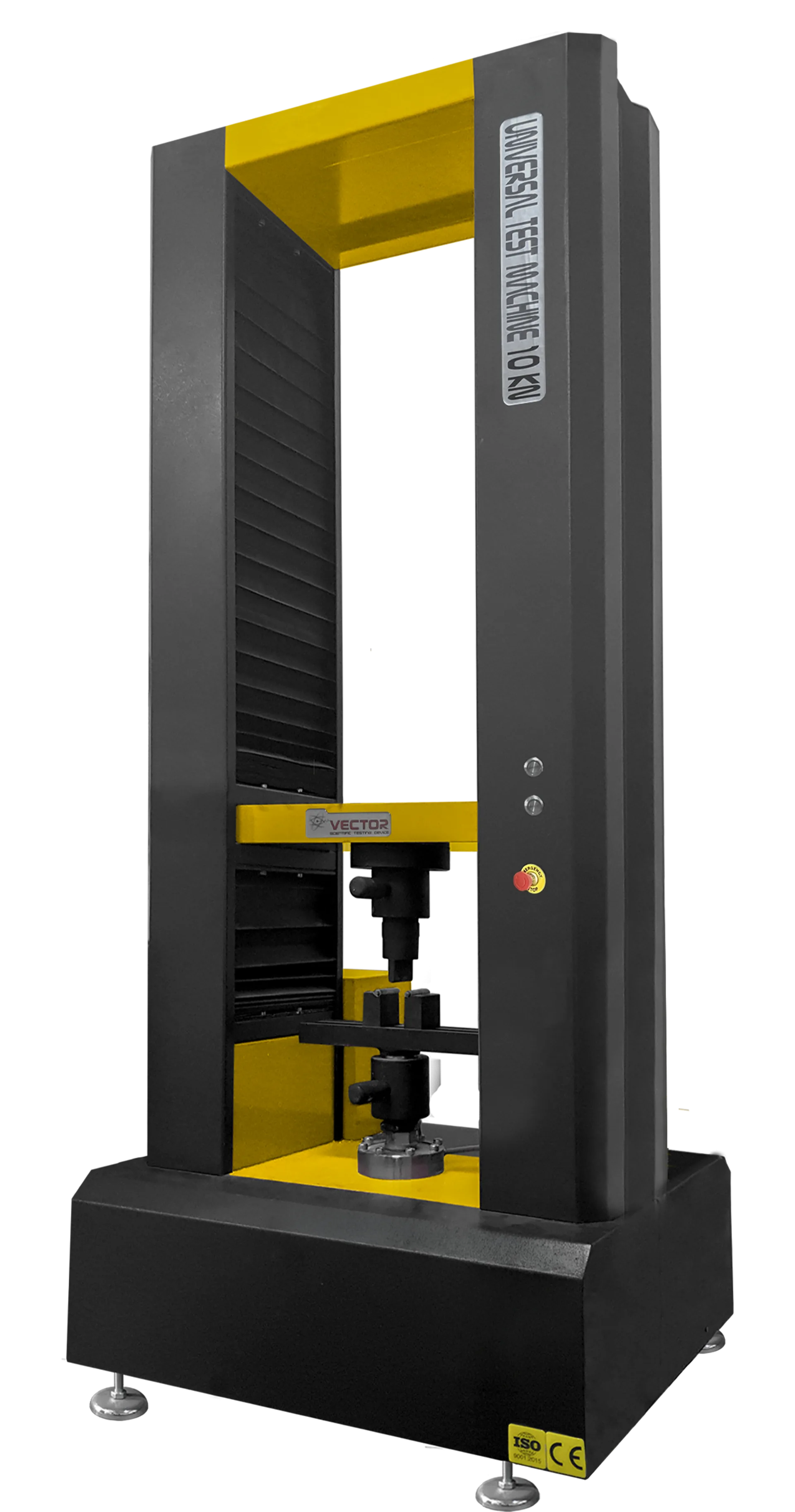
Vector Tesla Series dual-column floor-standing universal testing machine for industrial QA and R&D at 5–50 kN — ASTM E4 / ISO 7500-1 Class 0.5.
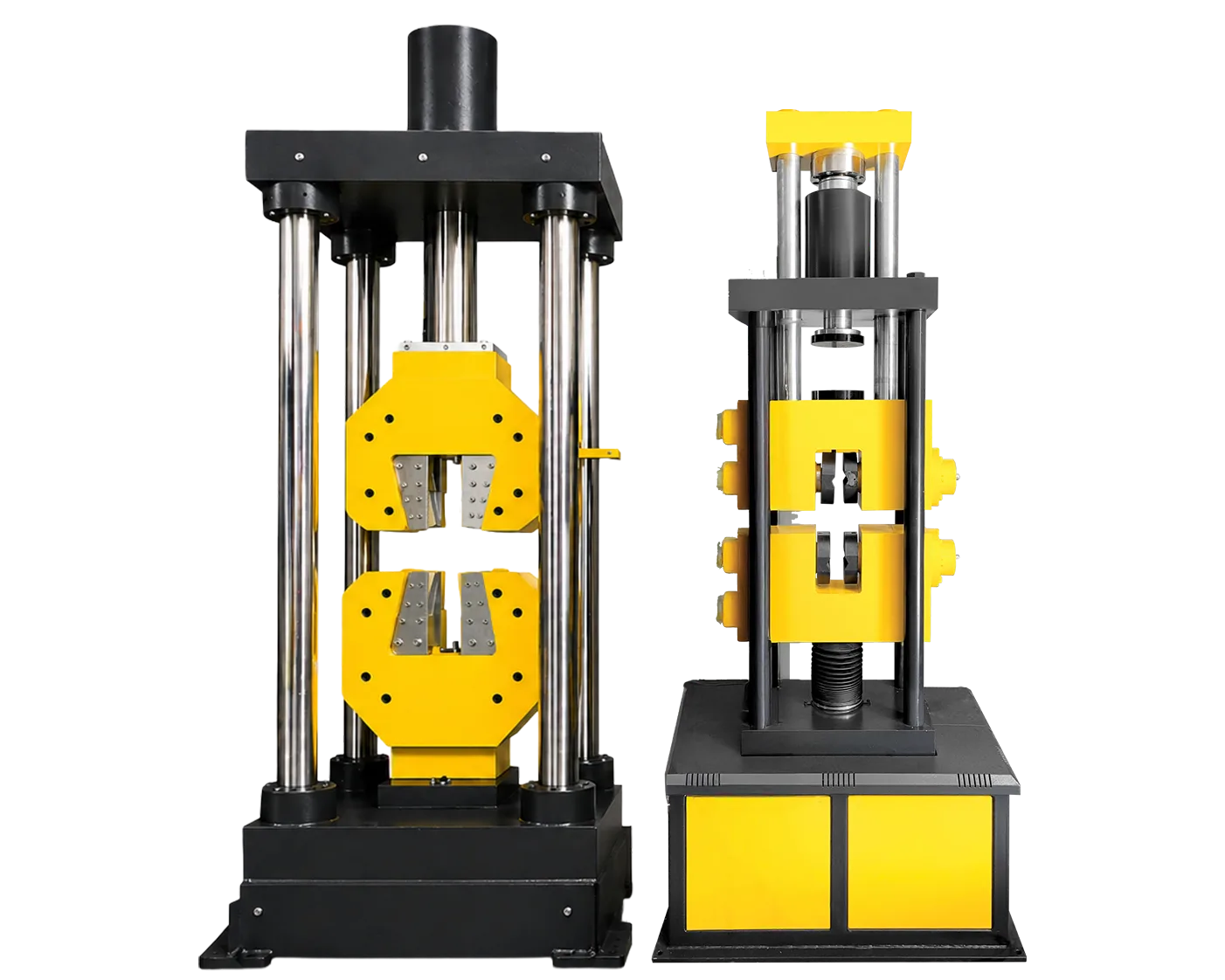
Vector Tesla Series VTR-50 servo-hydraulic UTM — 300 to 5000 kN for tensile, compression and flexural testing on metals, concrete and structural composites.
Convert between HRC, HRB, Brinell HB, Vickers HV, and Shore D using common empirical correlations (ASTM E140 family).
Open calculator →Vickers Hardness
Microindentation hardness from a square-based diamond pyramid indenter, reported as HV from the impression diagonal length and applied force.
Rockwell Hardness
Indentation hardness determined by measuring residual depth after a defined preliminary force, total test force, and recovery interval, expressed on scales such as HRC, HRB, and HRA.