



Construction & infrastructure
Building steel, bridge components, and seismic-critical members — Charpy V-notch requirements on thickness and grade.
Vector Robo Charpy system for metal notch toughness per ISO 148-1 and ASTM E23 — manual, semi-automatic or robotic lines from 300 J to 750 J with sub-zero option.
Robo Charpy impact testing — manual, semi-automatic or fully robotic metal programmes
Vector Charpy solutions
Every Charpy impact test system we deliver is scoped to your specimens, standards, throughput, and budget — not a one-size catalogue box.
A Charpy impact test system (Charpy testing machine or pendulum impact tester configured for Charpy) measures the absorbed energy required to fracture a standard notched metal bar — one of the most cited indicators of impact toughness, notch toughness, and ductile-to-brittle transition behaviour in structural steels, welds, and pressure-equipment materials.
Vector supplies complete Charpy test machine lines for quality control, weld-procedure qualification, mill certification, and research: from compact manual pendulum units to high-throughput automated Charpy installations with robotic specimen handling, optional sub-zero Charpy conditioning, and digital reporting aligned with ISO 148-1 and ASTM E23.
Whether you need a single 300 J frame for a fabrication shop or a 750 J automated cell for a steel plant, our application engineers define pendulum energy, anvil geometry, cooling strategy, and software integration around your test programme — including Charpy V-notch, Charpy U-notch, and witness-test workflows referenced in ASME, EN, and API construction codes.
Standards library
Charpy programmes are specified across structural steel, pressure vessel, pipeline, and weld qualification standards. Vector maps your required codes to machine capability, specimen support, striker geometry, and reporting fields before build.
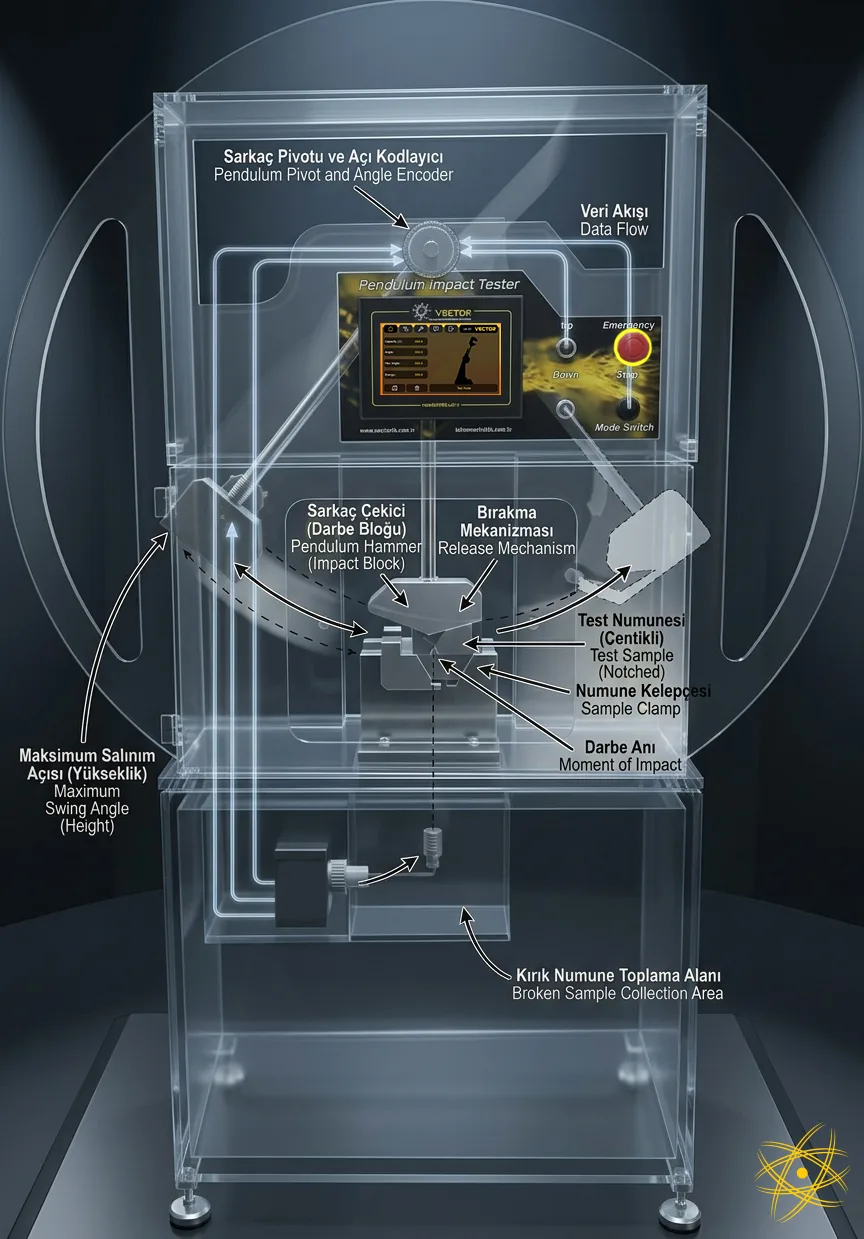
See Vector Charpy impact test systems in operation — from manual pendulum frames to automated specimen handling per ISO 148-1 and ASTM E23.

The Charpy test is a standardized pendulum impact method for evaluating how a notched metallic specimen absorbs energy when struck at high velocity — essential vocabulary for anyone specifying a Charpy machine or interpreting mill certificates.
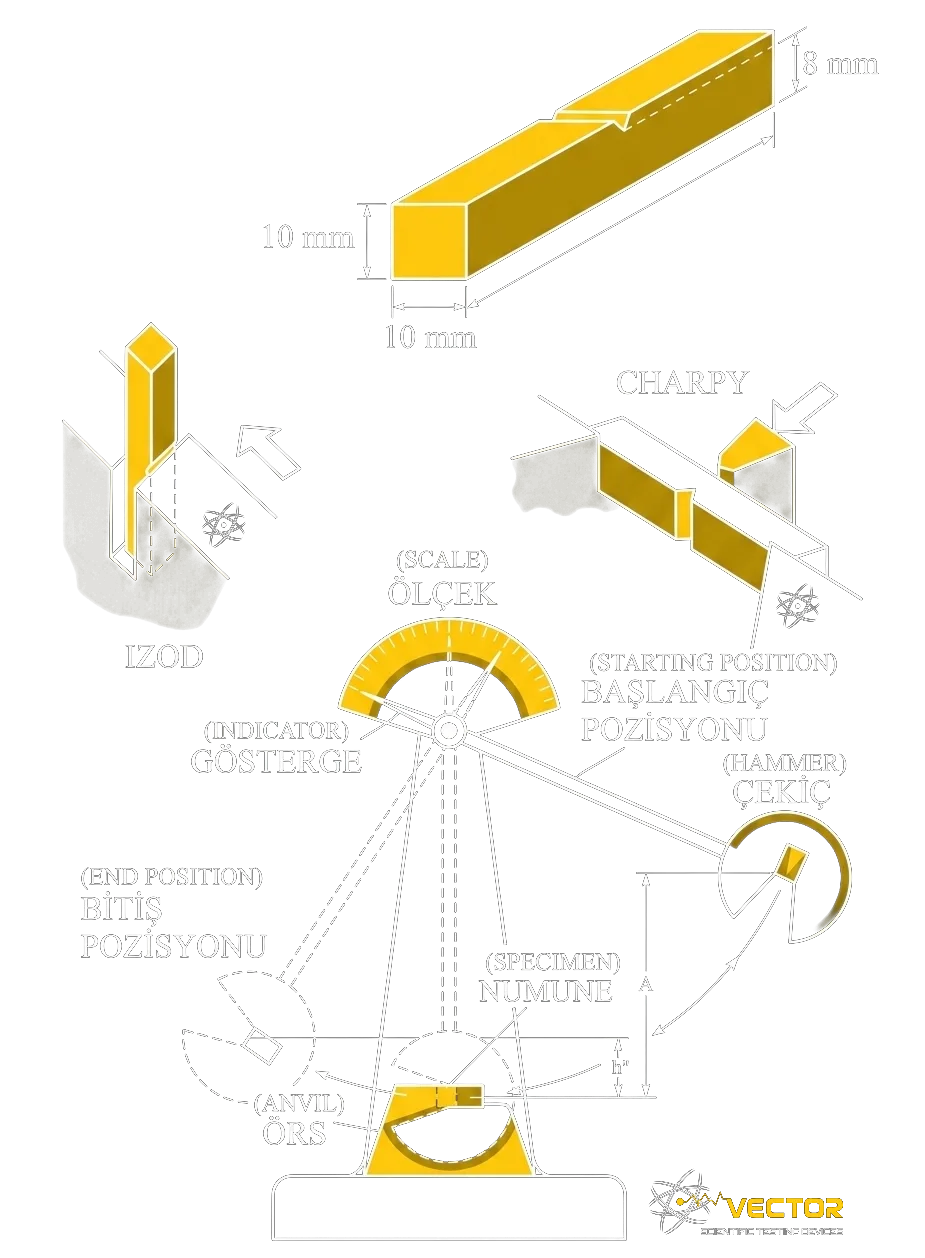
In a Charpy impact test, a machined bar with a controlled notch (typically 2 mm V-notch for KV or 5 mm U-notch for KU) rests horizontally on two anvils. A pendulum hammer is raised to a known height and released; the energy lost during fracture is the Charpy absorbed energy, reported in joules. Higher energy generally indicates greater toughness at the test temperature.
Unlike Izod testing (cantilever orientation, common for plastics), Charpy uses a horizontal three-point bend on metals — which is why procurement documents for bridges, pressure vessels, and line pipe almost always reference Charpy V-notch impact testing rather than Izod.
Structural failures in cold service, seismic events, or impact loading often initiate where local toughness is insufficient. Charpy notch toughness data help engineers select steel grades, qualify welding procedures, and prove compliance with construction and pressure-equipment codes. A modern Charpy impact test machine must therefore combine accurate energy measurement, safe high-energy operation, and repeatable specimen positioning — especially when test volumes reach hundreds of bars per day.
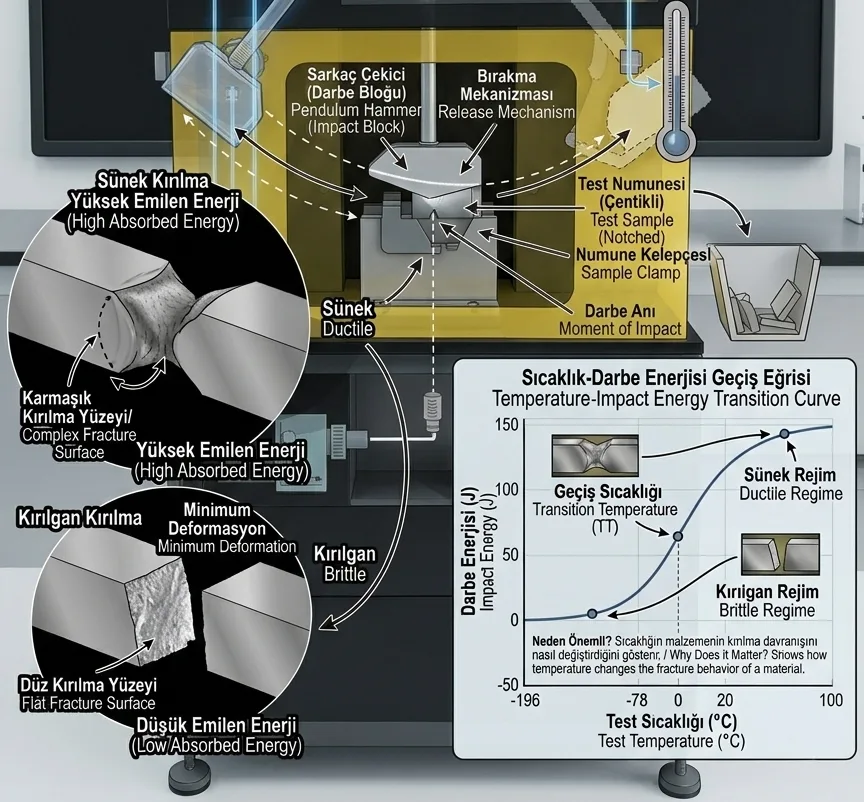
Charpy testing machines sit at the centre of metals mechanical testing whenever codes require proof of toughness at ambient or sub-zero temperatures. Typical programmes include:
Vector Charpy impact test systems support carbon and low-alloy steels, high-strength structural grades, weldments, castings, and selected non-ferrous programmes where Charpy-style bars are specified.
Building steel, bridge components, and seismic-critical members — Charpy V-notch requirements on thickness and grade.
Shop qualification of WPS/PQR packages with HAZ and weld-metal Charpy sets at mandated temperatures.
Pressure-vessel plate, forgings, and piping steels — often combined with sub-zero Charpy series for MDMT evaluation.
Hull and offshore structural steels where notch toughness at low temperature is contractually specified.
Selected high-strength steel components and safety-critical weldments with Charpy or Charpy-type acceptance limits.
Third-party laboratories running mixed-client Charpy workloads — automation and LIMS integration reduce turnaround time.
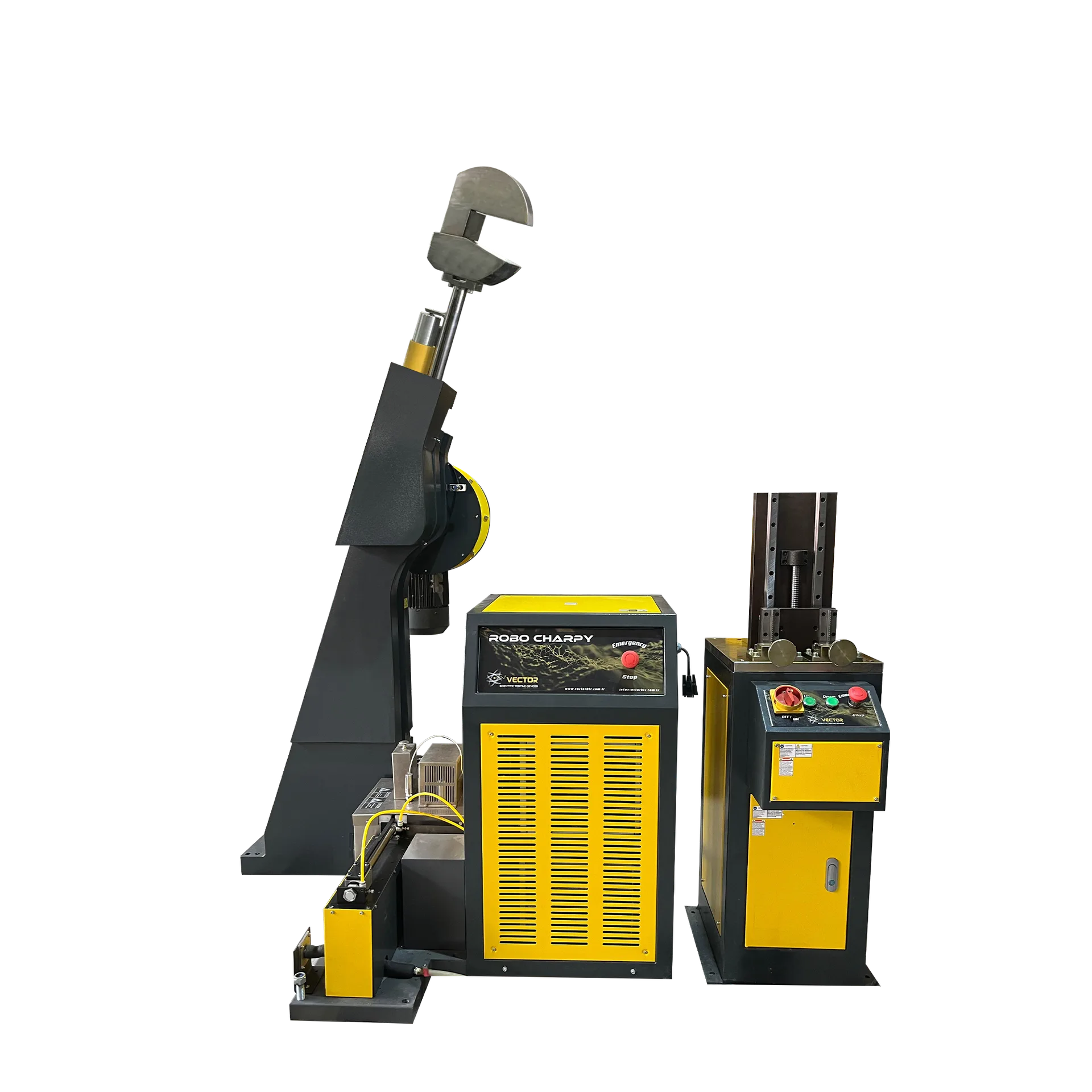
Vector does not sell Charpy equipment as a fixed catalogue SKU alone. We engineer Charpy impact test systems around your requirement — energy level, specimen volume, degree of automation, cooling method, plant layout, and the standards you must satisfy.
The message for your laboratory is simple: tell us what you must test and how fast — we design the Charpy system that fits, rather than forcing your workflow into a generic machine.
Representative building blocks on Vector Charpy lines — final specification is always project-specific.
Interchangeable hammers and frames sized for light-section steels through heavy plate and large-section Charpy bars.
Cost-effective Charpy machines for low-volume QC, education, and satellite labs — full ISO/ASTM capability without automation overhead.
Robotic magazines, automatic centreing, and batch reporting for steel plants and high-throughput test houses.
Chilled baths, transfer tooling, and timed exposure control for −40 °C, −60 °C, or programme-specific temperatures.
Guards, interlocks, and fragment containment sized for the installed pendulum energy.
Friction-corrected absorbed energy, specimen IDs, and fracture notes ready for accreditation audits.
Product brochures for pendulum impact testers and automated Charpy lines — energy ratings, configuration options, and typical metals laboratory applications.
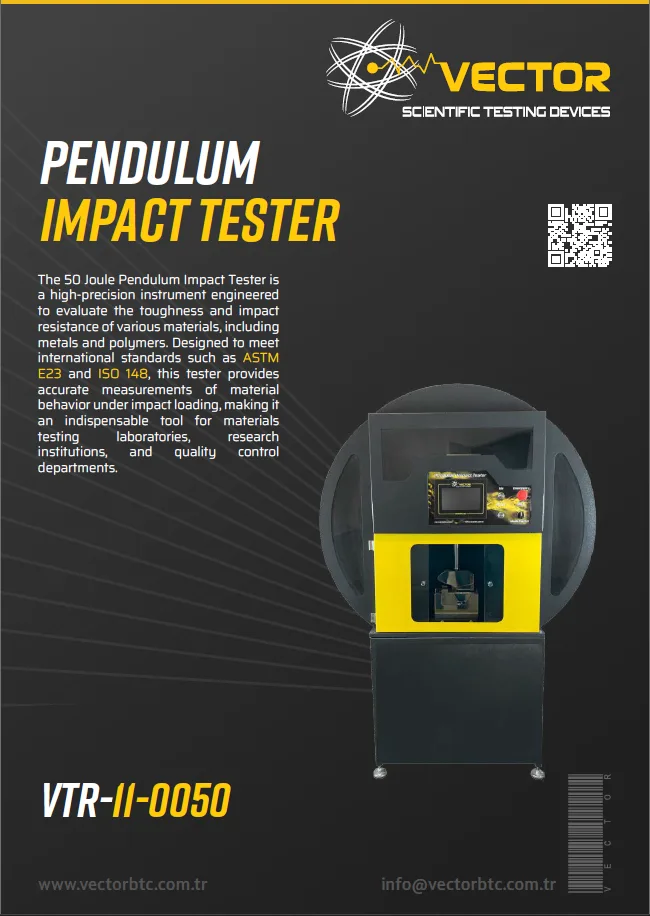
Pendulum impact tester — 50 J
Brochure (PDF)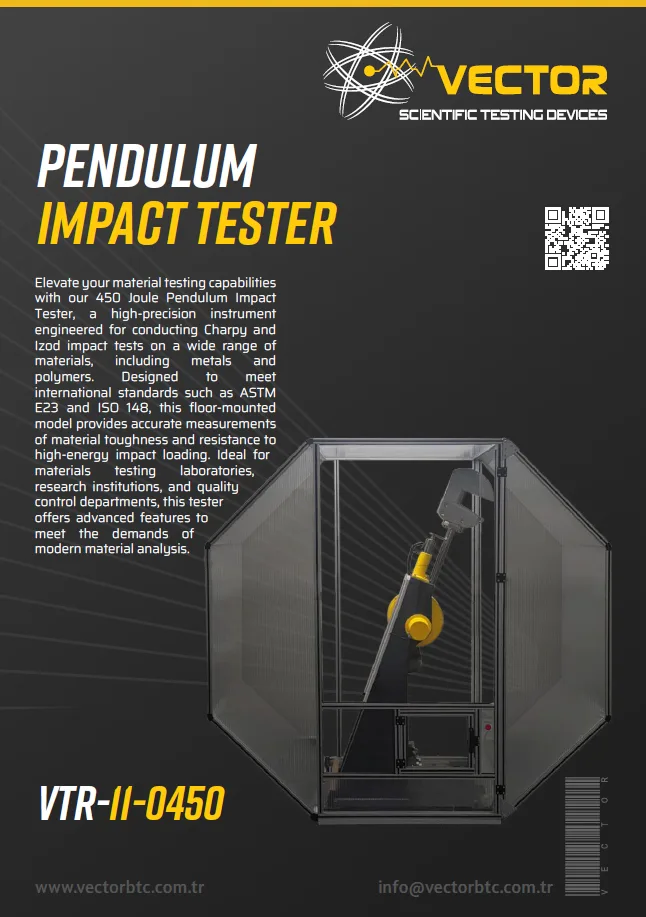
Pendulum impact tester — 450 J
Brochure (PDF)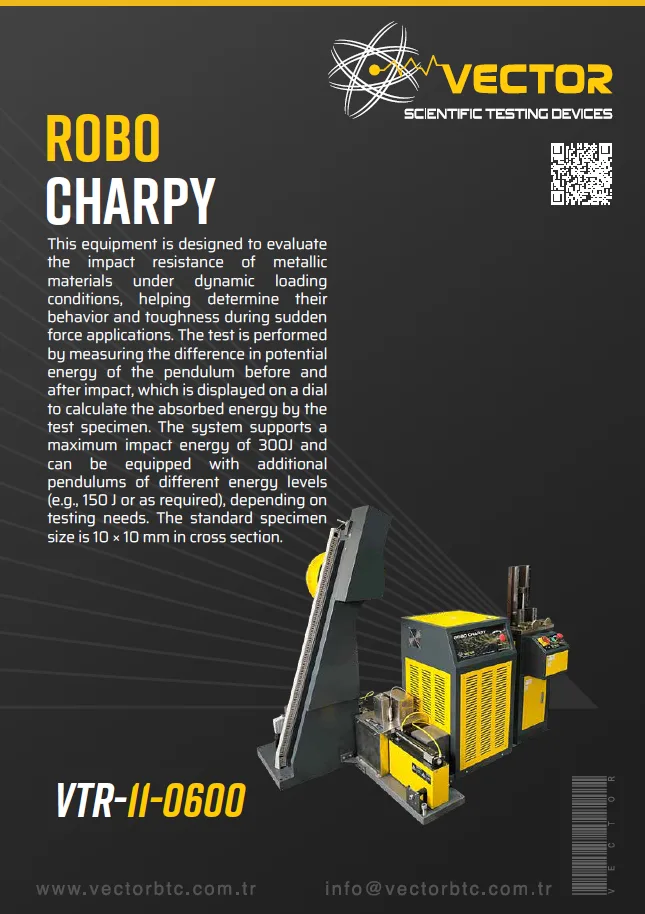
Robo Charpy automated line
Brochure (PDF)Configurable Charpy platform
Values below describe a typical high-capacity automated reference configuration (VTR-11-0600 class). Vector confirms all specifications in the project quotation.
Applications support
Share your standard, sample type, and lab workflow — we'll recommend a verified configuration you can quote against.
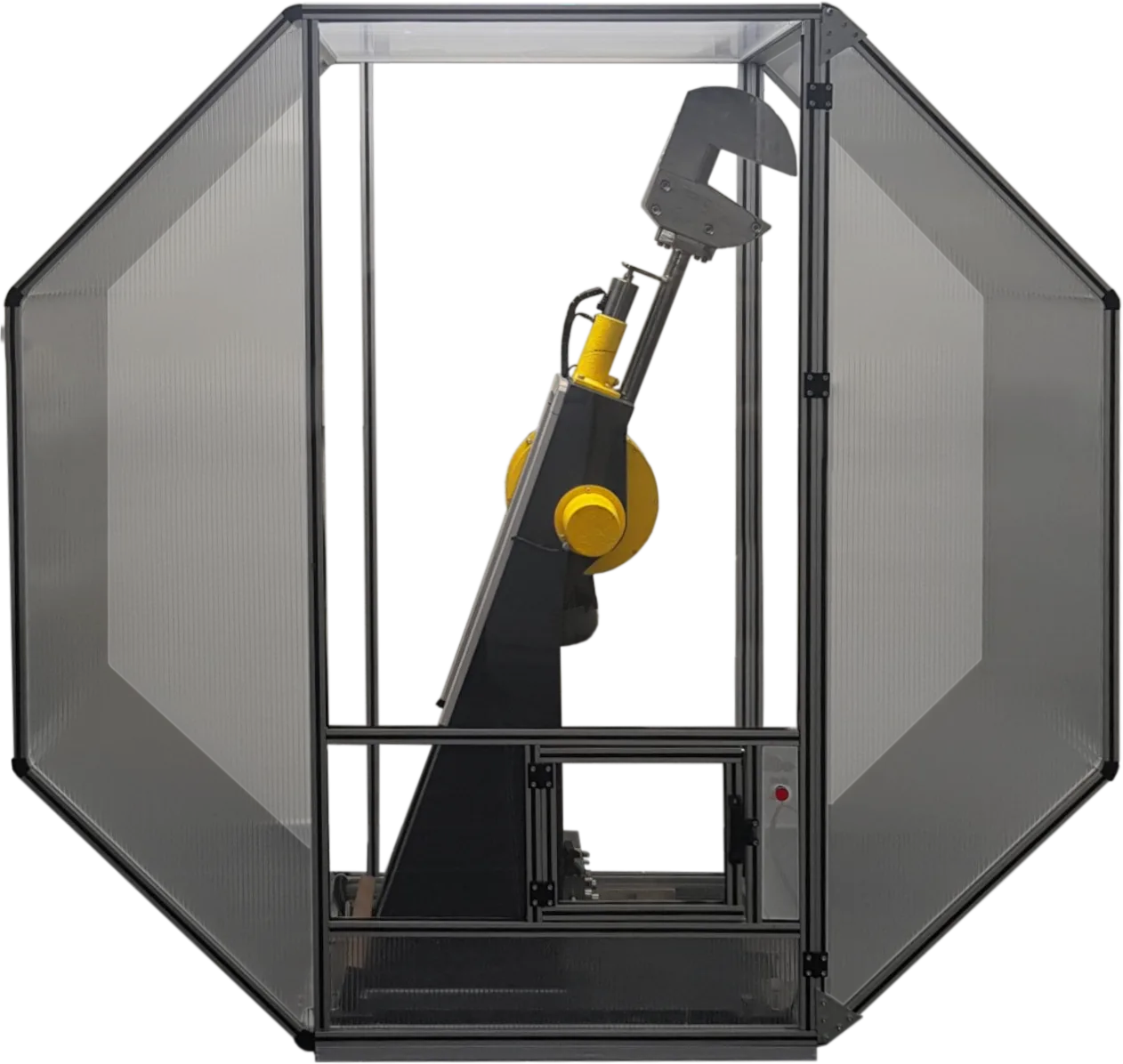
Vector pendulum impact tester for Izod absorbed energy on plastics, polymers and metals per ISO 180, ASTM D256 and ASTM E23 — from 5.5 J to 50 J.
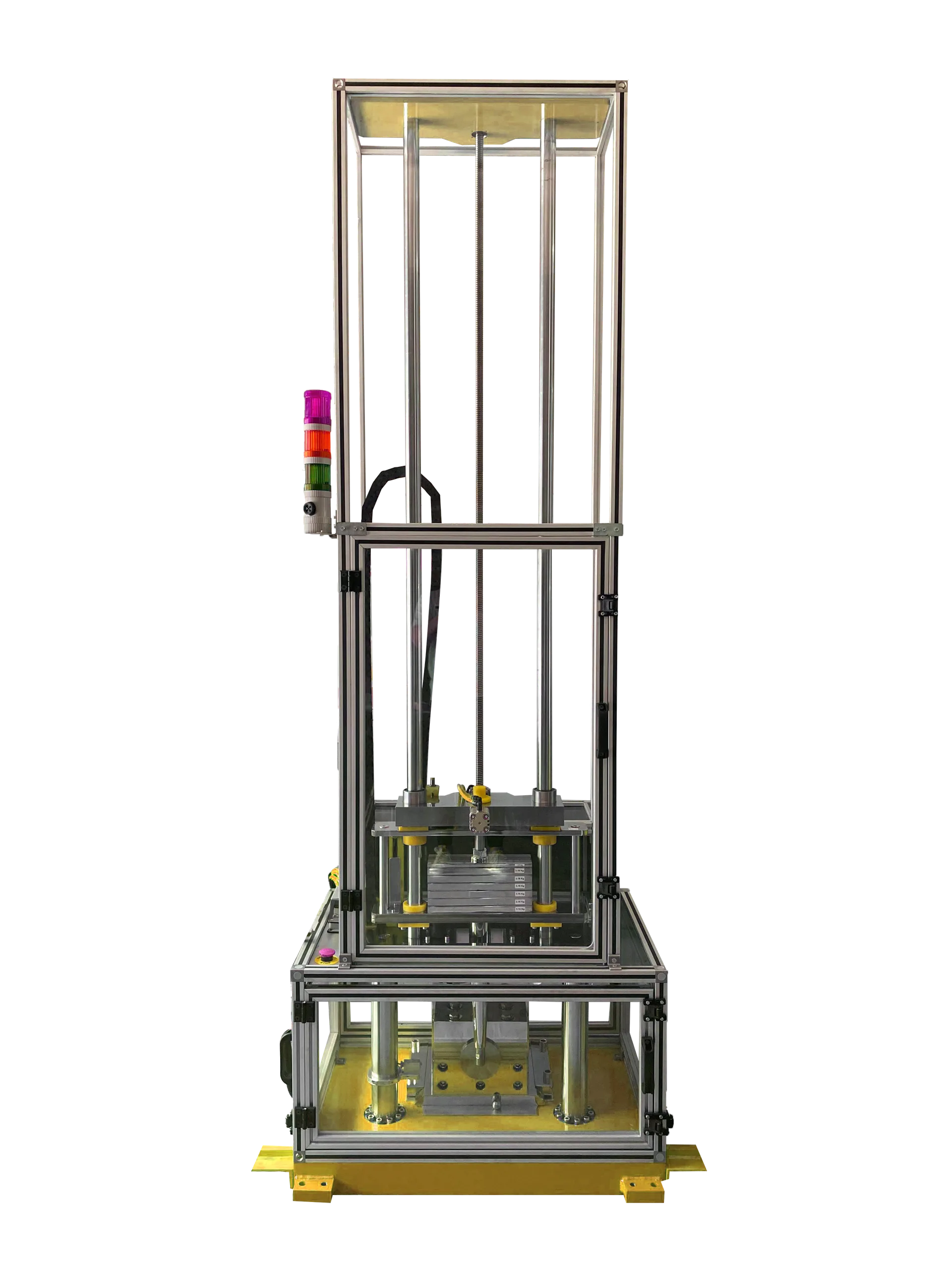
Vector VTR-17-0000 instrumented drop tower for plastics, composites and metals — 0.2 J to 2000 J impact energy, HMI control, and compliance with ASTM D3763, ASTM D7136, ISO 6603 and related standards.
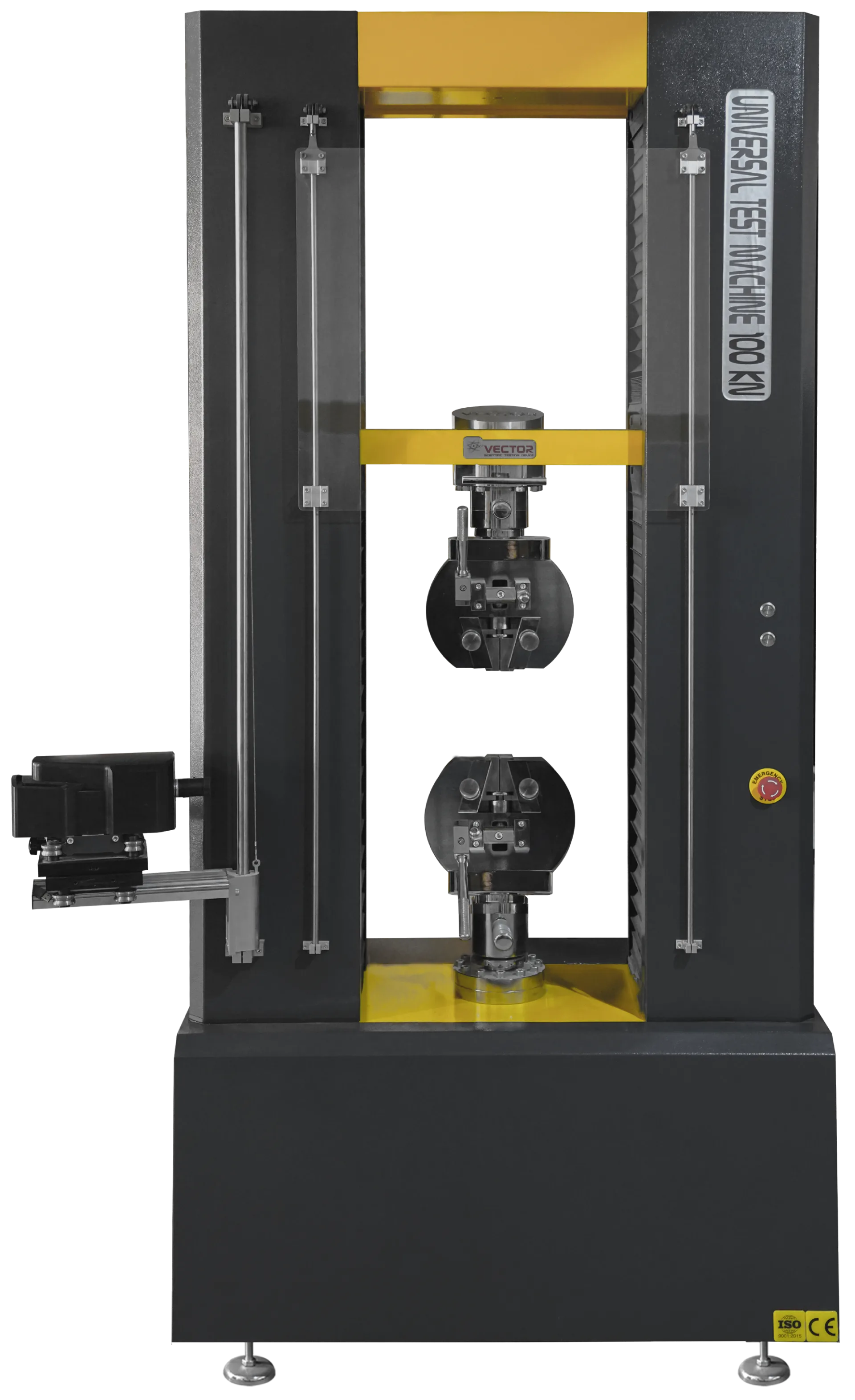
Vector Tesla Series heavy-duty dual-column UTM for tensile, compression, flexure and shear up to 300 kN — ASTM E4 / ISO 7500-1 Class 0.5 accuracy.