



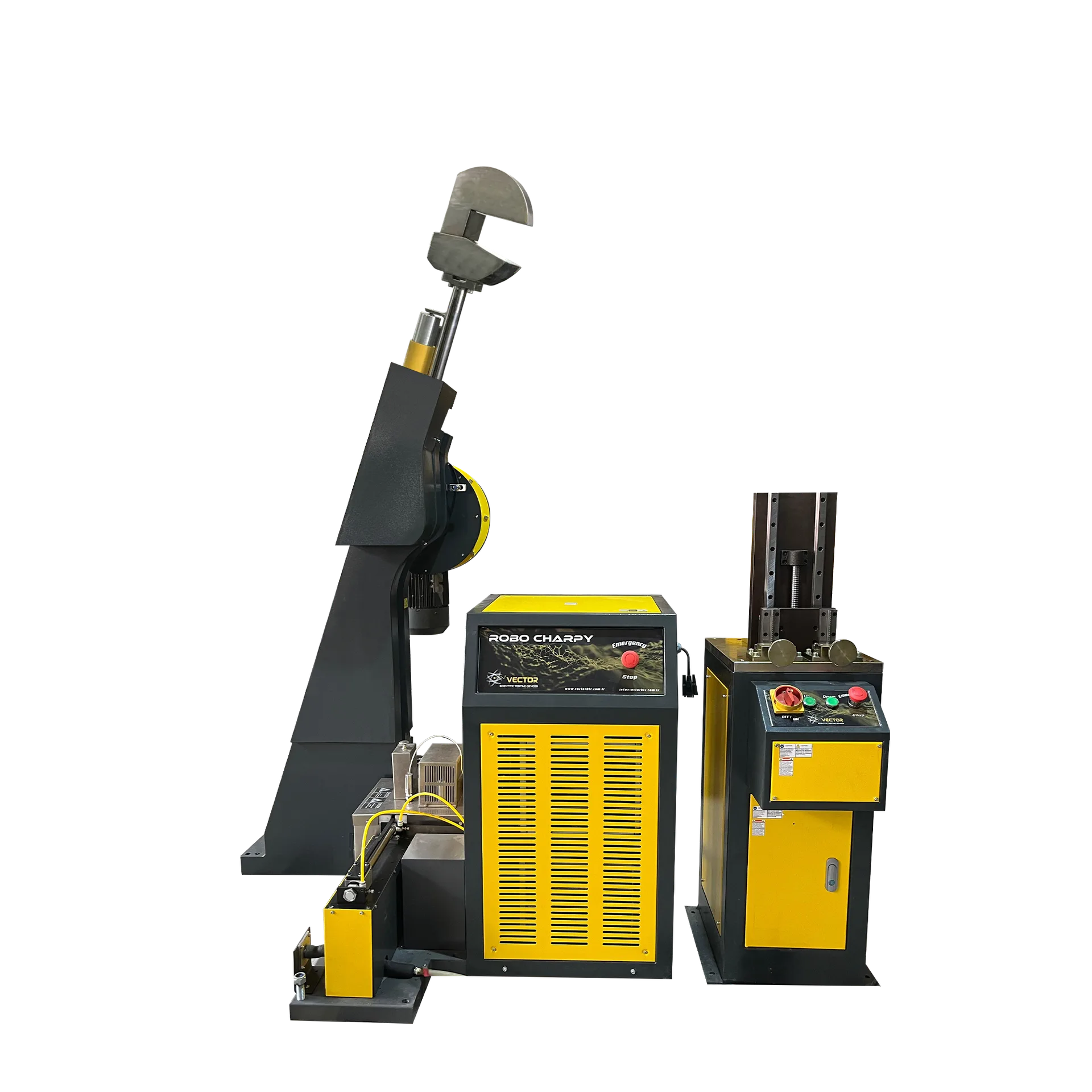
Robo Charpy Impact Testing System
Vector Robo Charpy system for metal notch toughness per ISO 148-1 and ASTM E23 — manual, semi-automatic or robotic lines from 300 J to 750 J with sub-zero option.
- iso-148-1
- astm-e23
- +1 more
View details →
Kinetic energy lost by the pendulum striker when a notched specimen fractures, reported in joules after friction corrections per Charpy or Izod methods.
Kinetic energy lost by the pendulum striker when a notched specimen fractures, reported in joules after friction corrections per Charpy or Izod methods.
Formula
KV = E0 − E1
E0 is initial pendulum energy and E1 is residual energy after fracture; ISO 148-1 / ASTM E23 define friction and geometry corrections.
Absorbed energy is the energy dissipated in notch fracture during a pendulum impact test. It is a screening toughness metric for metals and some plastics, not a direct fracture mechanics parameter.
A calibrated pendulum releases from a fixed height, strikes the specimen, and records rise after fracture. Machine software or tables convert angle/height to energy with periodic verification using certified reference specimens.
Report method (Charpy V, Izod), specimen size, and temperature. Sub-size specimens require notation per standard (e.g., KV2 for 10×10 mm Charpy).
Worn strikers, loose anvils, incorrect notch orientation, and neglecting friction calibration bias energy low or high.
Vector Robo Charpy system for metal notch toughness per ISO 148-1 and ASTM E23 — manual, semi-automatic or robotic lines from 300 J to 750 J with sub-zero option.
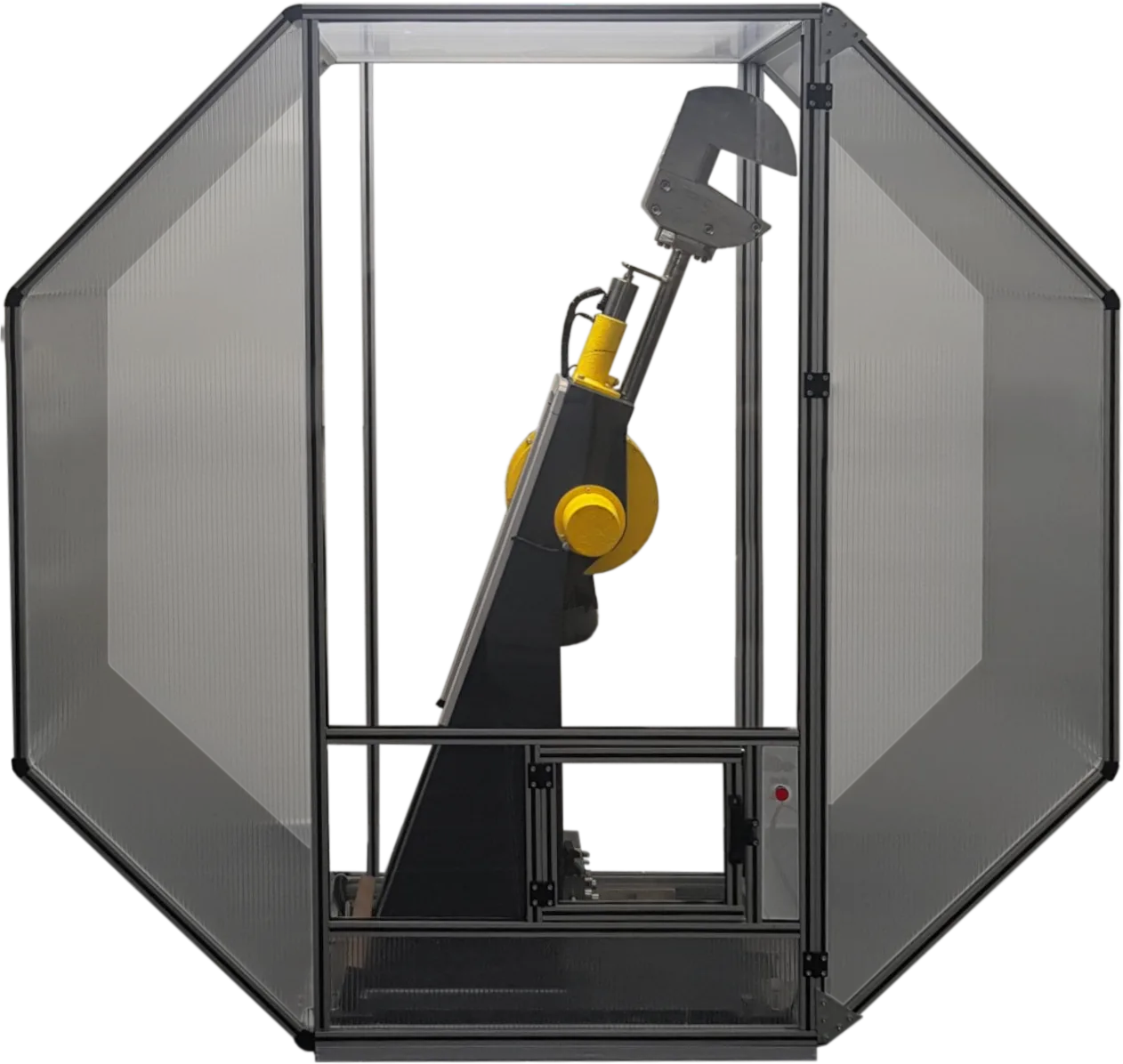
Vector pendulum impact tester for Izod absorbed energy on plastics, polymers and metals per ISO 180, ASTM D256 and ASTM E23 — from 5.5 J to 50 J.
Compute pendulum absorbed energy, machine capacity, and impact strength (kJ/m² or Izod J/m) from Charpy or Izod test inputs per ISO 148-1, ASTM E23, ISO 179-1, and ASTM D256.
Open calculator →Charpy Impact Test
A notched bar is broken by a swinging pendulum striker; absorbed energy KV or KU (joules) characterizes toughness and ductile-to-brittle transition versus temperature.
Izod Impact Test
A notched cantilever specimen is struck on its notched face by a pendulum; absorbed energy reflects toughness with a different stress distribution than Charpy.
Ductile-to-Brittle Transition
Temperature range where ferritic steels shift from high absorbed impact energy (ductile) to low energy (brittle) fracture; mapped with Charpy or Izod energy versus test temperature.