



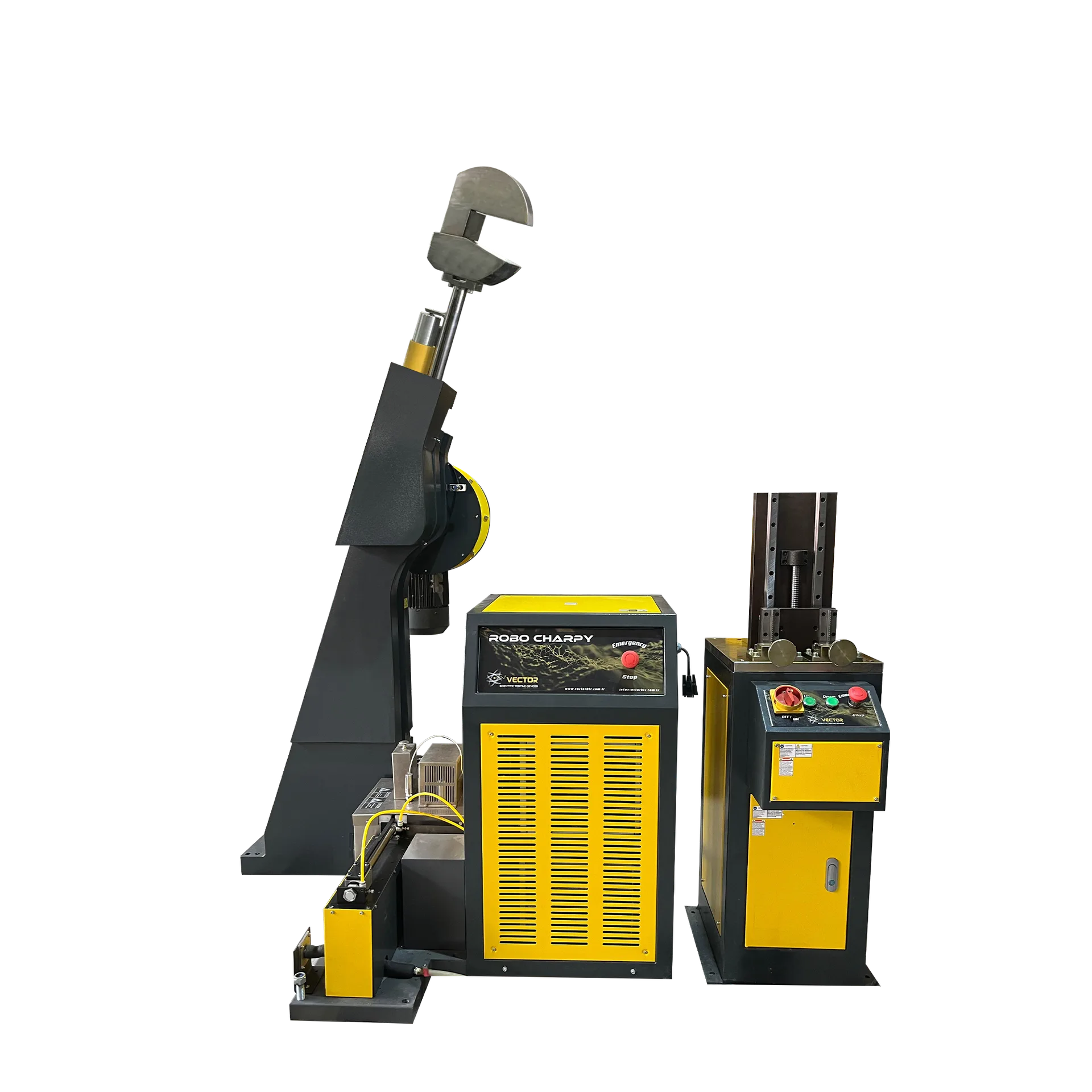
Robo Charpy Impact Testing System
Vector Robo Charpy system for metal notch toughness per ISO 148-1 and ASTM E23 — manual, semi-automatic or robotic lines from 300 J to 750 J with sub-zero option.
- iso-148-1
- astm-e23
- +1 more
View details →
Temperature range where ferritic steels shift from high absorbed impact energy (ductile) to low energy (brittle) fracture; mapped with Charpy or Izod energy versus test temperature.
Temperature range where ferritic steels shift from high absorbed impact energy (ductile) to low energy (brittle) fracture; mapped with Charpy or Izod energy versus test temperature.
The ductile-to-brittle transition (DBTT) curve shows how impact absorbed energy changes with test temperature. Ferritic steels often exhibit an upper shelf (ductile), a transition region, and a lower shelf (brittle).
Notched bars are broken in a pendulum impact tester at multiple temperatures (often after conditioning in a thermal chamber). Energy versus temperature is plotted; project specs may define acceptance at a reference temperature or require 50% shelf energy criteria.
ISO 148-1 and ASTM E23 govern specimen geometry, striker, and energy calculation. Report notch type, specimen size (KV2, etc.), and thermal soak time because transition position shifts with microstructure and strain rate.
Insufficient temperature control, misaligned specimens, and comparing energies from different notch sizes or sub-size bars without standard conversion rules.
Vector Robo Charpy system for metal notch toughness per ISO 148-1 and ASTM E23 — manual, semi-automatic or robotic lines from 300 J to 750 J with sub-zero option.
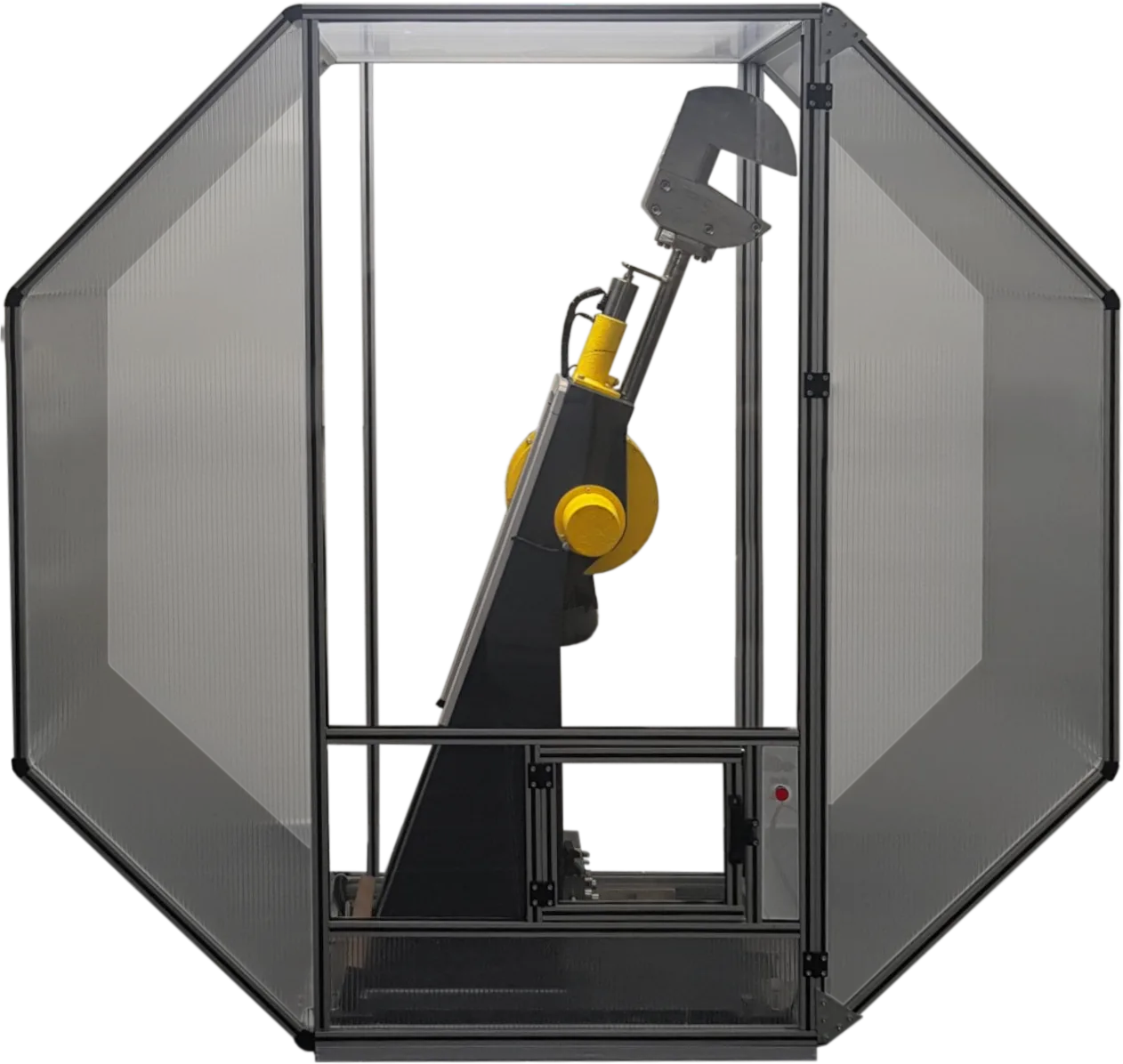
Vector pendulum impact tester for Izod absorbed energy on plastics, polymers and metals per ISO 180, ASTM D256 and ASTM E23 — from 5.5 J to 50 J.
Compute pendulum absorbed energy, machine capacity, and impact strength (kJ/m² or Izod J/m) from Charpy or Izod test inputs per ISO 148-1, ASTM E23, ISO 179-1, and ASTM D256.
Open calculator →Charpy Impact Test
A notched bar is broken by a swinging pendulum striker; absorbed energy KV or KU (joules) characterizes toughness and ductile-to-brittle transition versus temperature.
Izod Impact Test
A notched cantilever specimen is struck on its notched face by a pendulum; absorbed energy reflects toughness with a different stress distribution than Charpy.
Absorbed Impact Energy
Kinetic energy lost by the pendulum striker when a notched specimen fractures, reported in joules after friction corrections per Charpy or Izod methods.