



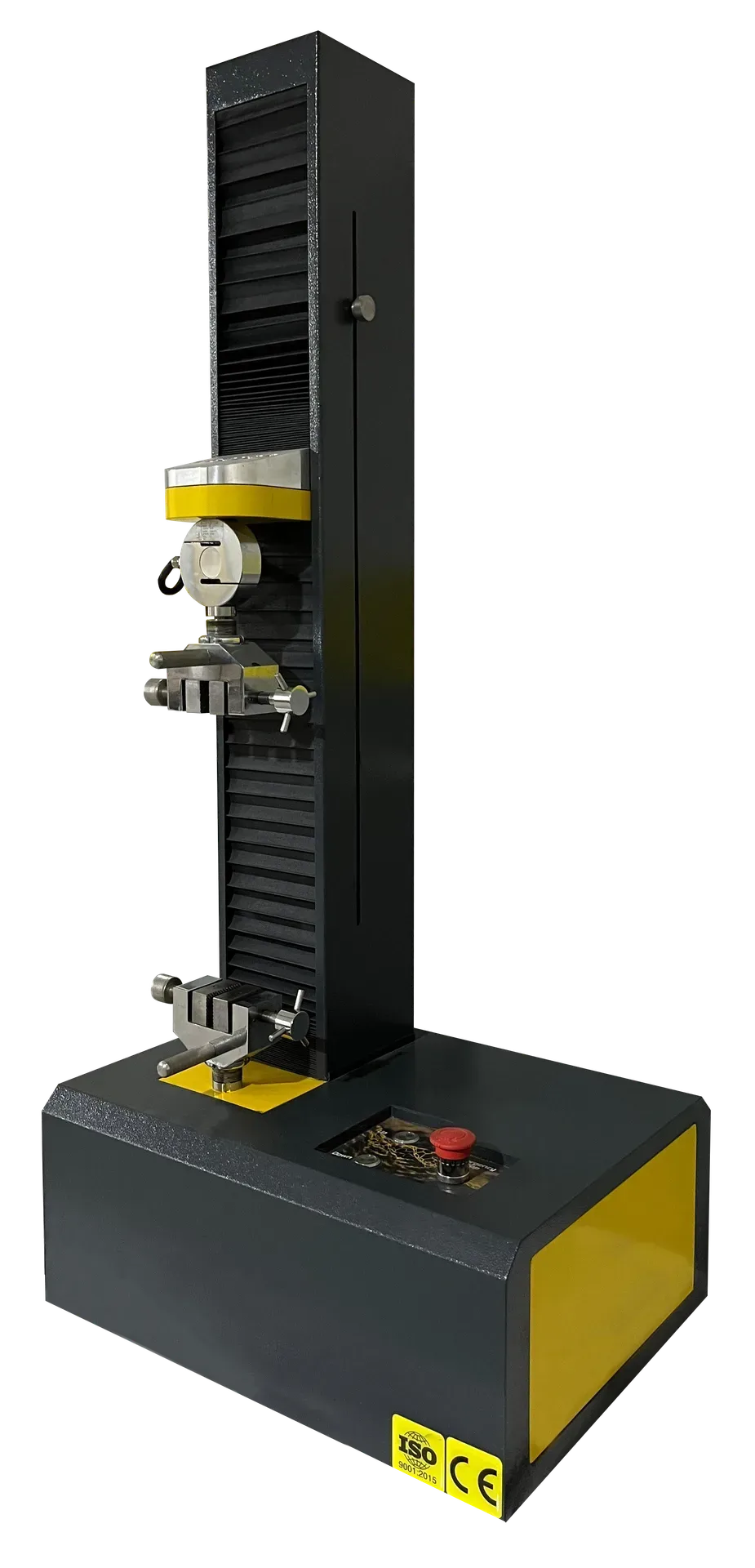
Benchtop Universal Testing Machine (0.5–2 kN)
Vector Tesla Series single-column benchtop universal testing machine for high-precision, low-force material testing — ASTM E4 / ISO 7500-1 Class 0.5.
- iso-7500-1
- astm-e4
- +3 more
View details →
Maximum engineering stress σUTS = Fmax/A0 reached in a monotonic tensile test, also called tensile strength Rm in ISO metals vocabulary; necking causes true stress to exceed engineering stress afterward.
Maximum engineering stress σUTS = Fmax/A0 reached in a monotonic tensile test, also called tensile strength Rm in ISO metals vocabulary; necking causes true stress to exceed engineering stress afterward.
Formula
Rm = Fmax / A0
Fmax is maximum force recorded and A0 is the original cross-sectional area of the parallel length. After necking begins, engineering stress drops while true stress in the neck continues to rise.
Ultimate tensile strength (UTS), or Rm in ISO terminology, is the peak engineering stress achieved before fracture in a standard tensile test. It reflects the balance between strain hardening (raising flow stress) and geometric softening from necking (reducing load-bearing area in the engineering definition).
For ductile metals, UTS occurs shortly after diffuse necking localizes into a sharp neck. The post-UTS descending branch of the engineering curve does not mean the material is weakening in a physical sense—true stress continues increasing until fracture when defined with instantaneous area.
UTS is a convenient single-number comparator for alloy development and incoming inspection, but it is not a safe “failure stress” for design: local stress concentrations, cyclic loading, and environmental exposure can cause failure far below UTS.
Specimen geometry (sheet vs round), strain rate, and temperature shift UTS. Thin sheet tests may show slightly different Rm than machined round bars due to texture and stress triaxiality in the neck.
Vector Tesla Series single-column benchtop universal testing machine for high-precision, low-force material testing — ASTM E4 / ISO 7500-1 Class 0.5.
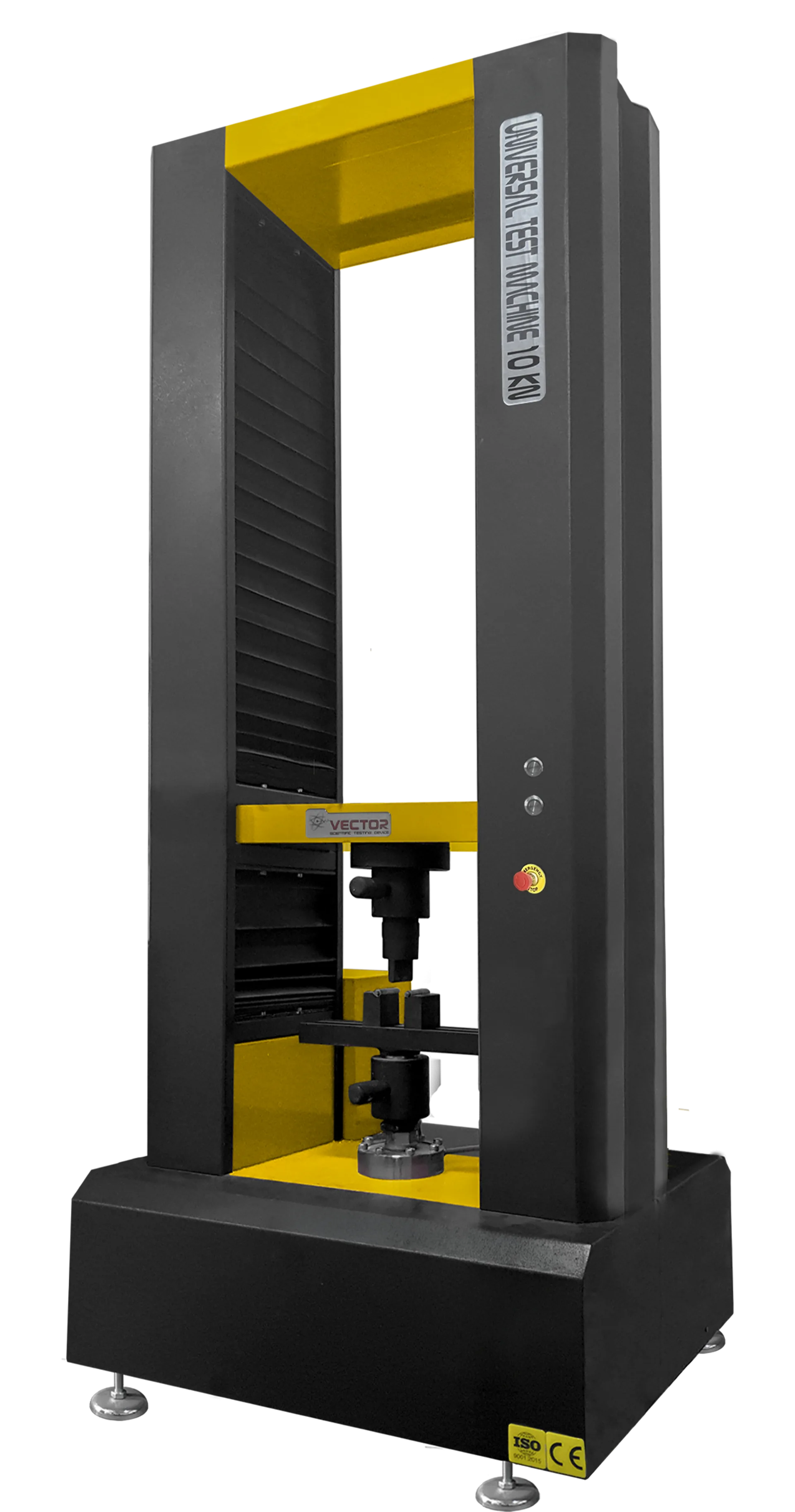
Vector Tesla Series dual-column floor-standing universal testing machine for industrial QA and R&D at 5–50 kN — ASTM E4 / ISO 7500-1 Class 0.5.
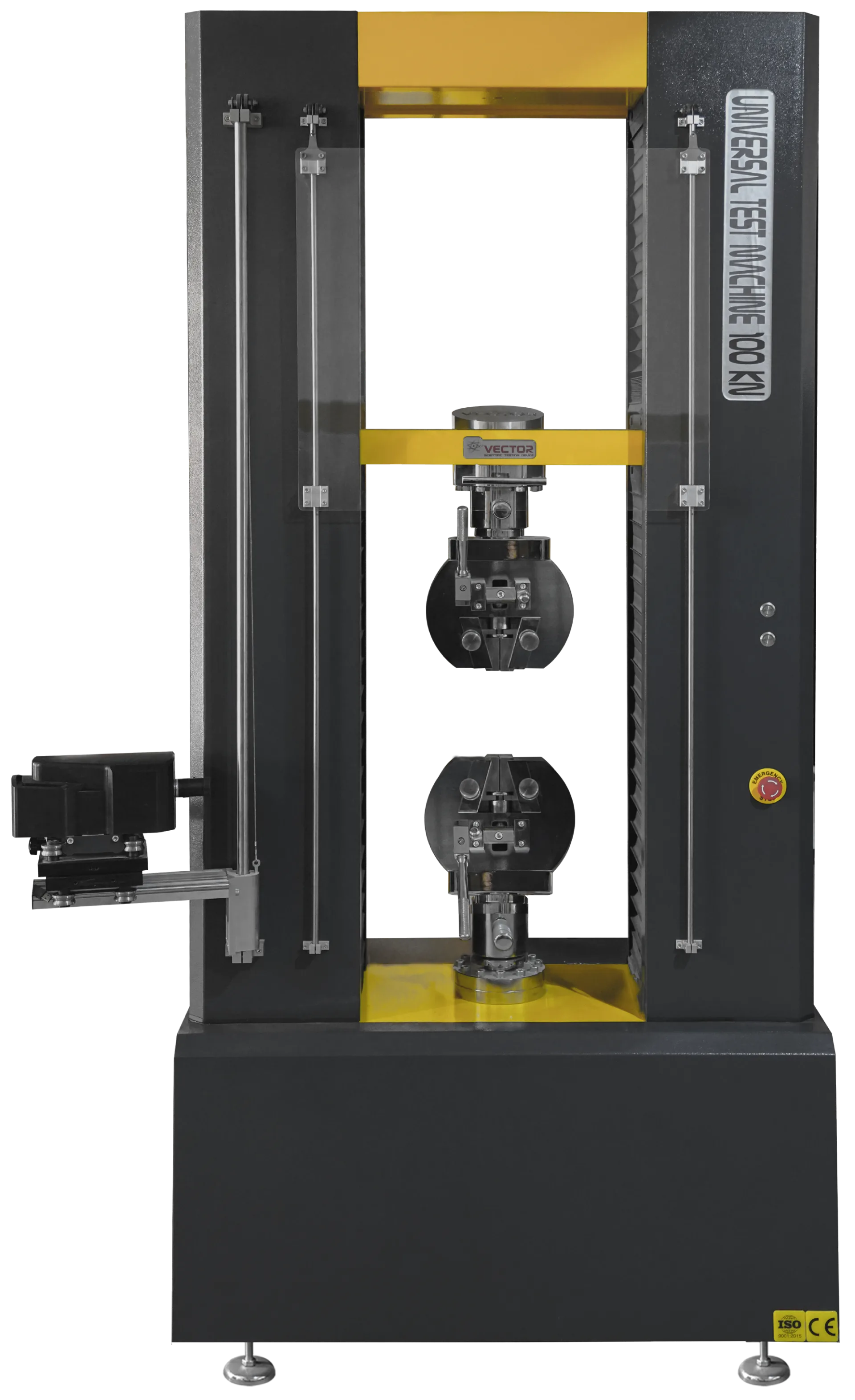
Vector Tesla Series heavy-duty dual-column UTM for tensile, compression, flexure and shear up to 300 kN — ASTM E4 / ISO 7500-1 Class 0.5 accuracy.
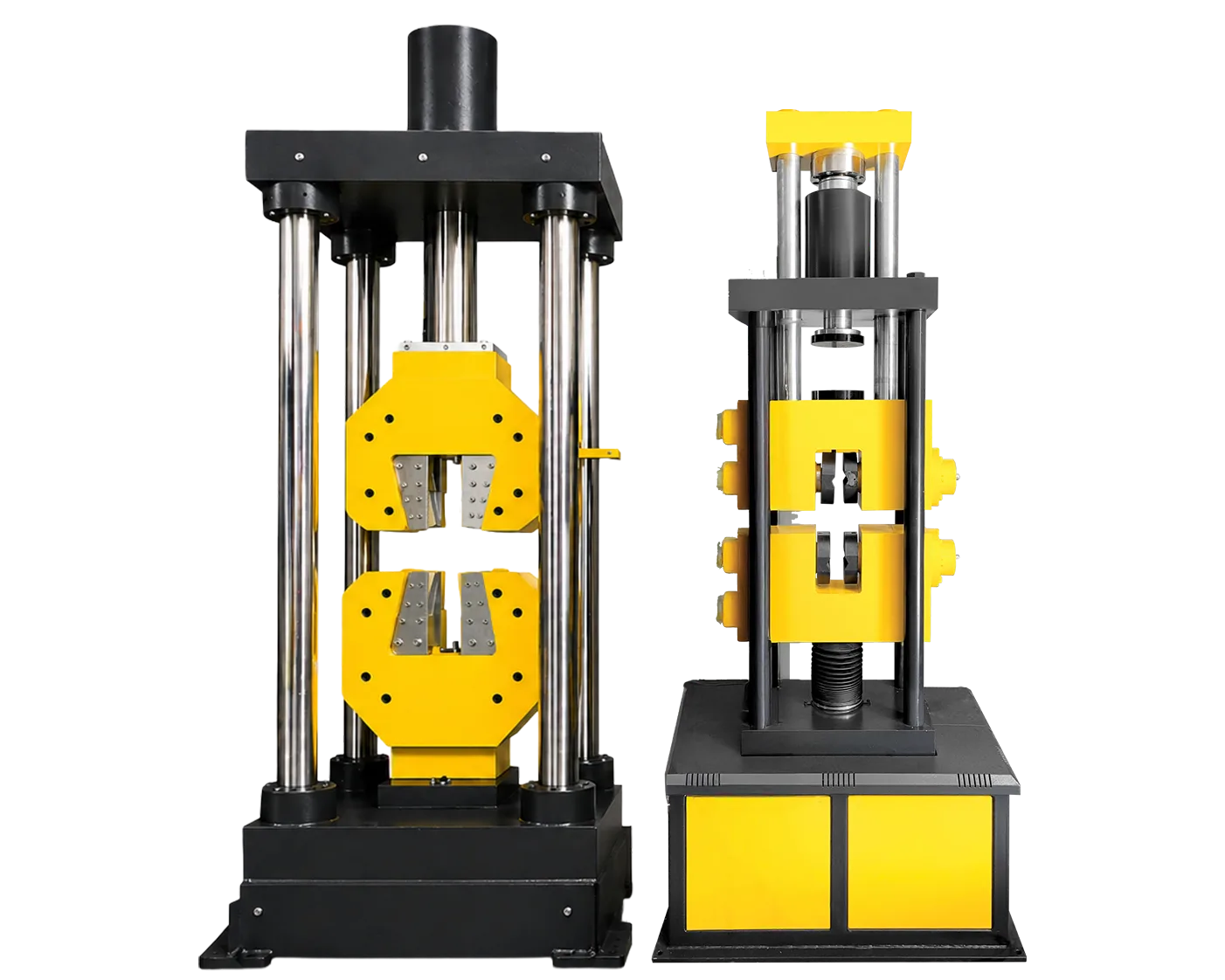
Vector Tesla Series VTR-50 servo-hydraulic UTM — 300 to 5000 kN for tensile, compression and flexural testing on metals, concrete and structural composites.
Compute yield strength Rp, tensile strength Rm, elongation A, and optional reduction of area Z from force and geometry inputs.
Open calculator →Yield Strength
The stress at which a material begins to deform plastically under monotonic loading; metals are often reported as Rp0.2 using the 0.2% plastic strain offset on the engineering stress–strain curve.
Elongation at Break
Permanent tensile strain after fracture, usually reported as percentage elongation A using original gauge length L0; depends strongly on L0/specimen proportionality.
Stress–Strain Curve
The graph of stress versus strain in a tensile or compression test; engineering curves use original area A0, while true curves use instantaneous area and reveal continued hardening after necking.