



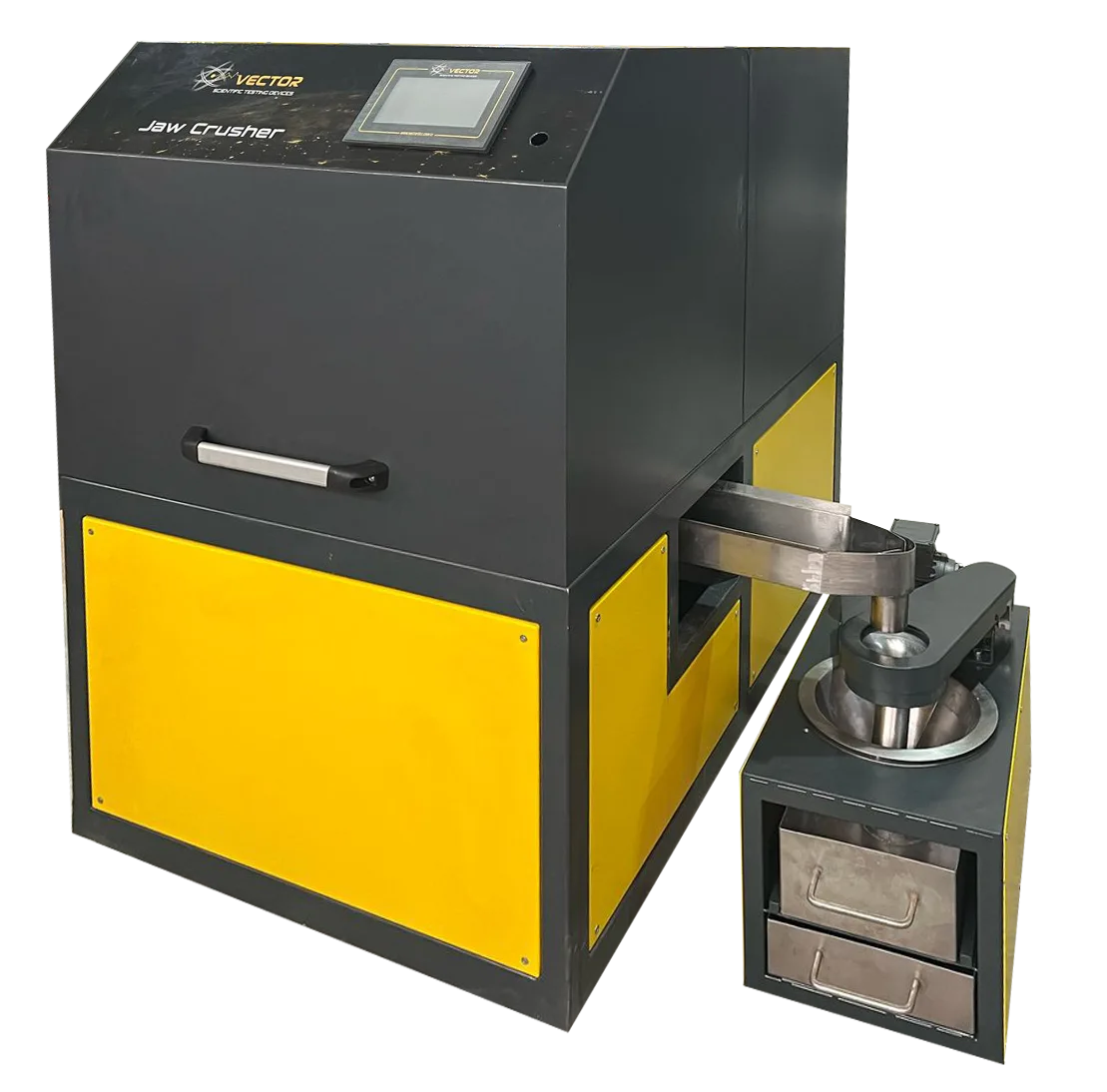
Thor Jaw Crusher
Vector VTR-1011-XL Thor continuous-feed jaw crusher — 270 × 90 mm jaws, up to 110 mm feed, 150–300 kg/h throughput, Mohs ≤ 8 and 7″ touchscreen HMI with jam detection.
- astm-c702
- astm-g81
- +2 more
View details →
Cutting, grinding, and finishing steps that produce test pieces with required geometry, surface integrity, and alignment before mechanical, impact, or microstructural testing.
Cutting, grinding, and finishing steps that produce test pieces with required geometry, surface integrity, and alignment before mechanical, impact, or microstructural testing.
Specimen preparation is not a measured property—it is the workflow that ensures test results reflect material behaviour rather than machining damage, wrong dimensions, or misaligned notches.
Routes include crushing and milling for bulk sampling, machining for tensile rounds and Charpy bars, and grinding/polishing for metallographic or hardness mounts.
Each downstream test (tensile, Charpy, hardness) references allowable preparation in its standard. Document heat-affected zones, coolant, and final dimensions on the test report chain.
Overheating during cutting, incorrect notch root radius, and out-of-tolerance gauge lengths are leading causes of rejected mechanical tests.
Vector VTR-1011-XL Thor continuous-feed jaw crusher — 270 × 90 mm jaws, up to 110 mm feed, 150–300 kg/h throughput, Mohs ≤ 8 and 7″ touchscreen HMI with jam detection.
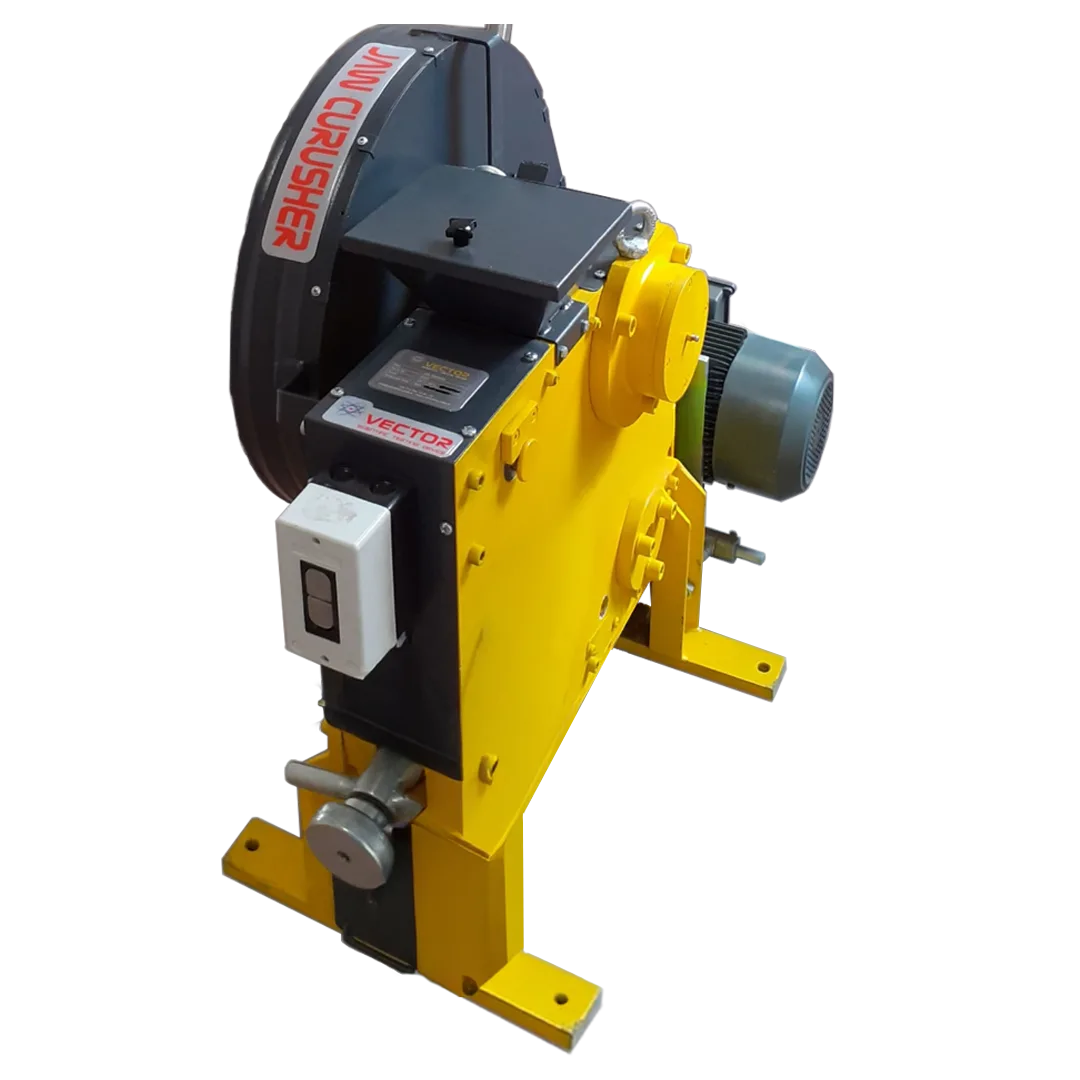
Vector VTR-1011 Nysos heavy-duty jaw crusher — up to 300 kg/h throughput, 45:1 crushing ratio and interchangeable manganese, stainless or tungsten carbide jaws.
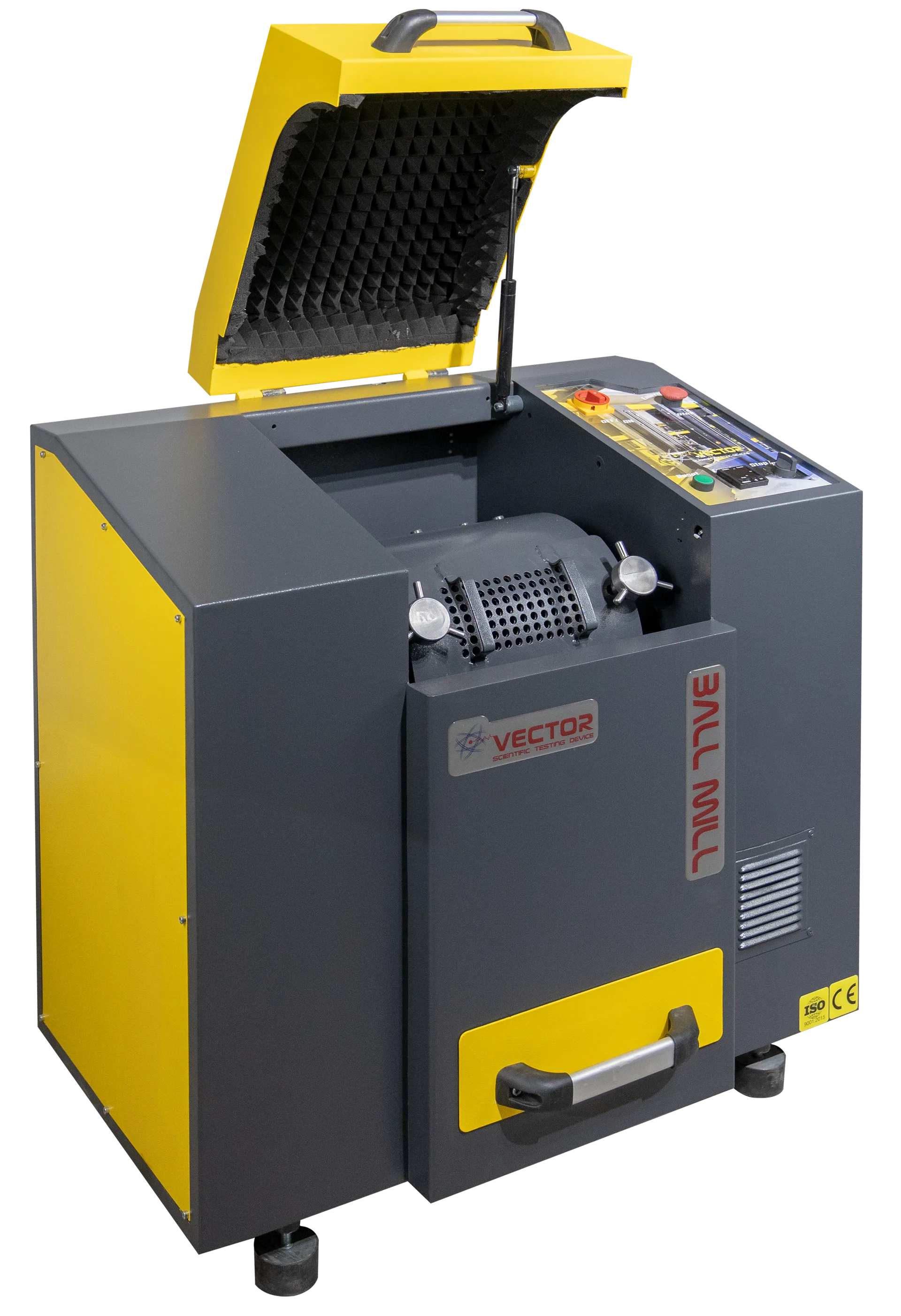
Vector VTR-1013 Hyperion laboratory drum ball mill for ultra-fine grinding to ~200 µm — 33 cm chamber, soundproof cabinet and up to 24 h continuous operation.
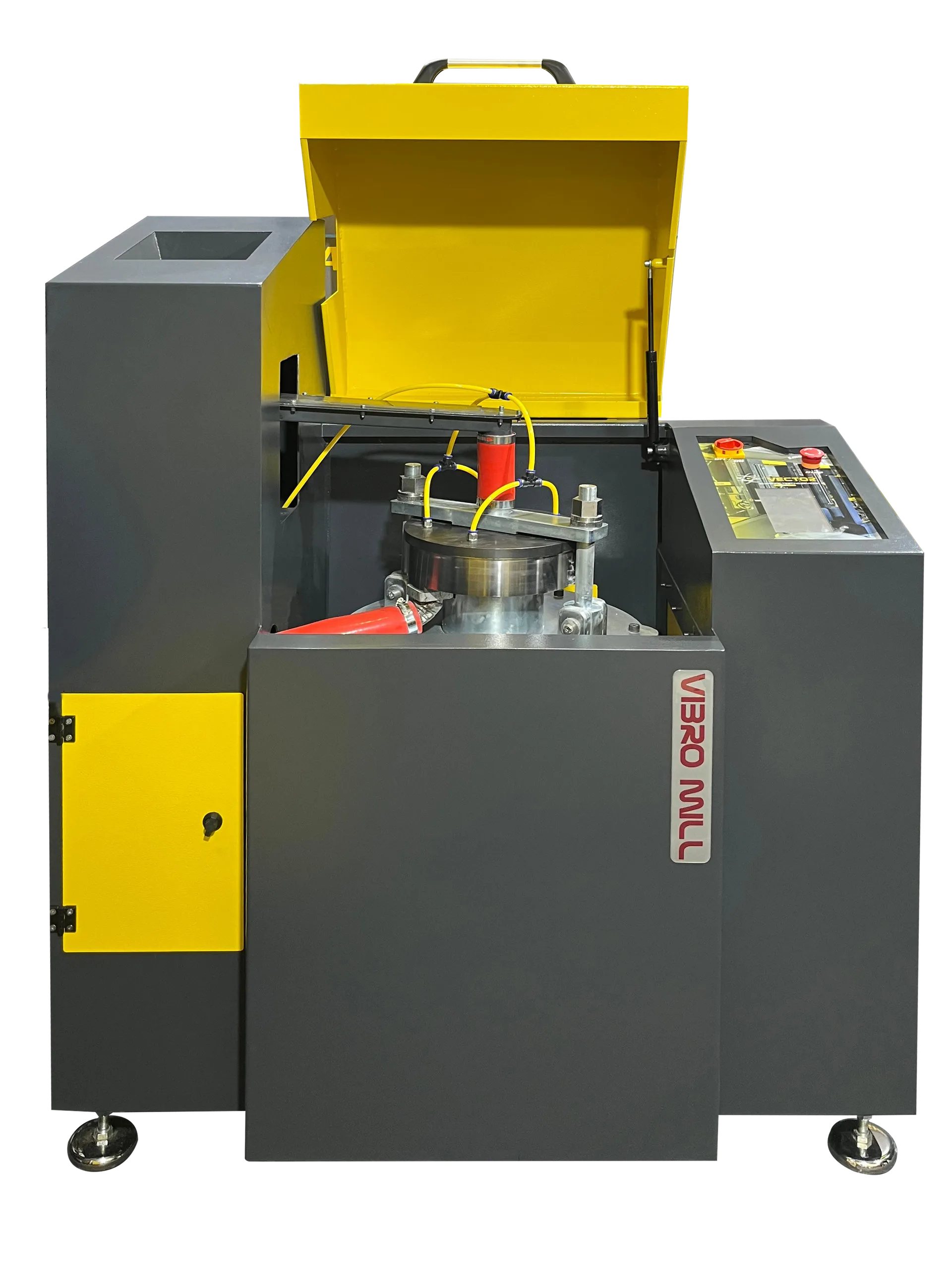
Vector VTR-1012-C Gaia continuous vibratory disc mill with automatic feed and proportional divider — meters 2–3 mm feed and discharges fines below 0.5 mm nonstop.
Compare measured ISO 527 and ASTM D638 tensile specimen dimensions against reference geometry within ±0.2 mm.
Open calculator →Grinding and Polishing
Sequential abrasive steps from coarse SiC paper through diamond suspensions to remove deformation and achieve a scratch-free surface for optical etching and microscopy.
Metallographic Mounting
Encapsulating a specimen in resin (hot compression or cold pour) to support edges, retain fragile features, and produce a flat surface for grinding and polishing.
Charpy Impact Test
A notched bar is broken by a swinging pendulum striker; absorbed energy KV or KU (joules) characterizes toughness and ductile-to-brittle transition versus temperature.