



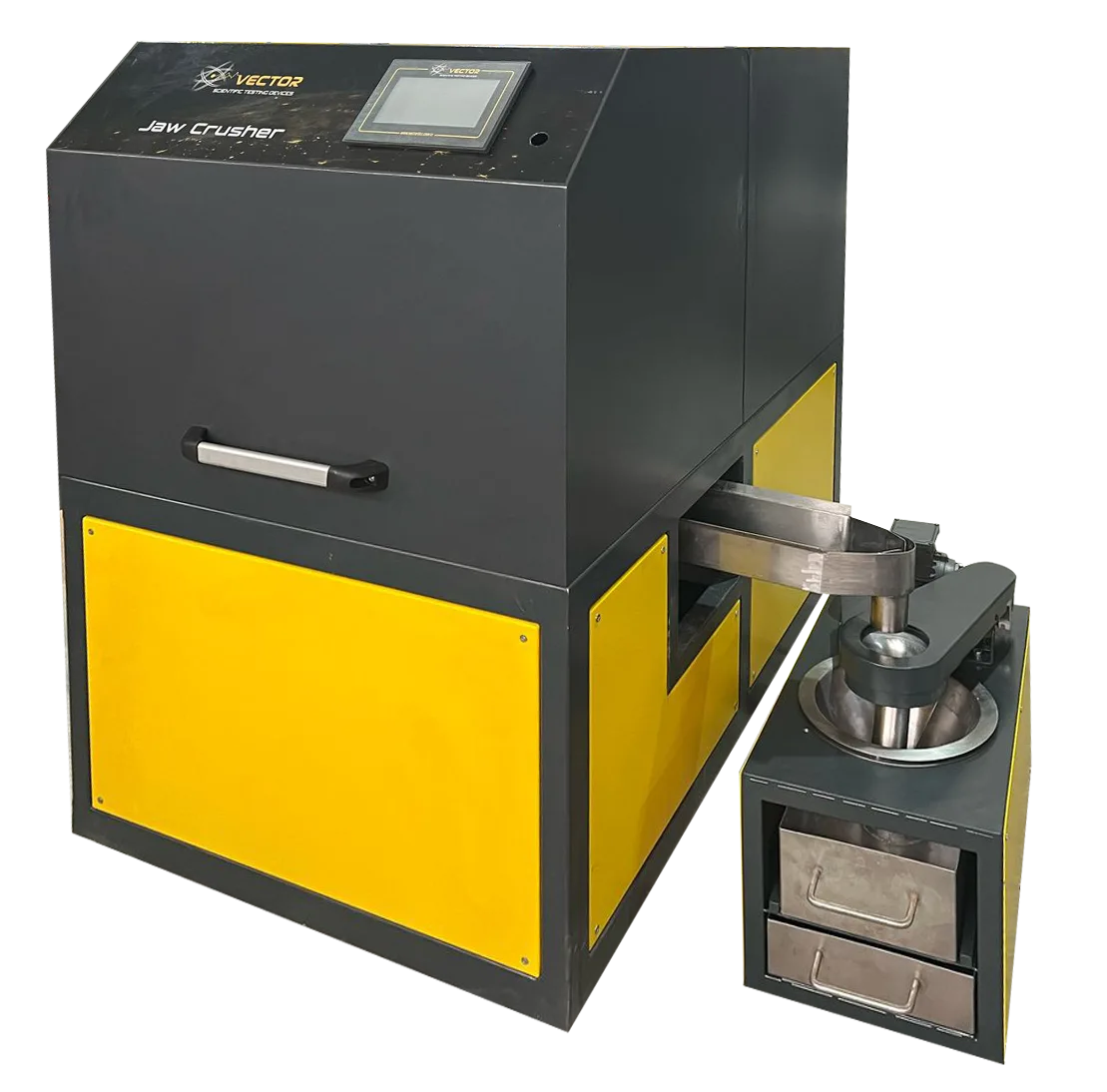
Thor Jaw Crusher
Vector VTR-1011-XL Thor continuous-feed jaw crusher — 270 × 90 mm jaws, up to 110 mm feed, 150–300 kg/h throughput, Mohs ≤ 8 and 7″ touchscreen HMI with jam detection.
- astm-c702
- astm-g81
- +2 more
View details →
Encapsulating a specimen in resin (hot compression or cold pour) to support edges, retain fragile features, and produce a flat surface for grinding and polishing.
Encapsulating a specimen in resin (hot compression or cold pour) to support edges, retain fragile features, and produce a flat surface for grinding and polishing.
Metallographic mounting stabilizes small, irregular, or layered specimens before abrasive preparation. Without mounting, thin sheet, wire, coatings, and porous powder metallurgy samples round over or debond under shear stresses during grinding.
Hot mounting uses thermosetting or thermoplastic presses at elevated temperature and pressure to produce cylindrical mounts with excellent edge retention when paired with harder resins. It is fast and dimensionally consistent but may thermally affect microstructure in sensitive alloys if temperature or time limits are exceeded.
Cold mounting pours epoxy, acrylic, or polyester resins at room temperature, ideal for temperature-sensitive phases, coatings, and electronic components. Vacuum impregnation fills porosity and cracks with dye-loaded resin to reveal void networks after polishing.
Mounting media should be chemically compatible with planned etchants and have similar abrasion resistance to the specimen to avoid relief between metal and resin during final polishing. Poor bonding creates edge rounding that falsifies layer thickness or inclusion ratings.
Vector VTR-1011-XL Thor continuous-feed jaw crusher — 270 × 90 mm jaws, up to 110 mm feed, 150–300 kg/h throughput, Mohs ≤ 8 and 7″ touchscreen HMI with jam detection.
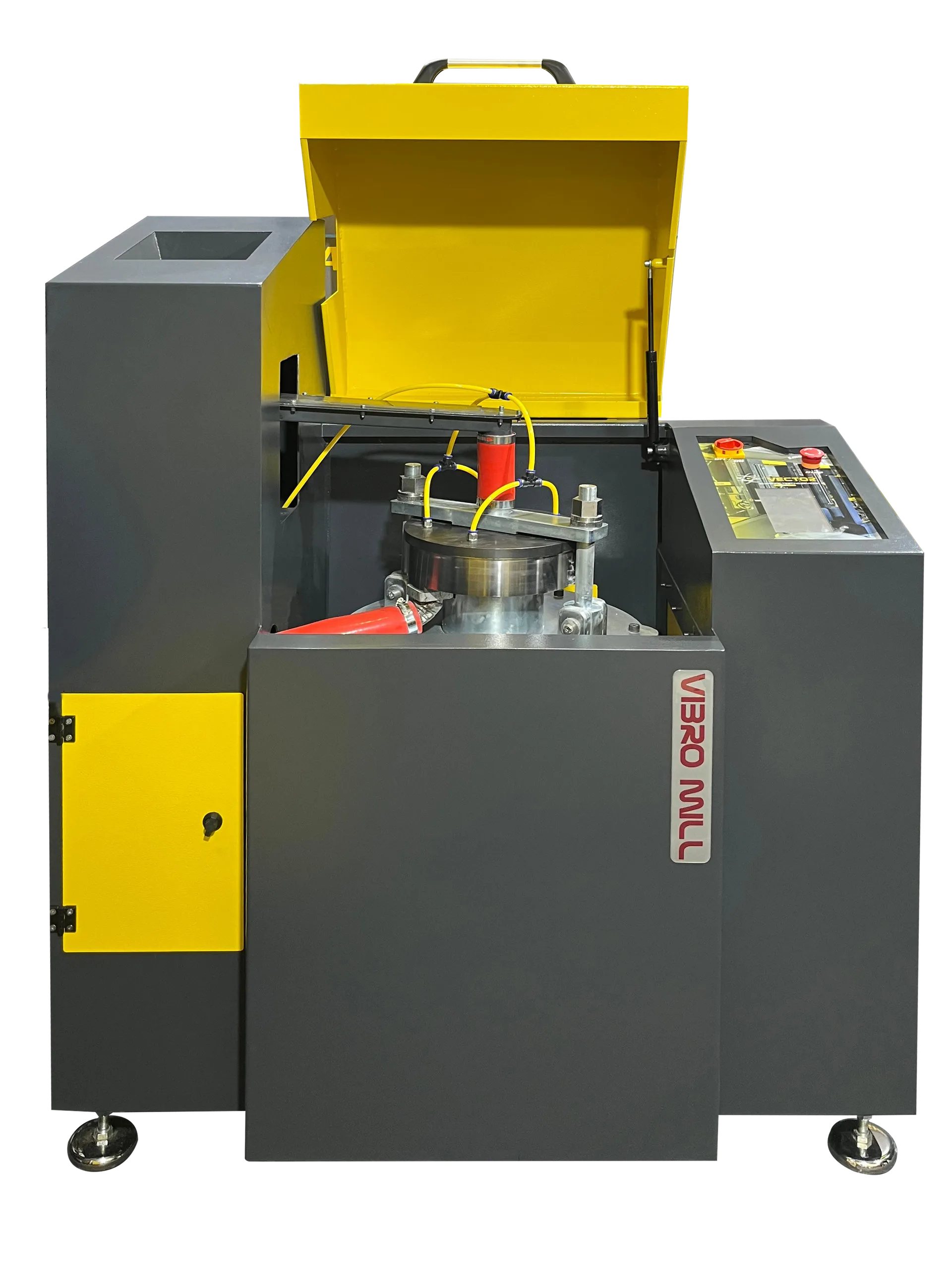
Vector VTR-1012-C Gaia continuous vibratory disc mill with automatic feed and proportional divider — meters 2–3 mm feed and discharges fines below 0.5 mm nonstop.