



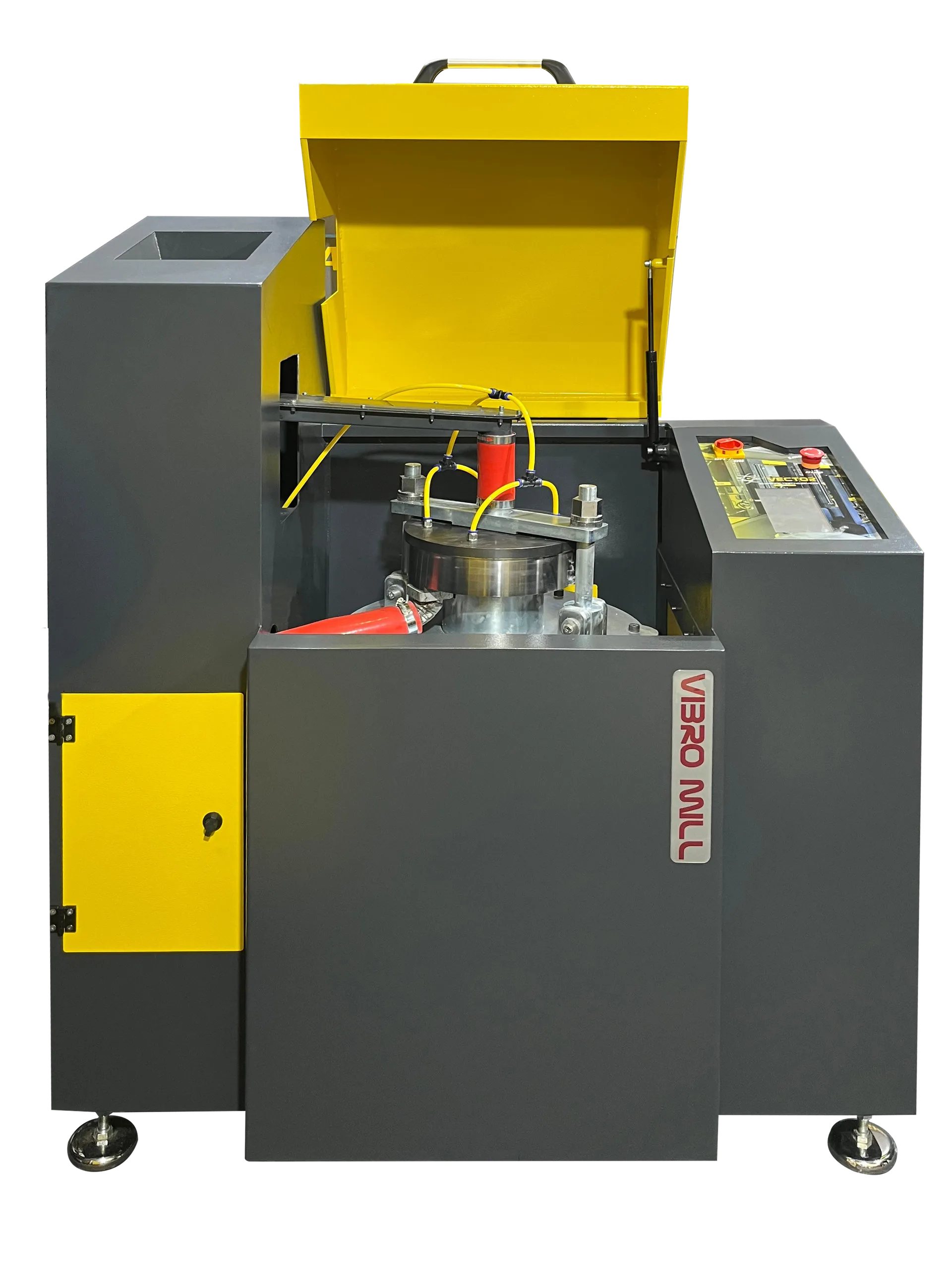
Gaia Vibratory Disc Mill
Vector VTR-1012-C Gaia continuous vibratory disc mill with automatic feed and proportional divider — meters 2–3 mm feed and discharges fines below 0.5 mm nonstop.
- astm-c1070
View details →
Sequential abrasive steps from coarse SiC paper through diamond suspensions to remove deformation and achieve a scratch-free surface for optical etching and microscopy.
Sequential abrasive steps from coarse SiC paper through diamond suspensions to remove deformation and achieve a scratch-free surface for optical etching and microscopy.
Grinding and polishing removes sectioning damage (burning, tearing, plastic flow) and progressively refines scratches until the surface reflects a mirror finish suitable for optical metallography. Each step uses finer abrasive and lighter pressure than the prior step to avoid embedding coarse grit and to keep deformation depth shallow.
Planar grinding on SiC papers establishes coplanarity between mount and specimen. Fine grinding transitions to diamond on composite disks or rigid platens to control flatness. Polishing with colloidal silica or alumina chemo-mechanically removes the last damage layer for grain boundary and inclusion contrast after etching.
Water sensitivity (e.g., aluminum-lithium alloys) or corrosion-prone steels may require oil-based lubricants or short cycles to avoid staining. Automated head pressures improve repeatability across operators.
The final surface must be artifact-free: comet tails, pull-outs, and relief between phases bias automated inclusion ratings and hardness indent placement. Documenting grit sequence and force supports audit trails in accredited labs.
Vector VTR-1012-C Gaia continuous vibratory disc mill with automatic feed and proportional divider — meters 2–3 mm feed and discharges fines below 0.5 mm nonstop.
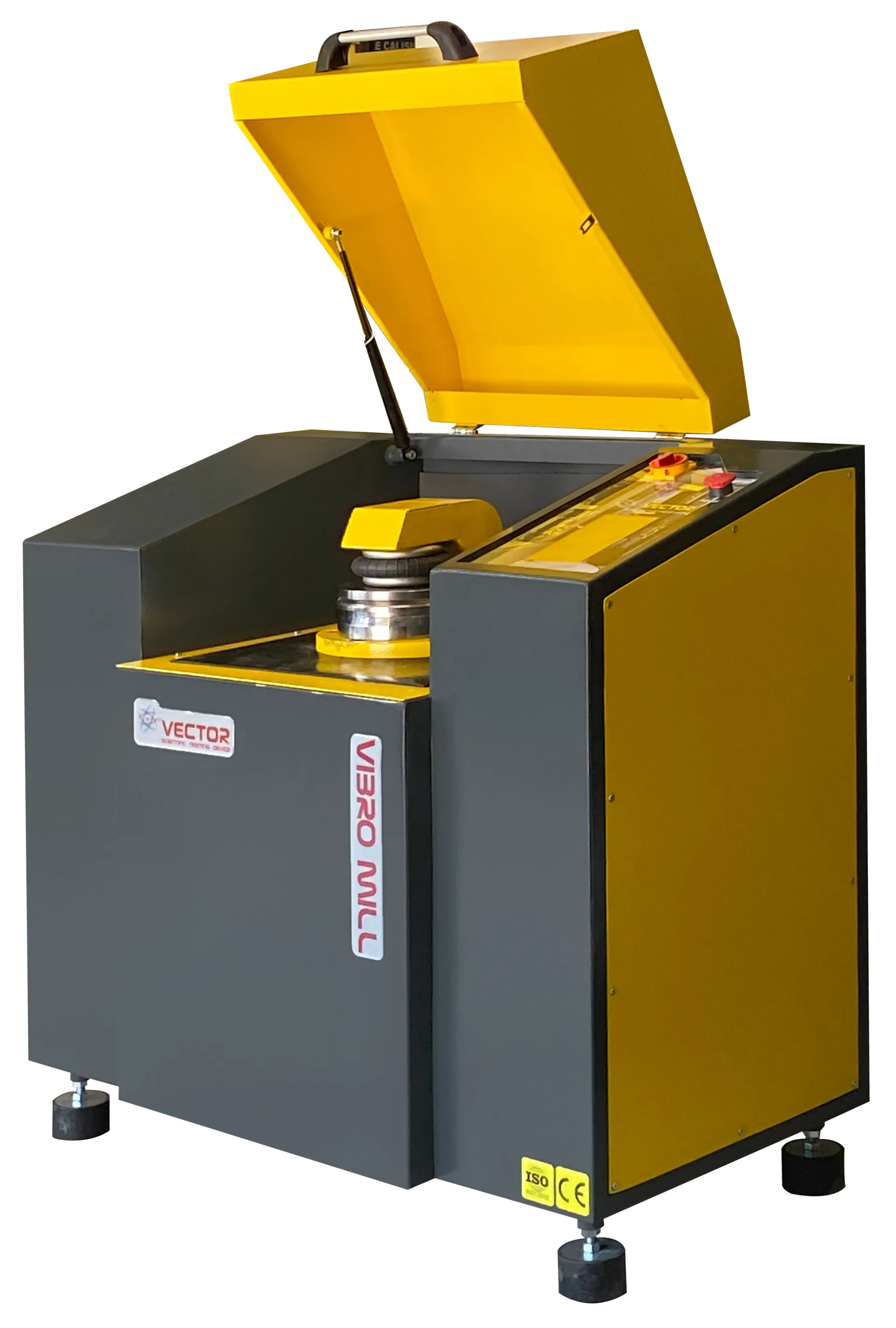
Vector VTR-1012 Hercules vibratory disc mill — automatic ring-and-puck grinding for fragile materials and minerals; repeatable fine powders for XRF, XRD and QC.
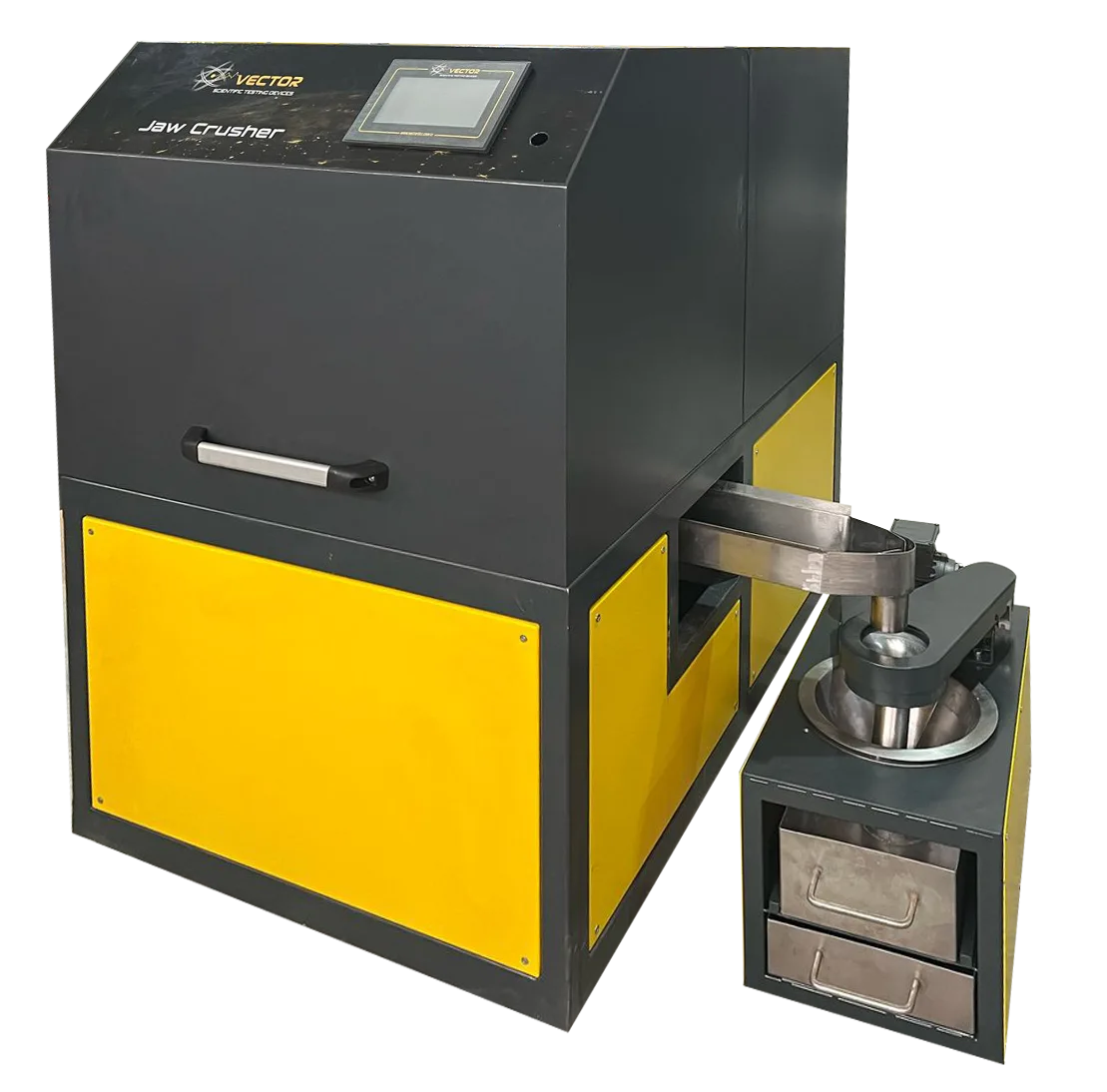
Vector VTR-1011-XL Thor continuous-feed jaw crusher — 270 × 90 mm jaws, up to 110 mm feed, 150–300 kg/h throughput, Mohs ≤ 8 and 7″ touchscreen HMI with jam detection.