



Aerospace & Defence
Service-temperature characterisation of titanium, nickel super-alloys, composite laminates and fastener systems used in airframes, engines and missile structures.
Vector Tesla Series VTR-CC UTM with integrated environmental chamber for tensile, compression and flexural testing under controlled temperature.
Set the test temperature yourself
The Vector Tesla Series VTR-CC universal testing machine with integrated environmental chamber performs tensile, compression and flexural testing under precisely controlled temperature — and optionally humidity — across a wide range of laboratory and industrial applications.
Built around the same calibrated VTR frame and Tesla Test Software ecosystem as Vector’s standard universal testing machines, the VTR-CC adds a slide-in thermal chamber that mounts directly on the load frame. Specimens are conditioned in-situ; chamber set-point, ramp profile and dwell time are coordinated by the Tesla controller alongside the test method itself — eliminating the need to move specimens between conditioning equipment and the load frame.
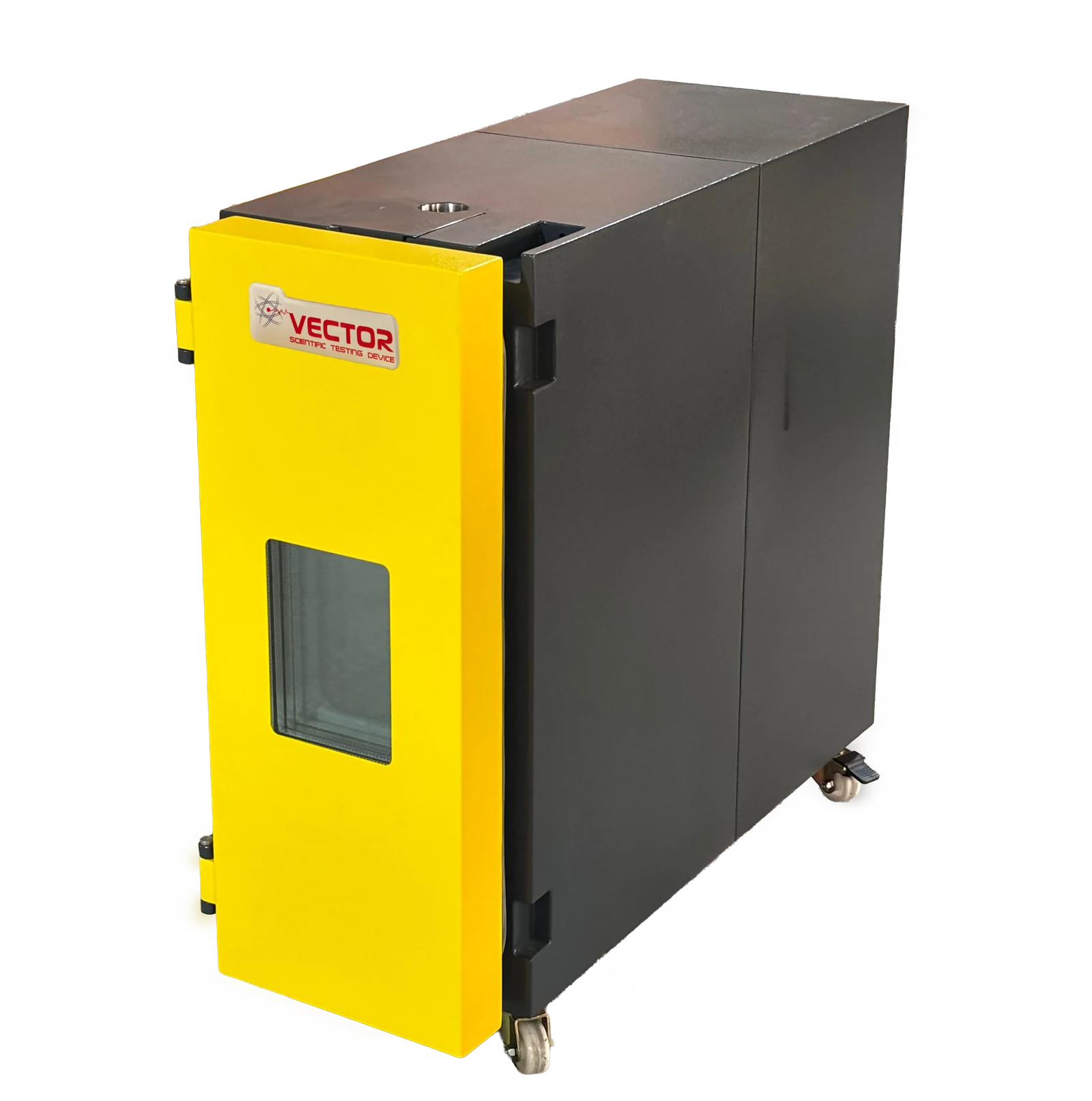
The VTR-CC is purpose-built for material characterisation when temperature is part of the test specification — from cryogenic alloys to high-temperature super-alloys and service-temperature polymers.
Service-temperature characterisation of titanium, nickel super-alloys, composite laminates and fastener systems used in airframes, engines and missile structures.
Tensile and flexural properties at glass-transition (Tg) and service temperatures — ASTM D638, ASTM D790, ISO 527-2 conditioned tests on polymer dogbone and bar specimens.
Rubber, gasket and seal performance from cold-start to under-hood temperatures; characterisation of stress-relaxation and creep at elevated temperature.
Steels, aluminium and welds for LNG, cryogenic storage and aerospace fuel systems — Charpy / tensile characterisation per ISO 6892-3 and related cryogenic methods.
Implant-grade alloys, polymer films and tissue-engineered scaffolds tested at body temperature; biomedical method support for predictable in-vivo conditions.
Vector’s application engineers configure chamber type, ramp/dwell profile and specimen sensors for non-standard temperature programs and bespoke material studies.
Engineered for accurate, repeatable material data when temperature is part of the specification.
Standard chamber options span low-temperature to high-temperature ranges; configurations available for cryogenic and high-temperature applications. Exact range — to be set per configuration.
Specimens condition, soak and test in one fixturing — eliminating thermal-loss errors that occur when transferring specimens between separate conditioning ovens and the load frame.
Pull rods extend through the chamber wall; full tensile, compression and bend testing in any thermal state. Same fixture catalogue as the ambient VTR frames.
Front viewport with internal LED illumination supports visual inspection and non-contact (video) extensometer integration — ideal for high-temperature elongation measurement without contact probes.
One Tesla workflow defines chamber set-point, ramp rate, dwell time and the load test sequence — eliminating separate chamber-controller programming and synchronisation issues.
Optional PT-100 / type-K thermocouple specimen probes feed back to Tesla for true specimen-temperature control and traceable reporting alongside force and elongation channels.
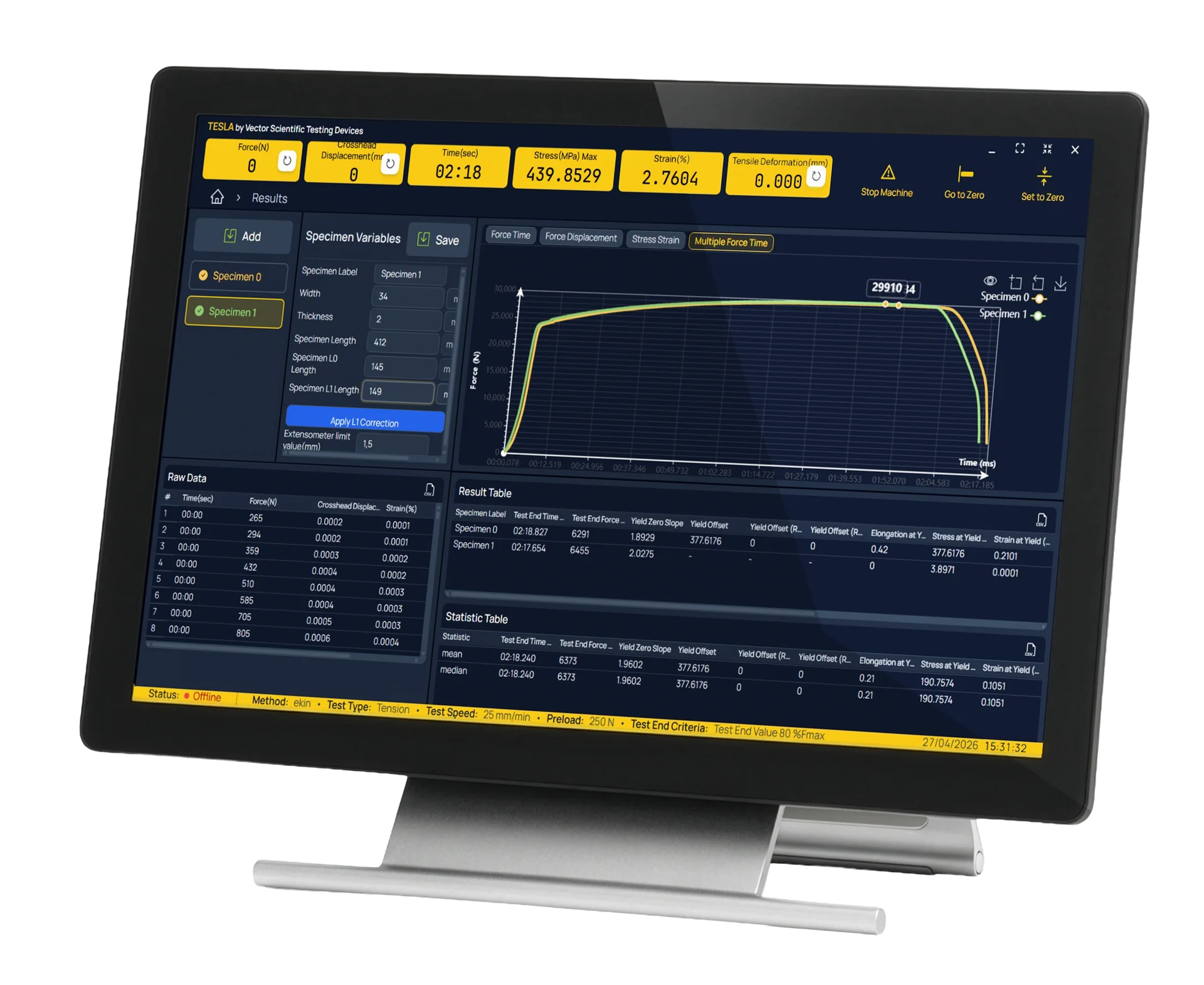
The Tesla Test Software turns the VTR-CC into a calibrated, audit-ready test cell with chamber coordination built in. Temperature set-points, ramp rates and dwell phases sequence automatically alongside force, displacement and strain-rate control — keeping the operator focused on the specimen, not on cross-system synchronisation.
Pre-Loaded Conditioned Methods — ASTM, ISO, DIN, EN and TS templates for elevated- and low-temperature tensile, compression and flexural tests, including ASTM E21, ISO 6892-2 and ISO 6892-3.
Integrated Chamber Sequencing — define set-point, ramp rate and soak time graphically; Tesla blocks test start until the specimen temperature is in tolerance.
Live Analysis & Reporting — real-time force–displacement and stress–strain curves overlaid with the temperature channel; auto-computed yield, ultimate, modulus and elongation; PDF / Excel / CSV / binary export.
Force, Position, Strain-Rate & Temperature — closed-loop control switchable between modes on the fly; specimen-temperature feedback ensures repeatable results across operators and shifts.
Universal Testing Machine with Environmental Chamber
Applications support
Share your standard, sample type, and lab workflow — we'll recommend a verified configuration you can quote against.
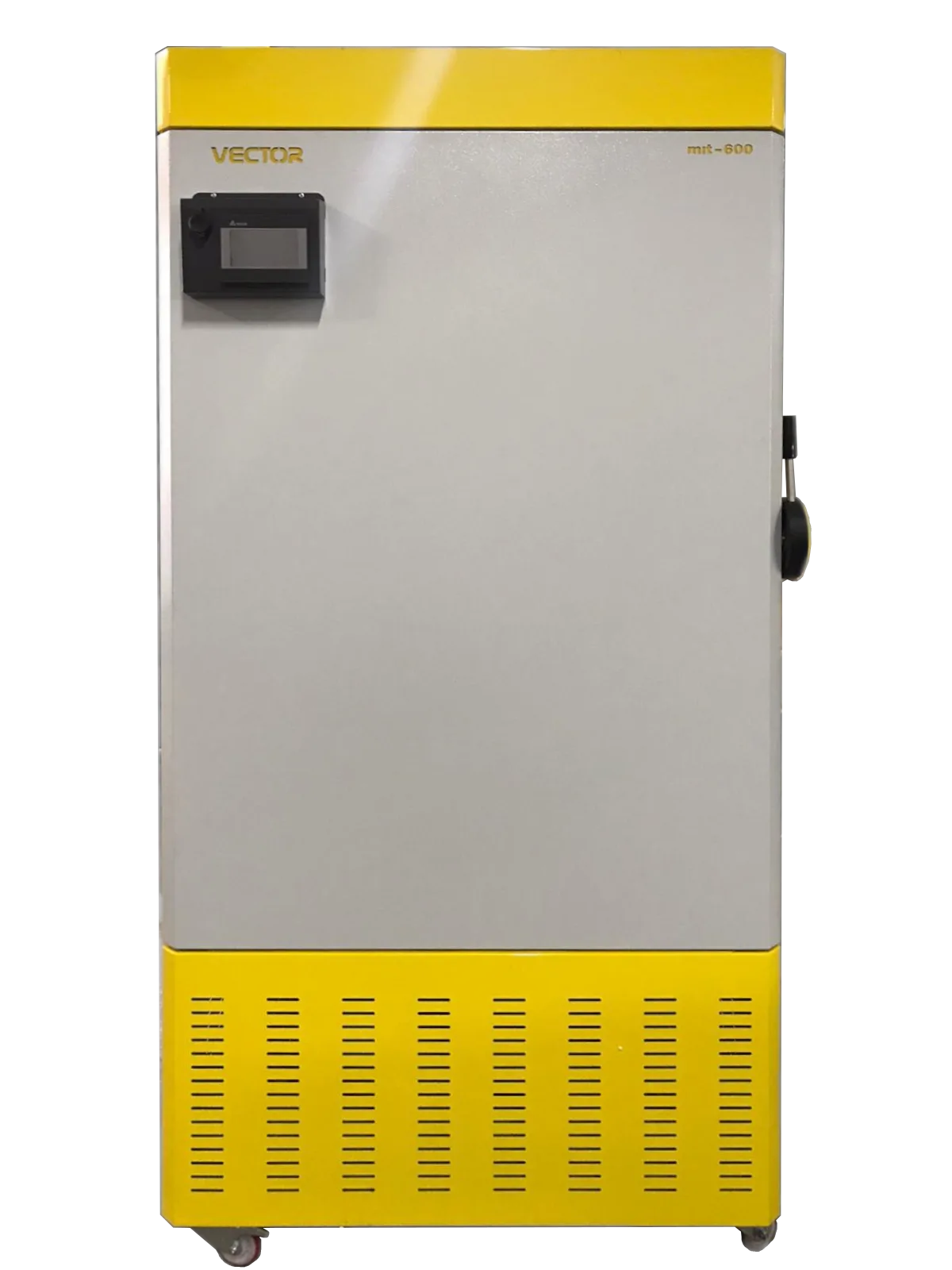
Vector VTR-1034 climatic chamber — programmable temperature and humidity for sample conditioning, cement mortar storage and laboratory stability testing.
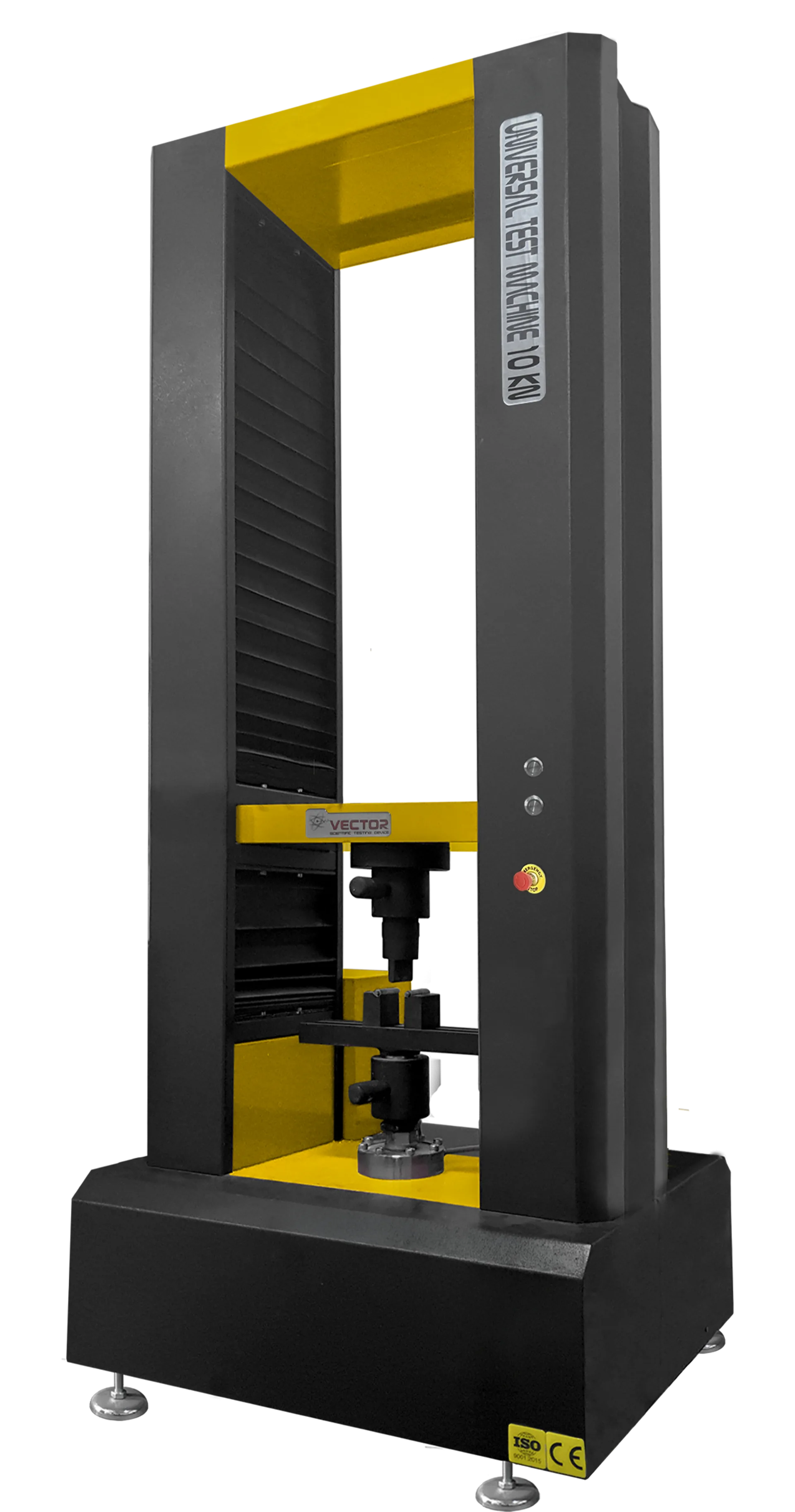
Vector Tesla Series dual-column floor-standing universal testing machine for industrial QA and R&D at 5–50 kN — ASTM E4 / ISO 7500-1 Class 0.5.
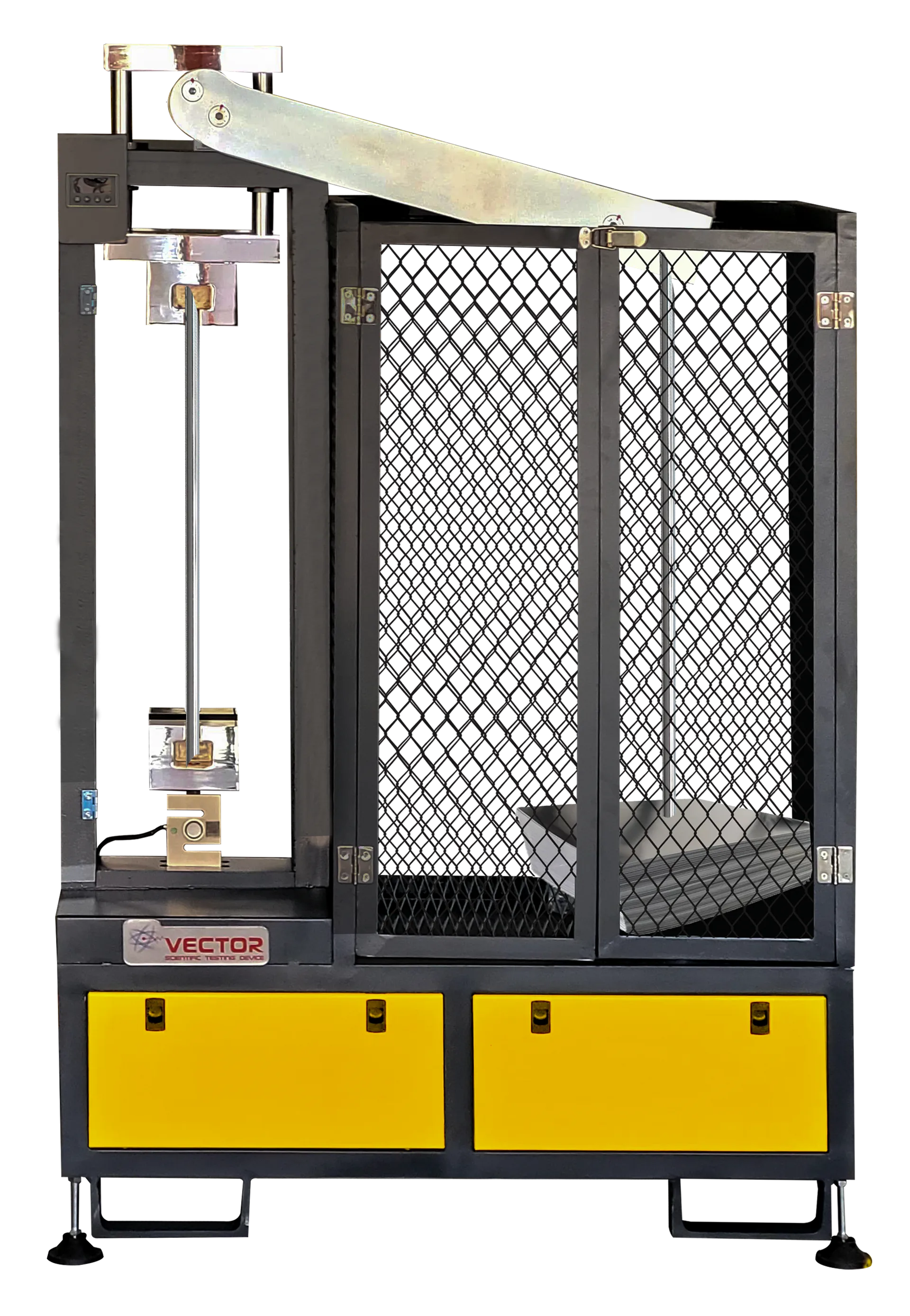
Vector VTR-13-050 Creep Testing Machine — dead-weight lever arm 50–200 kN for ASTM F519 hydrogen embrittlement, ISO 204 / ASTM E139 creep and stress rupture, modular floor system to 100,000 hours.
Capacity-matched clamping and fixtures for this frame — tensile, compression, flexural, and peel setups.
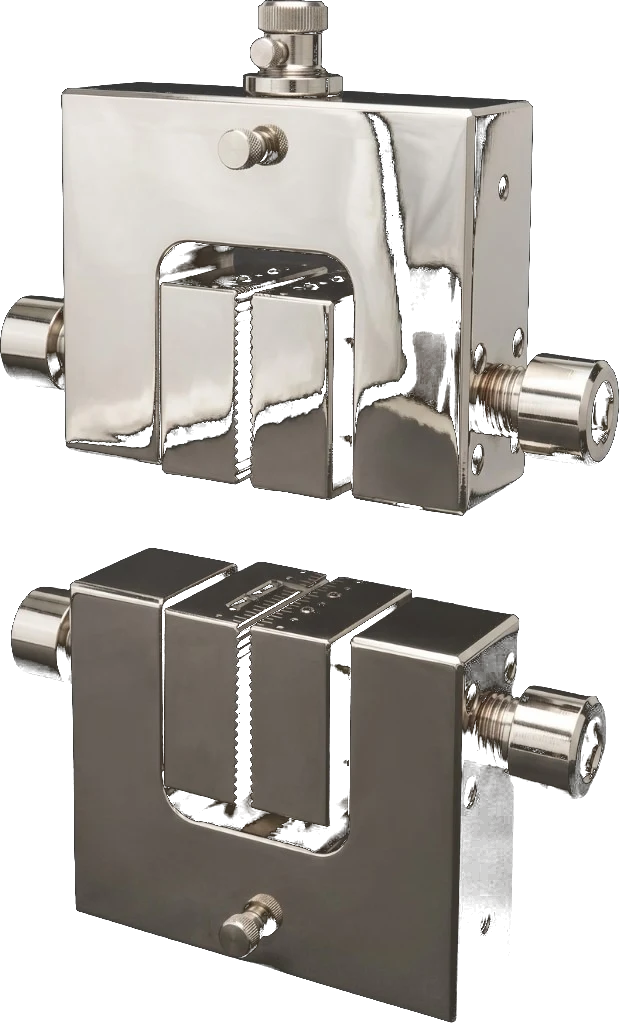
Self-tightening mechanical wedge grips for metals, plastics, and composites on electromechanical frames.
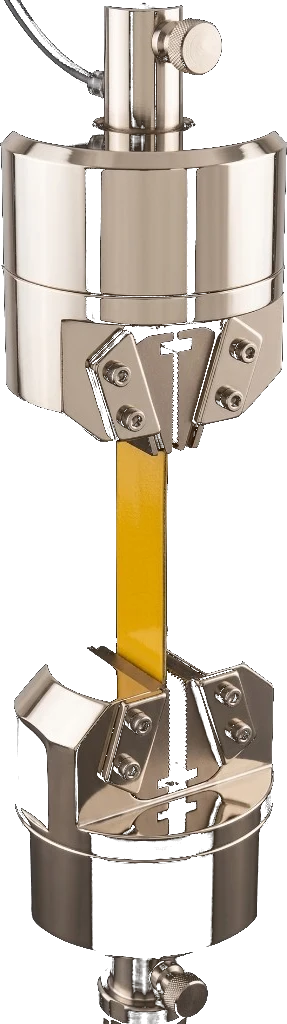
Pneumatic actuation for fast, repeatable clamping on films, foils, and soft polymer specimens.
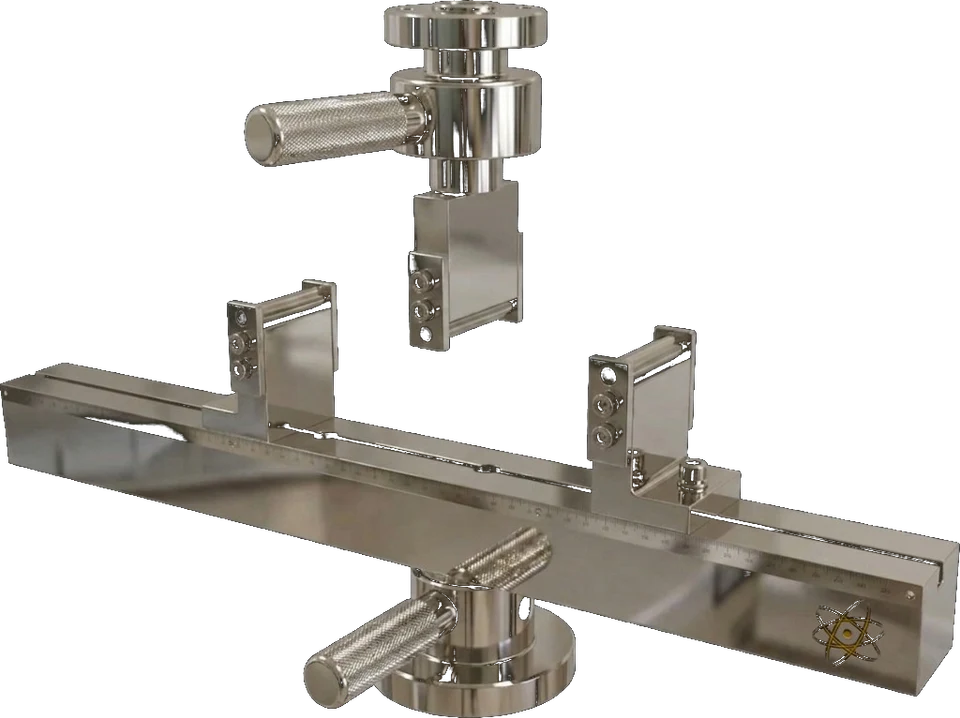
Three-point and four-point bending anvils and supports for flexural strength and modulus.