



Aerospace
High-strength alloy creep and embrittlement testing on fasteners, landing gear, and structural members per ASTM F519 and EN 2002-005.
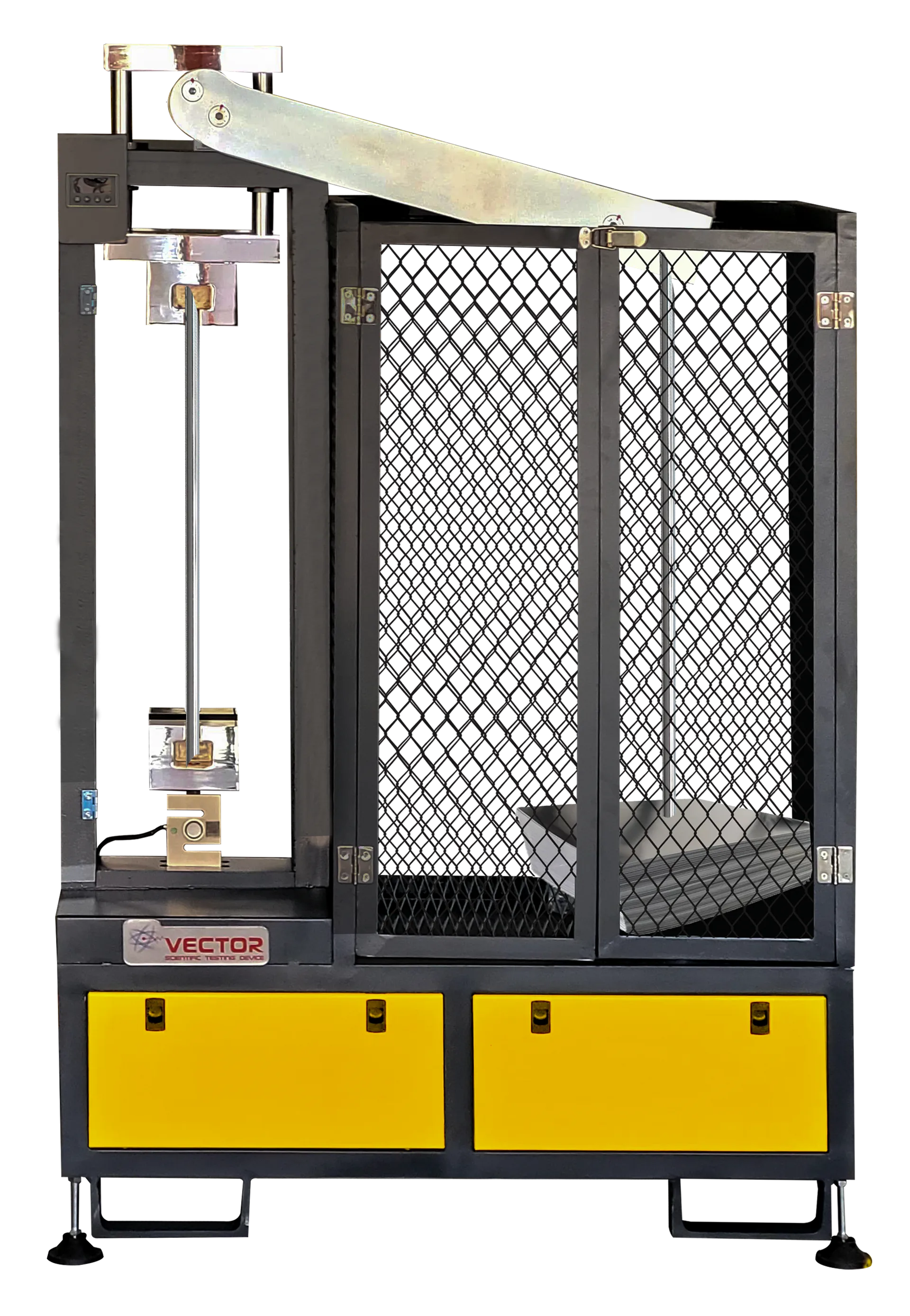
Vector VTR-13-050 Creep Testing Machine — dead-weight lever arm 50–200 kN for ASTM F519 hydrogen embrittlement, ISO 204 / ASTM E139 creep and stress rupture, modular floor system to 100,000 hours.
Dead-weight lever arm Creep Testing Machine — 50–200 kN for ASTM F519, ISO 204 and ASTM E139 long-duration programmes
The Vector VTR-13-050 Creep Testing Machine is a dead-weight lever arm platform engineered for advanced creep, stress rupture, relaxation, crack growth, and hydrogen embrittlement programmes — designed for long-term reliability and precision in aerospace, oil and gas, power generation, and regulated alloy qualification.
Operating from 50 kN to 200 kN without motorised load loops, the Creep Testing Machine applies constant force through calibrated masses and a pre-tensioned spring — maintaining load integrity through multi-thousand-hour dwells and power interruptions that can affect servo-controlled frames.
The system aligns with ASTM F519, ISO 204, ASTM E139, EN 2002-005, and ASTM E1457, with optional high-temperature furnace packages from −100 °C to +1,500 °C and integrated HMI logging for audit-ready datasets.
Standards library
Vector maps your required codes to lever-arm geometry, specimen grips, environmental packages, and reporting fields before build — so creep, rupture, relaxation, crack growth, and hydrogen embrittlement workflows can share one qualified Creep Testing Machine where your procedures allow.
From landing-gear fastener qualification to pipeline integrity and plating QA — the Creep Testing Machine delivers globally recognised sustained-load data for safety-critical supply chains.
High-strength alloy creep and embrittlement testing on fasteners, landing gear, and structural members per ASTM F519 and EN 2002-005.
Pipeline creep characterisation, drill-string HE screening, and pressure-equipment stress rupture under service environments.
Suspension fasteners, springs, and driveline components — post-plating hydrogen embrittlement batch release.
Turbine blade alloys, boiler tubes, and heat exchanger materials under long thermal dwell programmes.
Post-plating process control, coating compliance, and multi-specimen lot release on ASTM F519 workflows.
Creep curves, crack growth rates, relaxation of novel alloys — up to 100,000-hour evidence sets.
Mechanical precision, smart software, and modular upgrades — engineered for regulated long-duration programmes on a single floor-standing Creep Testing Machine.
Covers notched tensile coupons for HE screening through large high-temperature creep bars — smooth, continuous force without motor drift.
Wear-resistant flexible joints preserve lever-arm alignment as specimens elongate; automatic end-of-test capture logs rupture time.
−100 °C to +1,500 °C with uniform gauge-zone control and integrated controller in the machine base.
Continuous load and time logging, heating-phase documentation, password-protected datasets, Excel and graphical export.
Interlocked doors prevent operation when open; calibrated masses secured inside the enclosure during loading and fracture events.
Additional grips, load cells, furnace packages, and measurement accessories without replacing the core load frame.
Creep is time-dependent deformation under constant stress — often at elevated temperature. A Creep Testing Machine holds the specimen under dead load while extensometry across the gauge length records elongation over hours to years, revealing behaviour that short tensile runs cannot predict.
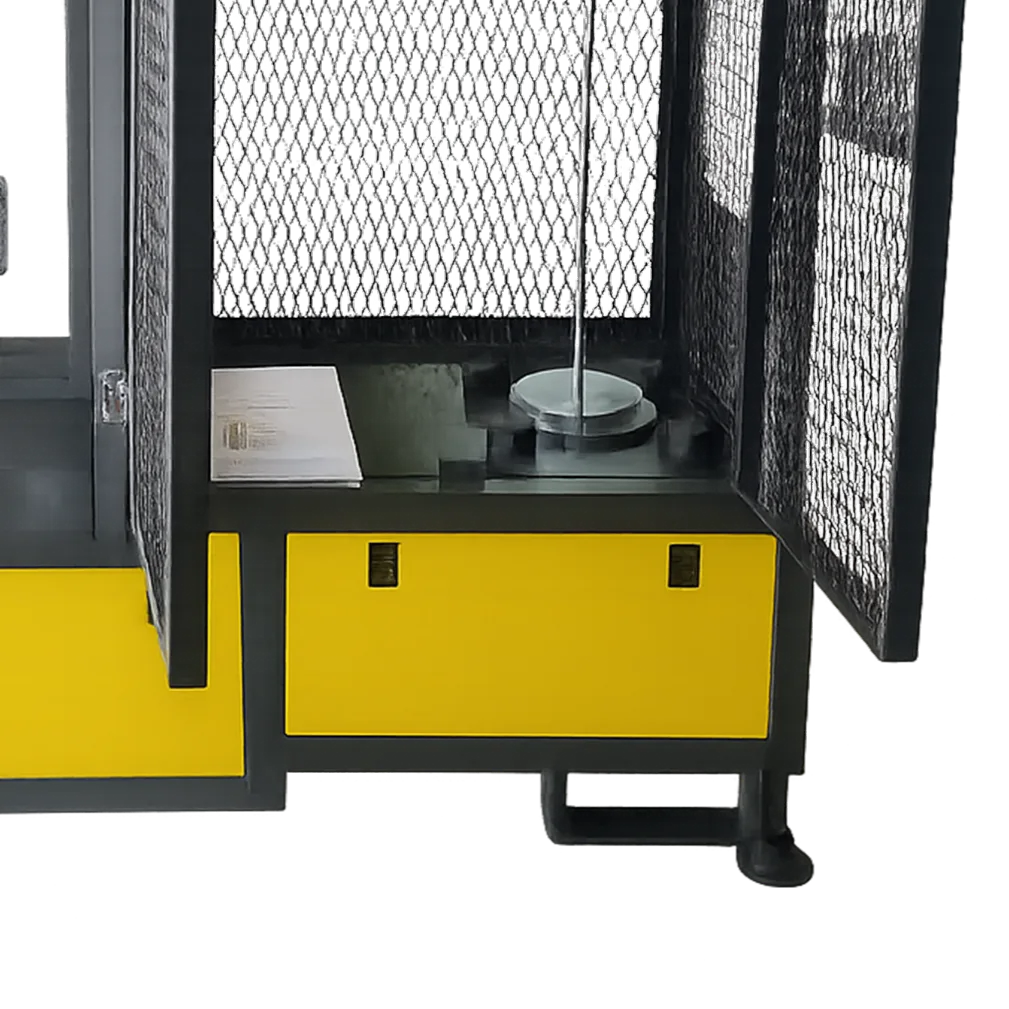
Hydrogen embrittlement reduces ductility after hydrogen uptake from plating, pickling, welding, or service exposure. ASTM F519 standardises sustained-load testing of high-strength steels using notched specimens under long-term uniaxial tension.
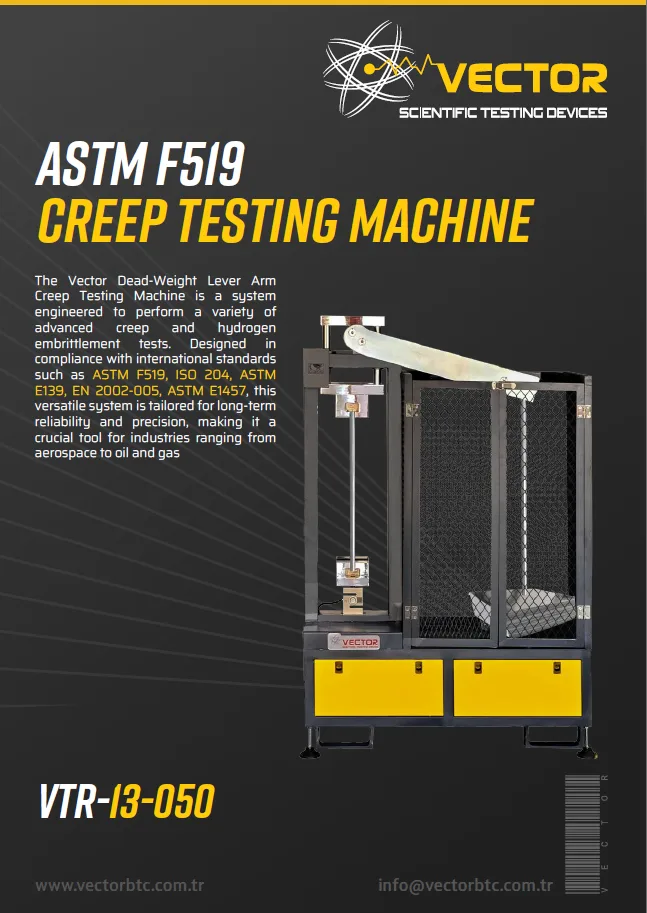
Product brochure for the Vector VTR-13-050 Creep Testing Machine — load range, test types, standards coverage, optional furnace, and typical laboratory applications.
Brochure (PDF)Vector Creep Testing Machine
Creep testing measures slow, time-dependent deformation under constant load — often at temperature — to support design data short tensile tests cannot supply. A Creep Testing Machine isolates long dwells, precise constant-force hardware, and logging tuned for rupture timing.
Dead-weight systems apply force through gravity and calibrated masses, avoiding servo drift and loss of load control during extended runs or power interruptions that can affect motorised frames.
Notched specimens are loaded in sustained tension for the standard 200-hour window so plating and post-processing effects on ductility can be judged against acceptance criteria, with batch layouts for high-throughput labs.
The platform is engineered for ASTM F519, ISO 204, ASTM E139, EN 2002-005, and ASTM E1457 so creep, rupture, relaxation, crack growth, and HE workflows can share one qualified frame where your procedures allow.
Applications support
Share your standard, sample type, and lab workflow — we'll recommend a verified configuration you can quote against.
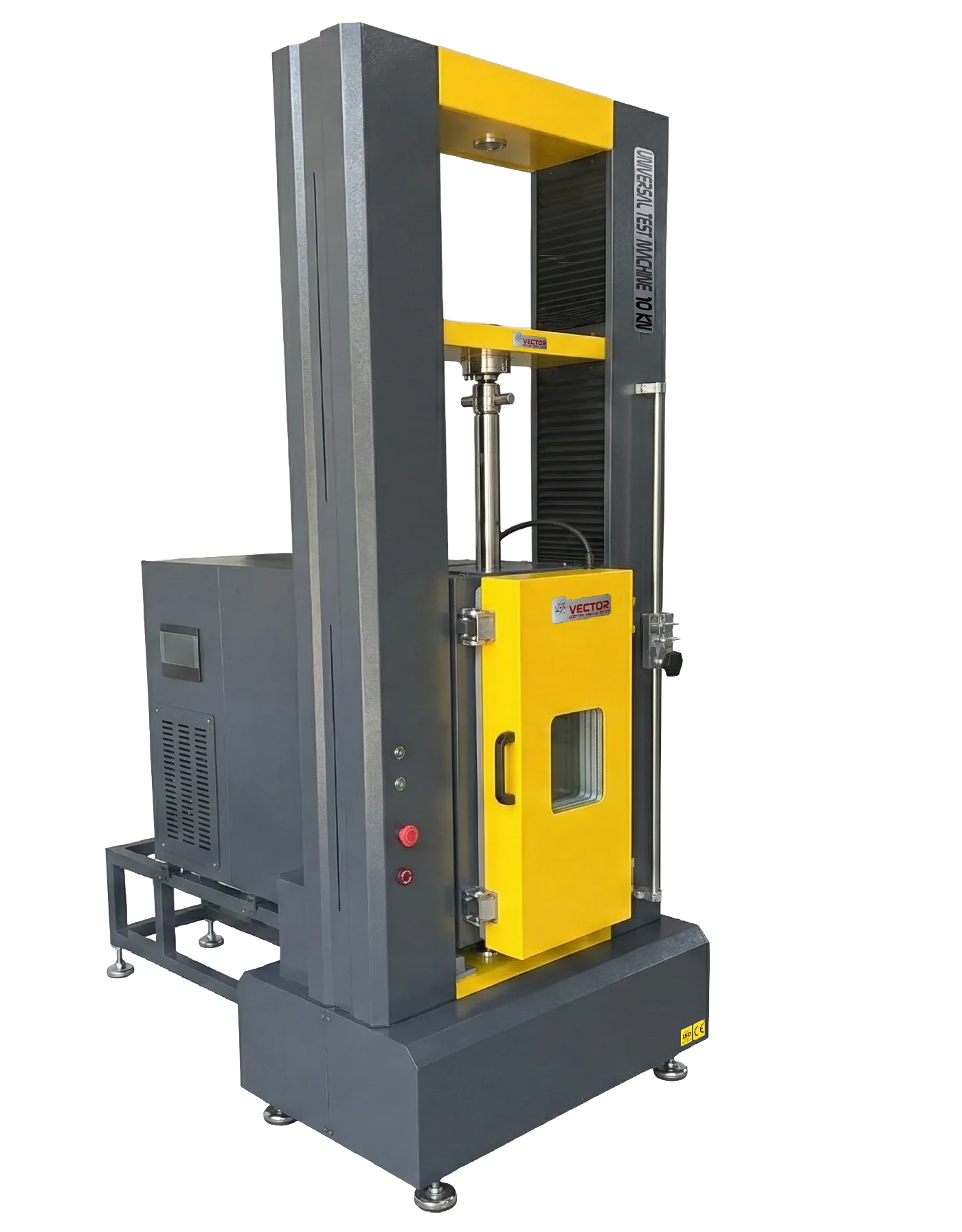
Vector Tesla Series VTR-CC UTM with integrated environmental chamber for tensile, compression and flexural testing under controlled temperature.
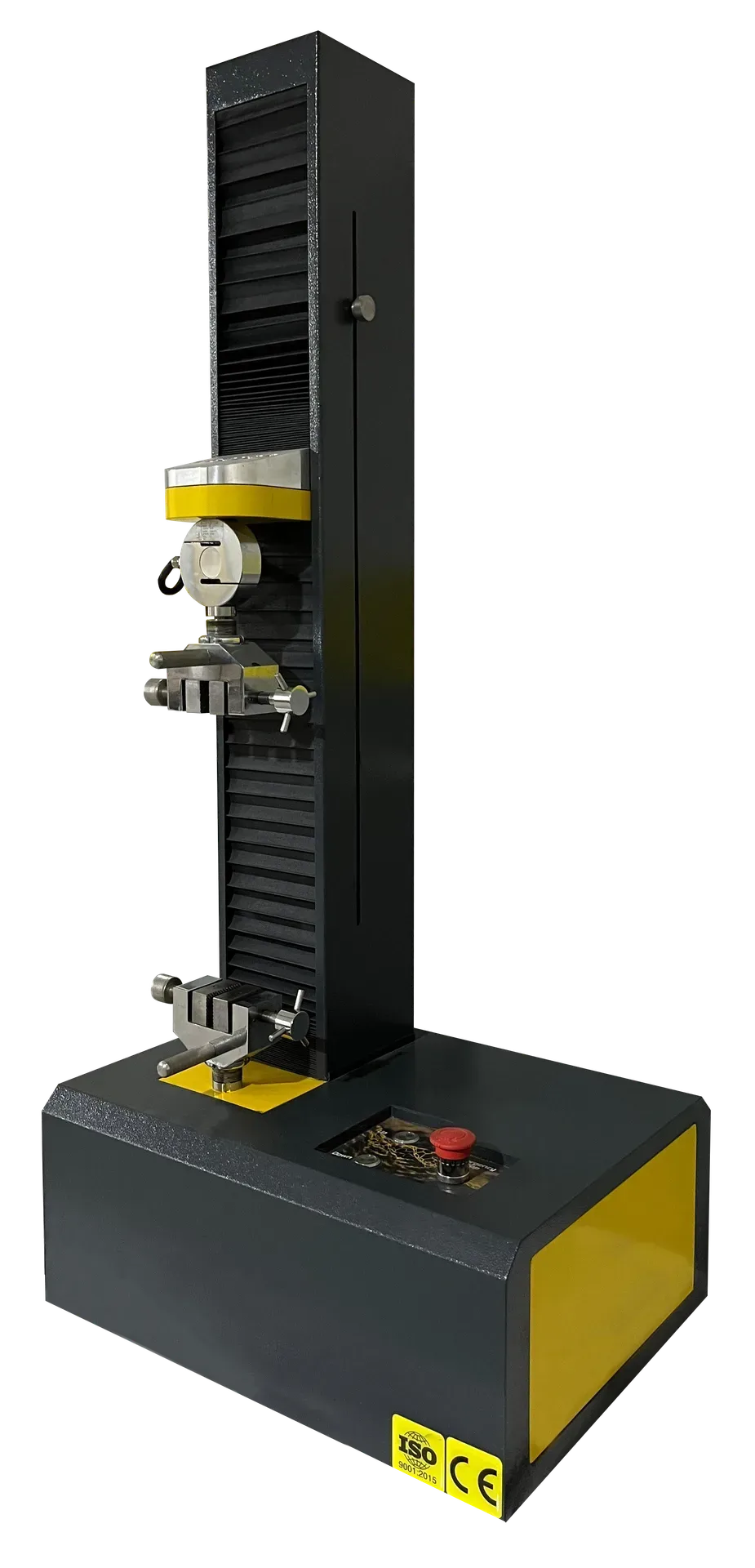
Vector Tesla Series single-column benchtop universal testing machine for high-precision, low-force material testing — ASTM E4 / ISO 7500-1 Class 0.5.
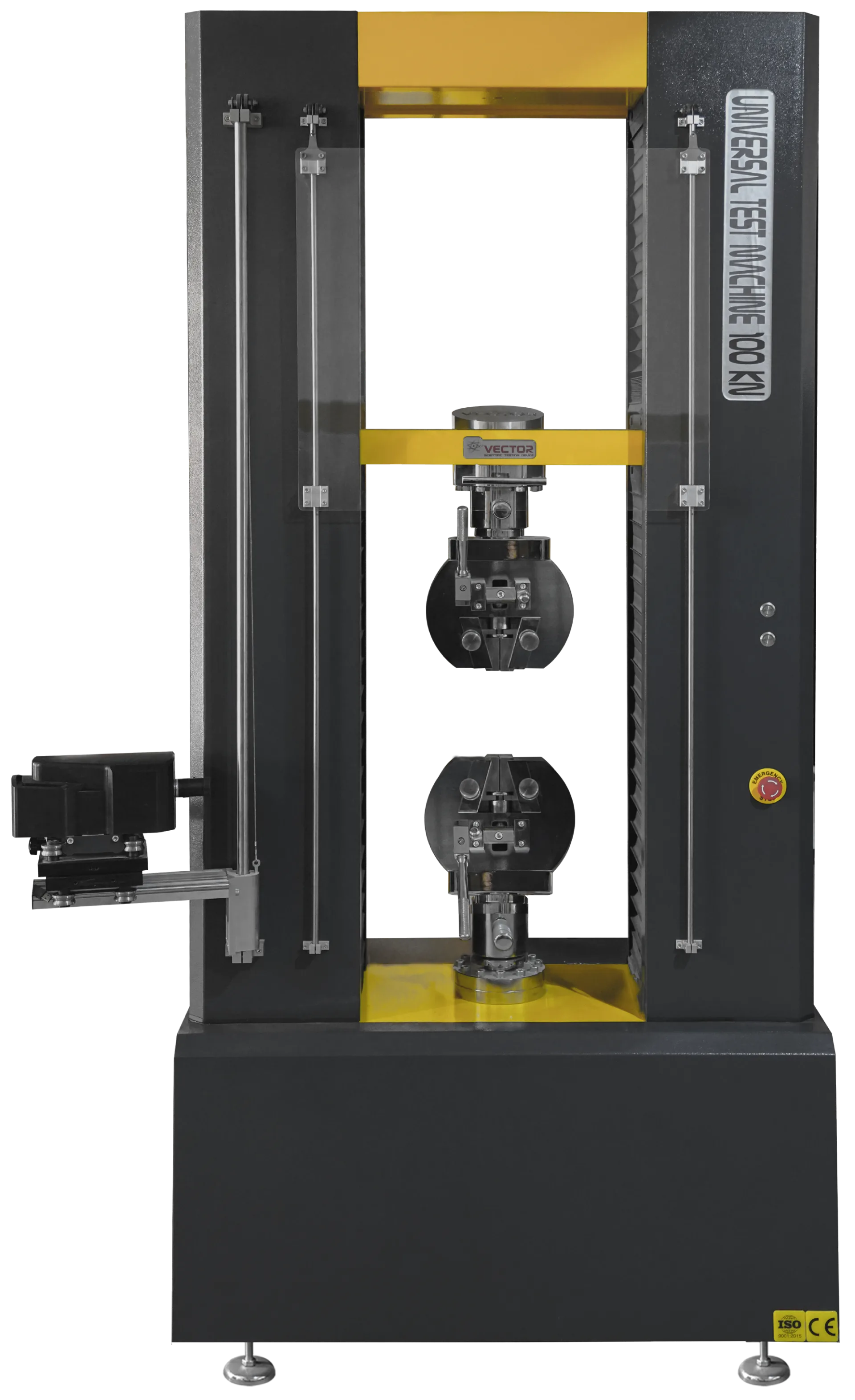
Vector Tesla Series heavy-duty dual-column UTM for tensile, compression, flexure and shear up to 300 kN — ASTM E4 / ISO 7500-1 Class 0.5 accuracy.