



Automatic Blaine
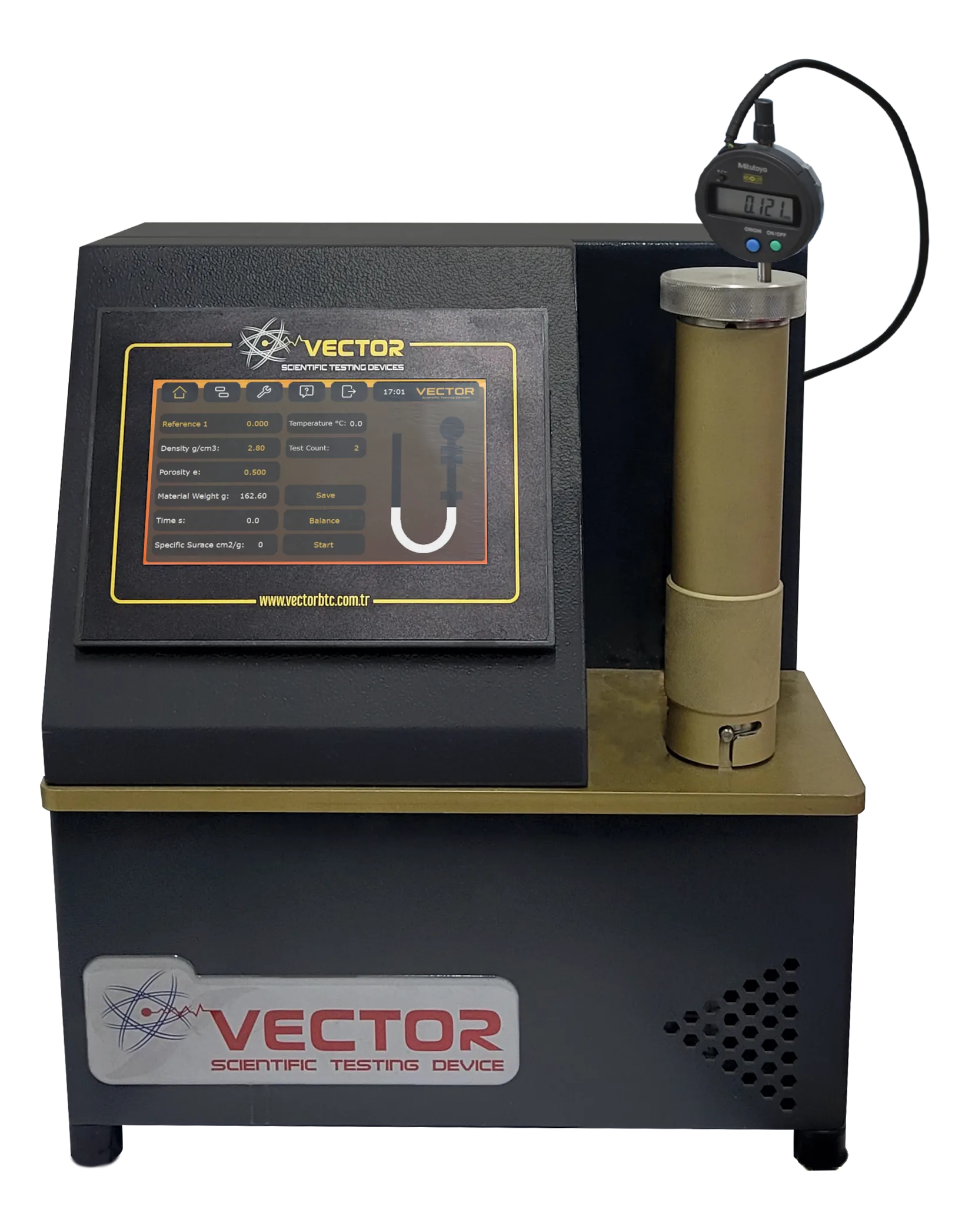
Vector VTR-1016 automatic Blaine tester — repeatable cement and powder fineness per EN 196-6, ASTM C204 and AASHTO T153 with touchscreen control.
- astm-c1070
- astm-c204
- +1 more
View details →
Cement fineness index from air permeability through a packed powder bed, expressed as Blaine specific surface area (m²/kg) per EN 196-6 or ASTM C204.
Cement fineness index from air permeability through a packed powder bed, expressed as Blaine specific surface area (m²/kg) per EN 196-6 or ASTM C204.
Formula
S = (K/ρ)·(√e³/(1−e))·(√t/√(0.1η)); simplified: S = (524.2·K/ρ)·√t
Blaine specific surface from air-flow time, bed porosity, cement density, air viscosity, and apparatus constant K.
Blaine fineness correlates specific surface area of cement (or similar powders) with air flow resistance through a compacted bed. Finer grinding increases surface area and typically accelerates early hydration.
A Blaine permeability cell is filled and compacted; air flow and pressure drop are measured and converted to specific surface using a calibration constant tied to reference cement.
EN 196-6 and ASTM C204 define apparatus, bed preparation, and calculation. Report temperature, manometric liquid, and reference cement used for calibration.
Poor bed compaction, moisture in powder, and drifted permeability cell constants produce inconsistent Blaine values across shifts. When Blaine is inconclusive for ultrafine cement, EN 196-6 air-jet sieving (e.g. Alpine air jet sieve) may be required.
Vector VTR-1016 automatic Blaine tester — repeatable cement and powder fineness per EN 196-6, ASTM C204 and AASHTO T153 with touchscreen control.
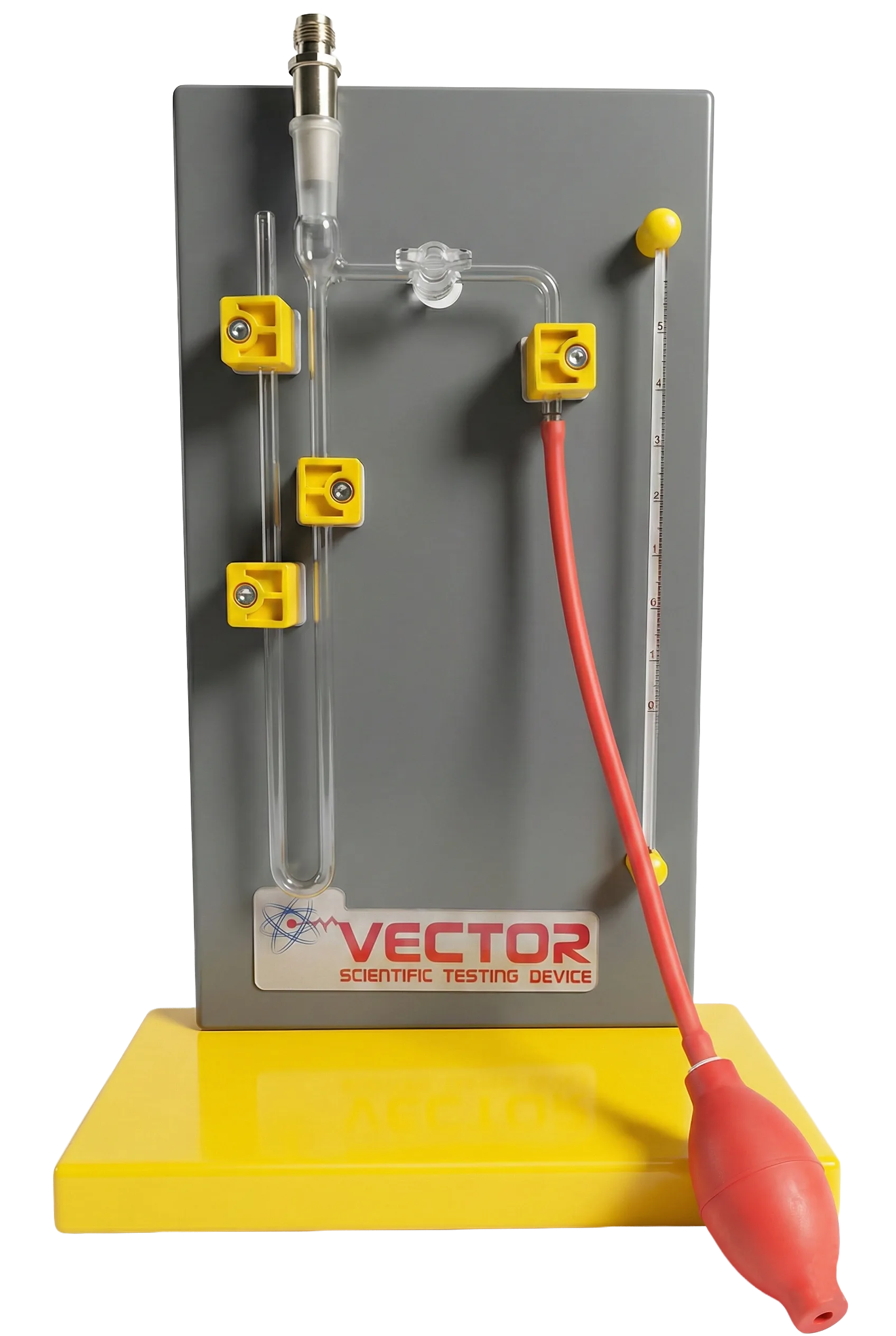
Vector VTR-1015 manual Blaine apparatus — classical U-tube manometer fineness testing per EN 196-6, ASTM C204 and AASHTO T153 for reference and training labs.
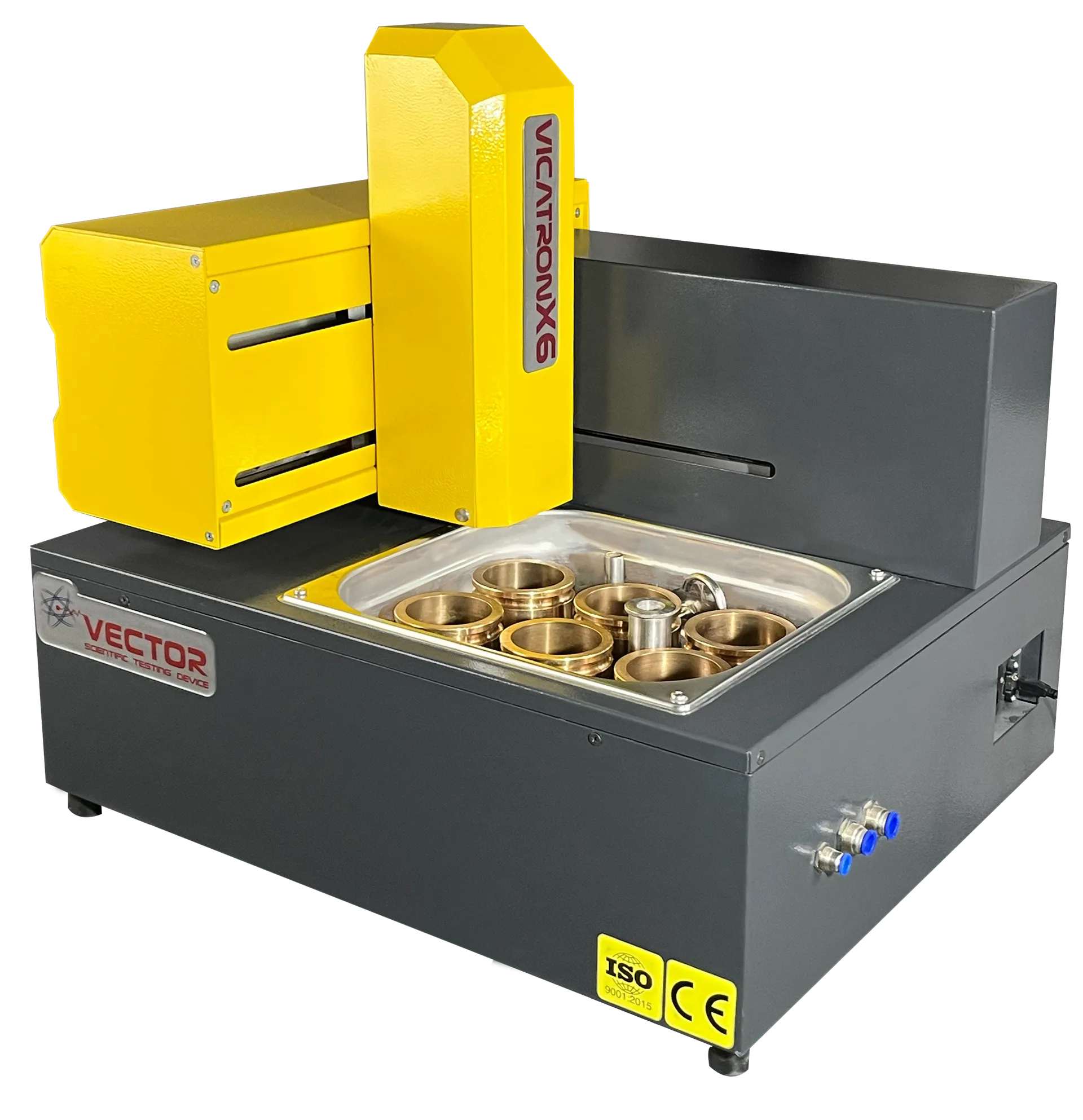
Vector VTR-1022 automatic Vicat — 6-station cement setting time and consistency per EN 196-3 and ASTM C191 with 0.1 mm accuracy and VicatMaster software.
Compute cement Blaine specific surface (cm²/g and m²/kg) from device constant K, density, air-flow time, and optional porosity and temperature — aligned with EN 196-6 and ASTM C204 practice.
Open calculator →Vicat Setting Time
Initial and final setting times of cement paste measured by needle penetration under defined load and temperature per EN 196-3 or ASTM C191.
Sieve Analysis
Particle size distribution determined by mass retained on a stack of standard sieves after controlled agitation, reported as percent passing or retained per ISO 565 / ASTM E11 sieve series.