



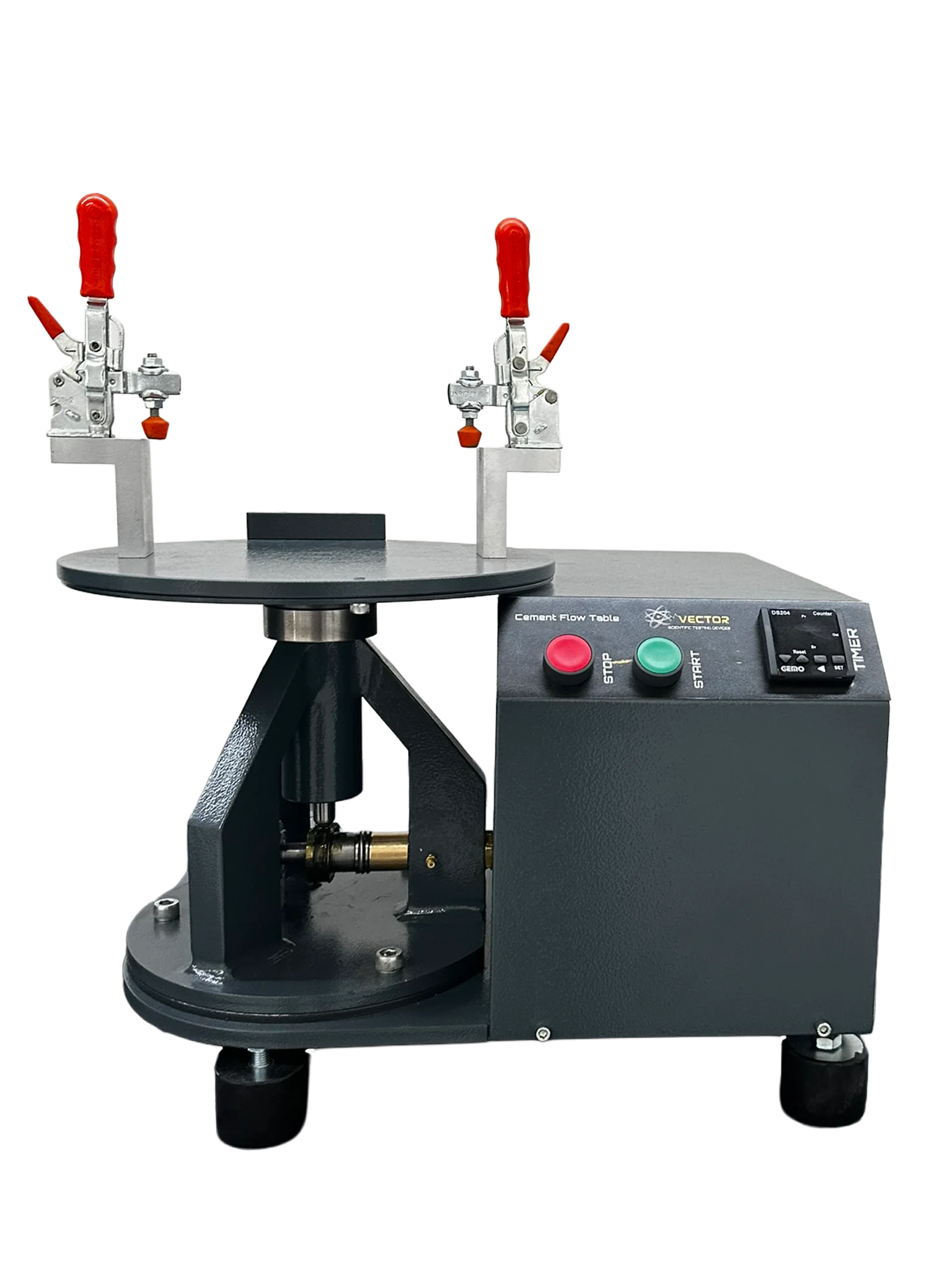
Cement Flow Table
Vector VTR-1036 cement flow table — motorized spread table for cement paste, lime and mortar flow per ASTM C230 and EN methods with programmable drops.
- ASTM C230
View details →
Spread of cement paste or mortar on a flow table after standardized drops, expressed as percent flow or spread diameter per ASTM C1437 using apparatus per ASTM C230.
Spread of cement paste or mortar on a flow table after standardized drops, expressed as percent flow or spread diameter per ASTM C1437 using apparatus per ASTM C230.
Cement flow describes how far a fresh paste or mortar spreads on a flow table after a defined number of lift-and-drop cycles. It tracks workability, cohesion, and consistency — useful when admixtures, temperature, or mixing time change.
Mortar is placed in a conical mould on the table centre; the table is dropped from a fixed height (12.7 mm per ASTM C230). Spread diameter or percent flow is read with a caliper or scale after the prescribed drops (ASTM C1437 defines the test steps).
ASTM C230 specifies table, mould, drop mechanism, and caliper geometry. ASTM C1437 defines the test procedure (spread measurement steps). Report drop count, mould condition, and whether SI or inch-pound accessories were used.
Loose mounting on a light bench, greased shafts, worn cam faces, and wrong moving mass all reduce spread and mimic stiff mortar. Use a motorized flow table on a rigid block for repeatable drops.
Vector VTR-1036 cement flow table — motorized spread table for cement paste, lime and mortar flow per ASTM C230 and EN methods with programmable drops.
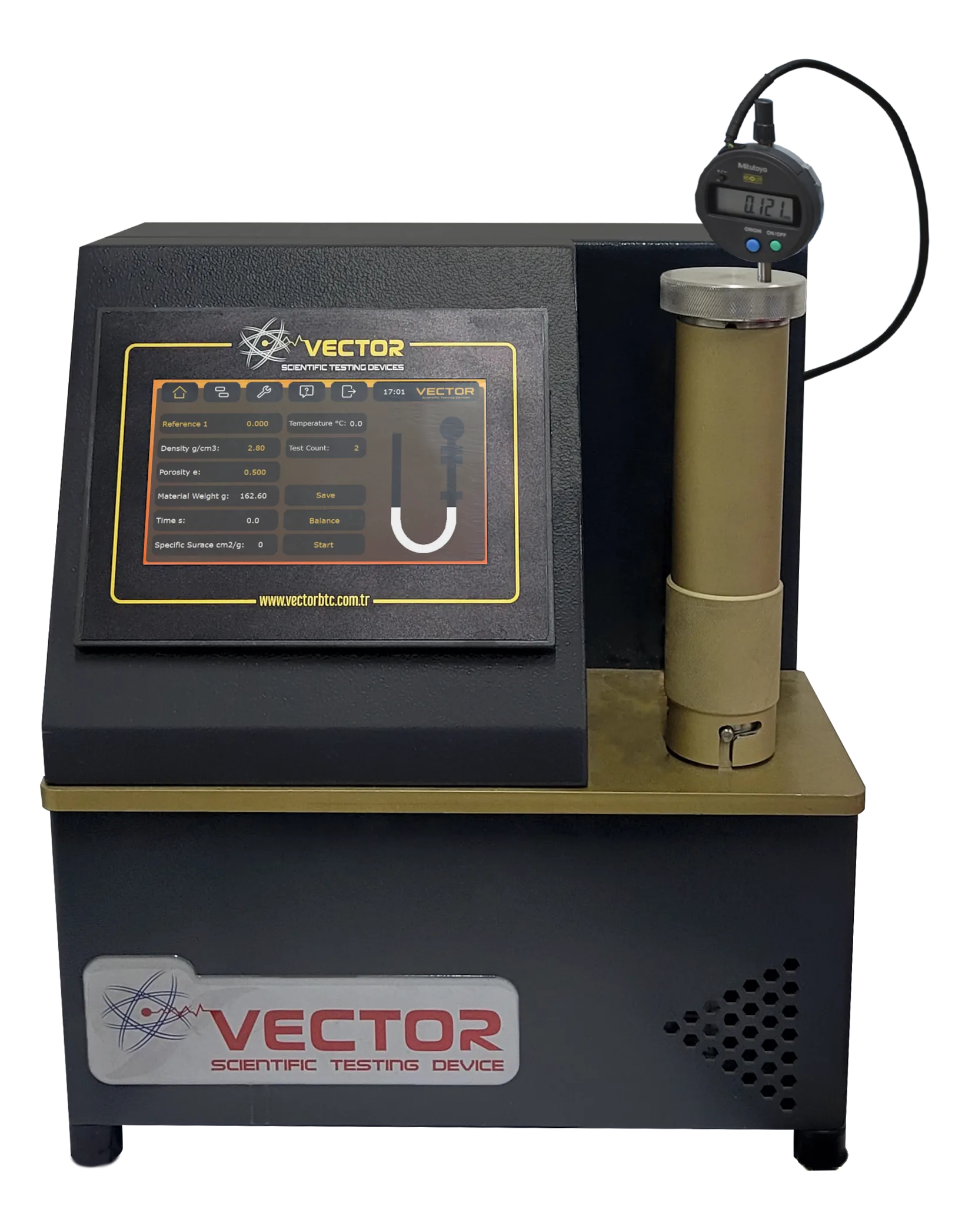
Vector VTR-1016 automatic Blaine tester — repeatable cement and powder fineness per EN 196-6, ASTM C204 and AASHTO T153 with touchscreen control.
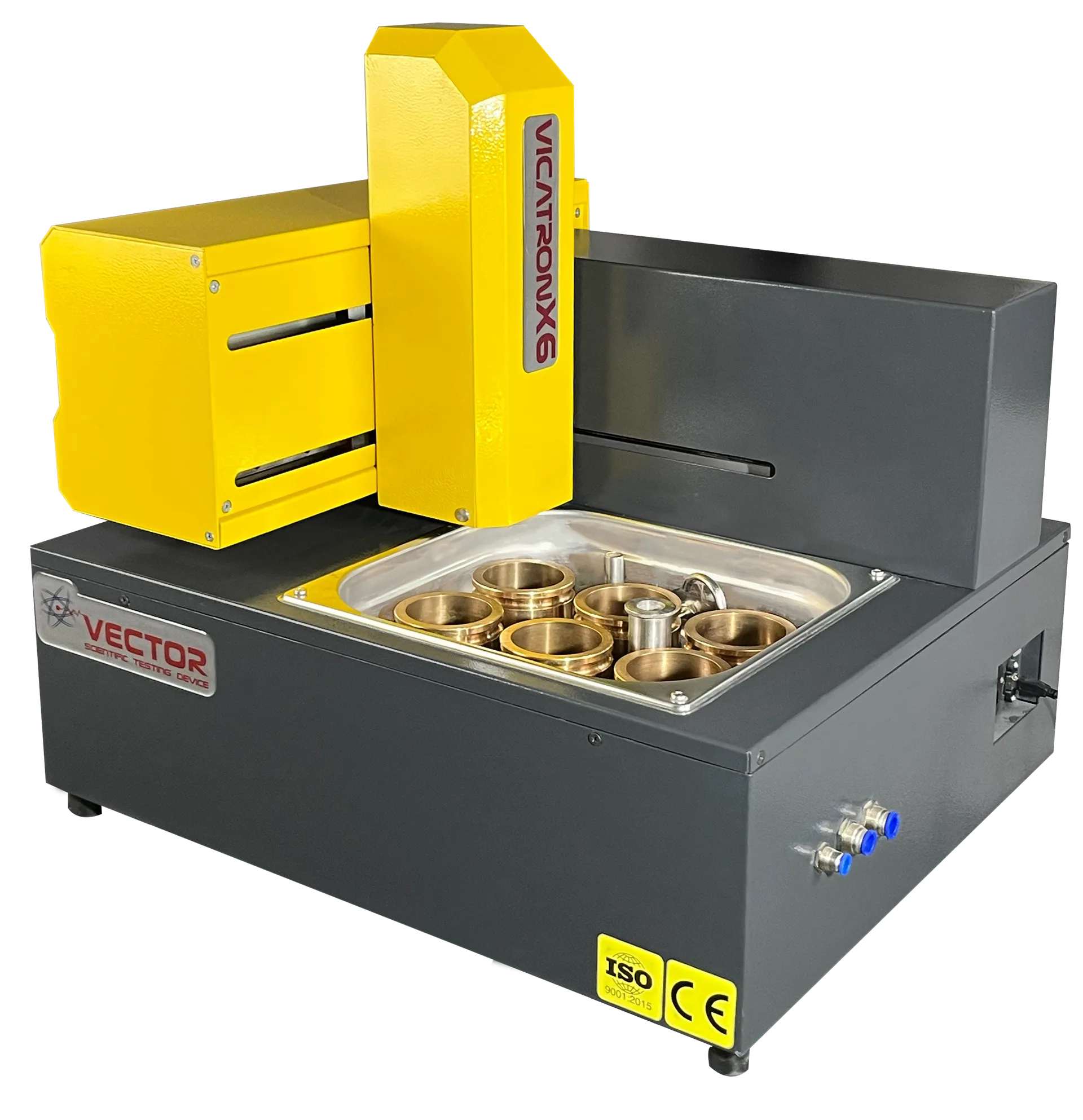
Vector VTR-1022 automatic Vicat — 6-station cement setting time and consistency per EN 196-3 and ASTM C191 with 0.1 mm accuracy and VicatMaster software.