



News
Cement Fineness Test
Automatic Blaine apparatus for cement fineness testing — laboratory workflow, k calibration, EN 196-6 and ASTM C204 compliance, plus links to VTR-1016, the Blaine calculator, and glossary.
What Is the Blaine Air Permeability Test?
The Blaine air permeability test is a standardized method used to determine the specific surface area and fineness of cement. By measuring the time required for air to pass through a compacted cement bed, laboratories can directly evaluate particle size distribution and grinding quality.
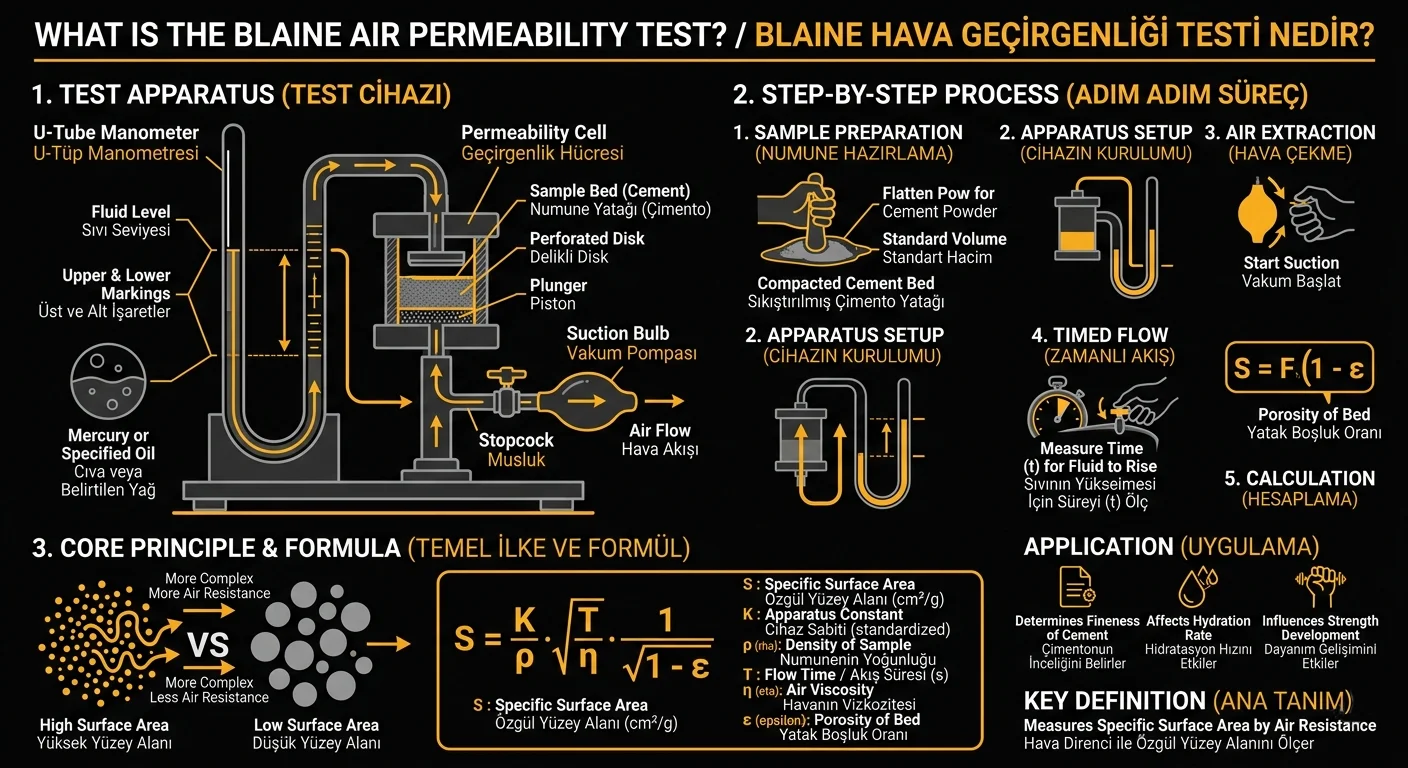
How the Cement Industry Uses Blaine Fineness Testing
Cement manufacturers rely on Blaine fineness testing throughout the production process to maintain consistent product performance.
In addition to production environments, laboratories use Blaine testing in:
- Cement quality control laboratories
- R&D centers and academic research facilities
- Certification and conformity assessment bodies

Advantages of Automatic Blaine Apparatus in Cement Fineness Testing
Key advantages include:
- Precise airflow and test timing control
- Digital measurement of test parameters
- Reduced operator dependency
- Improved repeatability and consistency
- Automated calculation of specific surface area
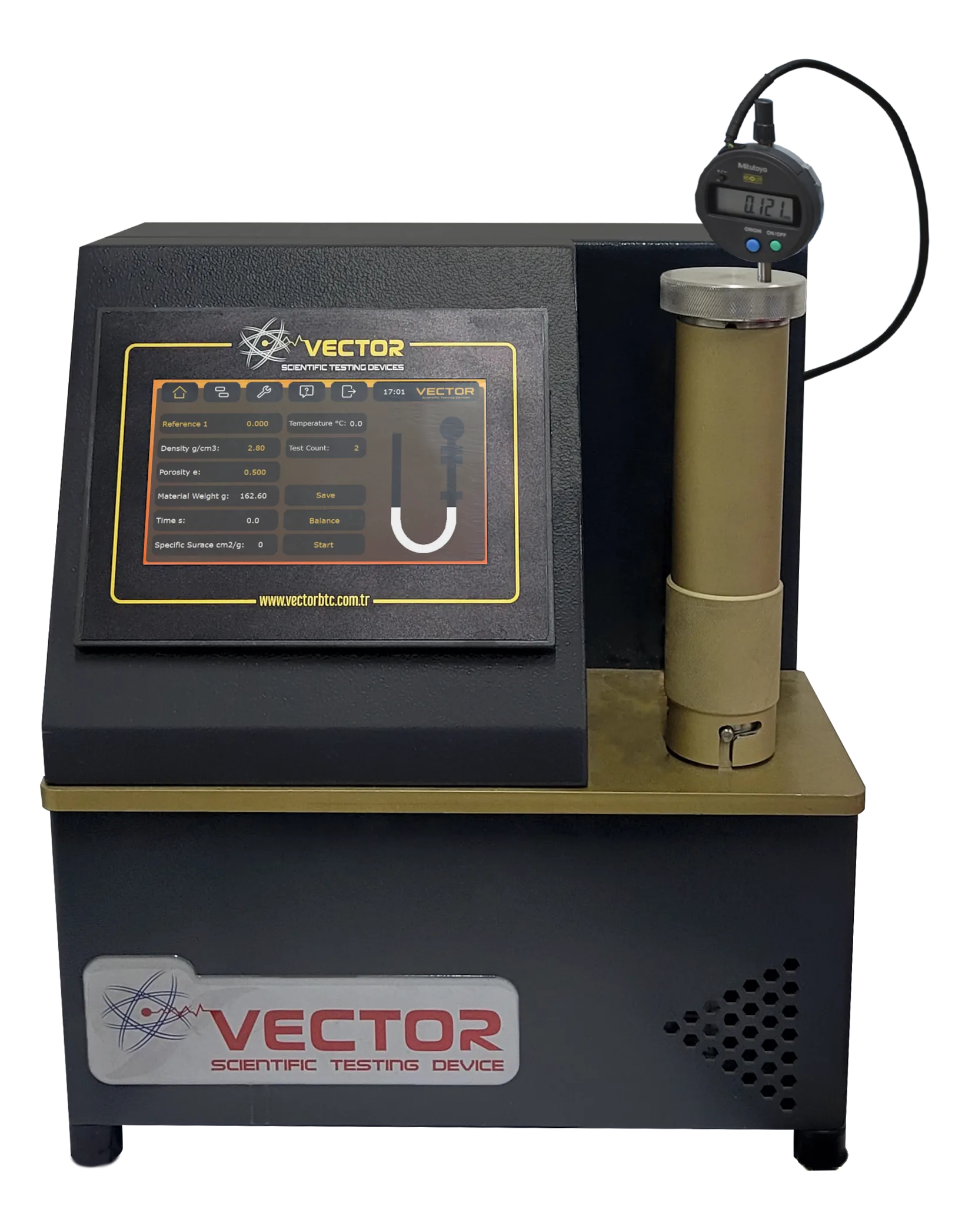
Laboratory workflow
Repeatable specific surface on an automatic Blaine — setup through production testing.
Preparation and setup
Keep the lab at 18–22 °C and at most 65 % relative humidity. Mount the instrument on a level, vibration-free bench. Align the manometer liquid meniscus with the lower tube mark.
HMI and software
Select the EN or ASTM method on the touchscreen. Enter cement density and porosity accurately; compare the internal temperature sensor with an external thermometer and apply offset if needed.
k constant calibration
Run three measurements on certified Blaine reference sand; the instrument computes device constant k from the average flow time. Store reference material dry and shake to break agglomerates.
Cement test
Weigh the target mass on a precision balance. Place one filter paper, cement, and a second paper in the cell; compact with the piston. Withdraw the piston slowly with a slight twist — rapid withdrawal can disturb the bed.
Safety and maintenance
Use two new filter papers every test. Clean cement residue from the cell, piston, and perforated disc; wipe optical sensors behind the manometer tube periodically.
Critical tip
Pulling the piston quickly after compaction can create vacuum in the cell, crack the bed, and void the test. Slow withdrawal with a slight twist preserves repeatability.