



News
Pellet Press for XRF Sample Preparation
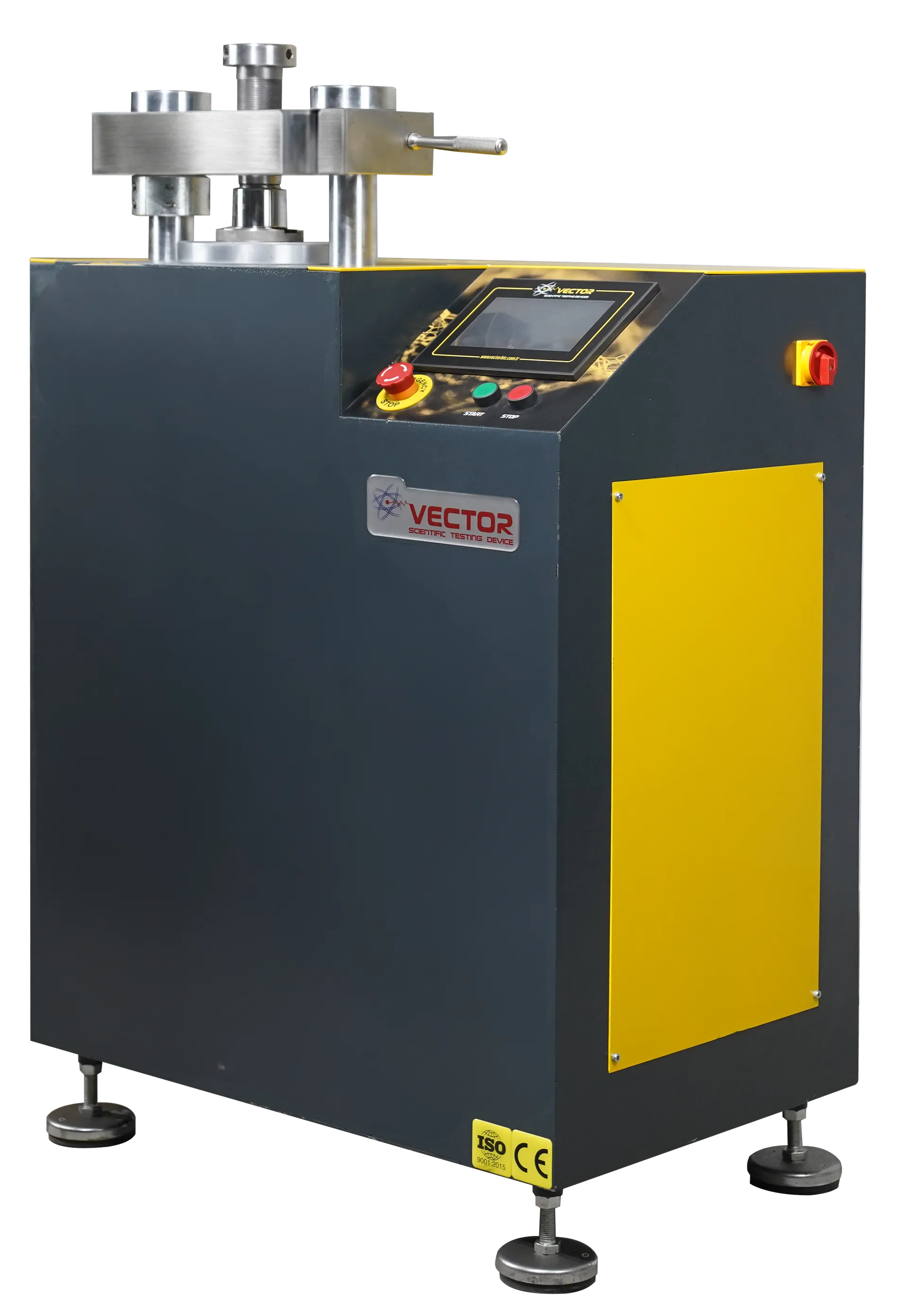
The Vector VTR-1027 XRF pellet press delivers repeatable, high-quality pellets for XRF, FTIR, and spectroscopic analysis — fully hydraulic, fully automated.
What Does a Tablet Press / XRF Pellet Press Do?
In the laboratory, a tablet press (XRF pellet press) compacts powdered samples into discs with the density and surface finish required for the analytical beam path. Homogeneous pellets for X-ray fluorescence (XRF) and FTIR directly affect spectrum quality, repeatability, and calibration stability.
Manual presses can vary from operator to operator. Automatic hydraulic XRF pellet press systems use programmable load profiles, dwell times, and load maintenance to deliver consistent results for the same material type.
XRF Pellet Press Capabilities
The Vector VTR-1027 keeps every phase of the pressing cycle under control:
-
Programmable load cycles
Store up to 6 programs with up to 10 steps each — ramp, dwell, and release rates under full control.
-
Precision pressure control
Adjustable pressure up to 400 kN with real-time touchscreen changes during the cycle.
-
Maintain load function
Tops up pressure as the sample settles; hold duration from 0.1 minutes to indefinite.
-
Wide die range
5–40 mm pellet dies — from KBr FTIR pellets to XRF analysis discs.
-
Durability and safety
Stainless steel construction, mirror-polished pressing surfaces, safety lock, and automatic pump shut-off valve.
Programmable Workflow & Accessory Compatibility
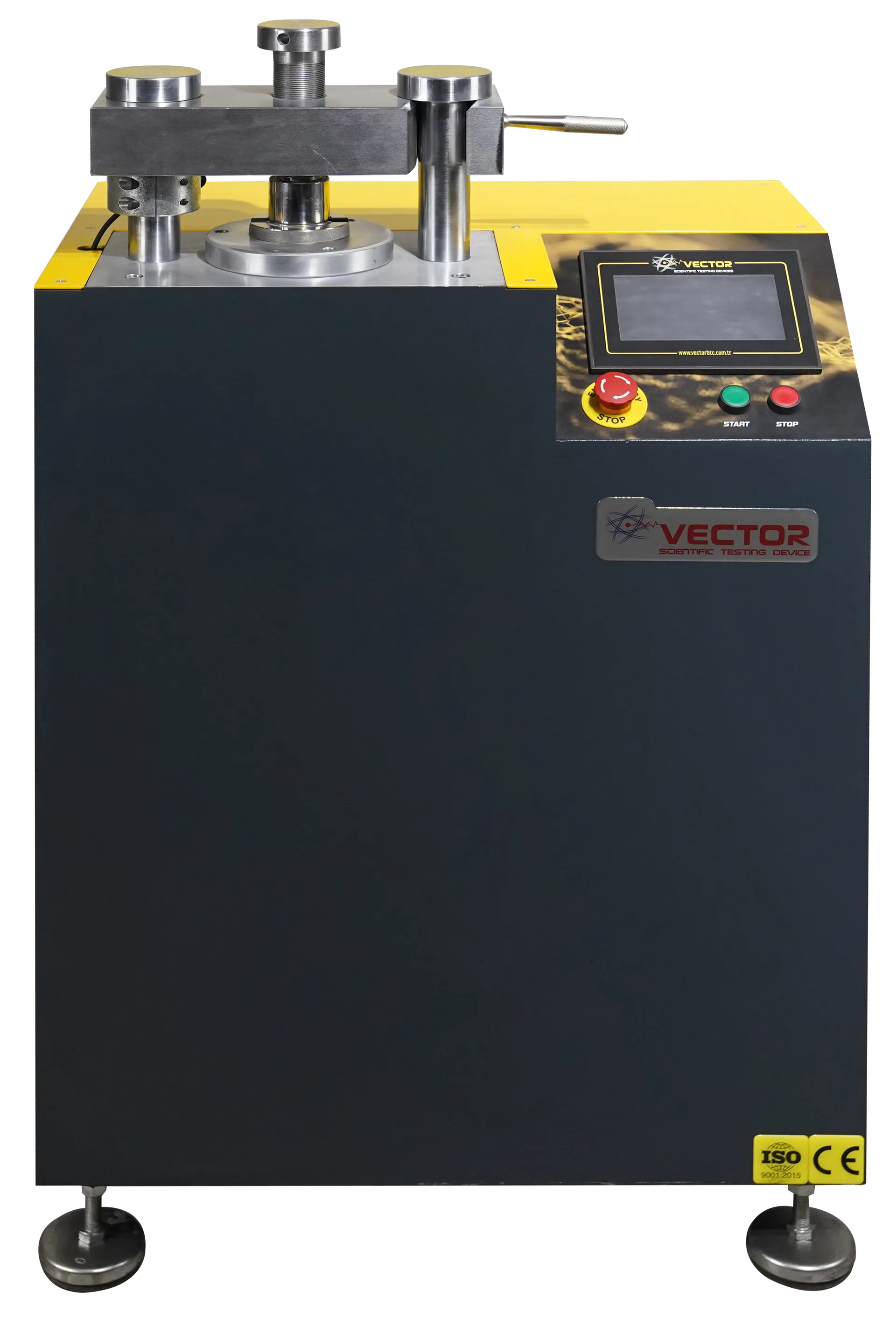
An intuitive touchscreen, high-contrast display, and step-by-step program editing reduce operator burden. Successful pressing conditions can be saved and replayed — improving throughput in high-volume labs.
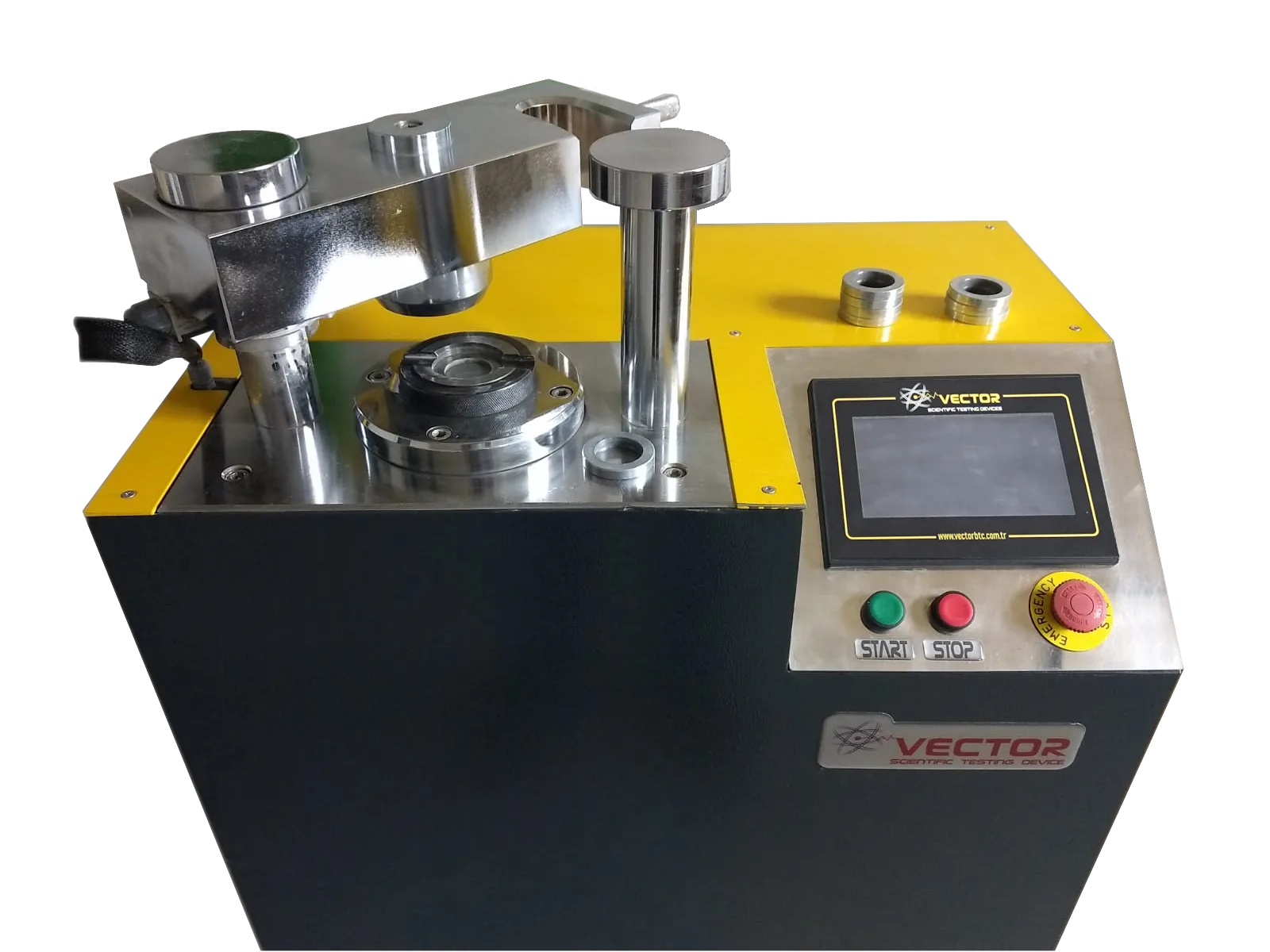
The press works with common accessories including Specac pellet dies, heated platens, and film makers. Fast, medium, and slow load release plus preset or indefinite hold modes are supported.
Engineered and Built by Vector
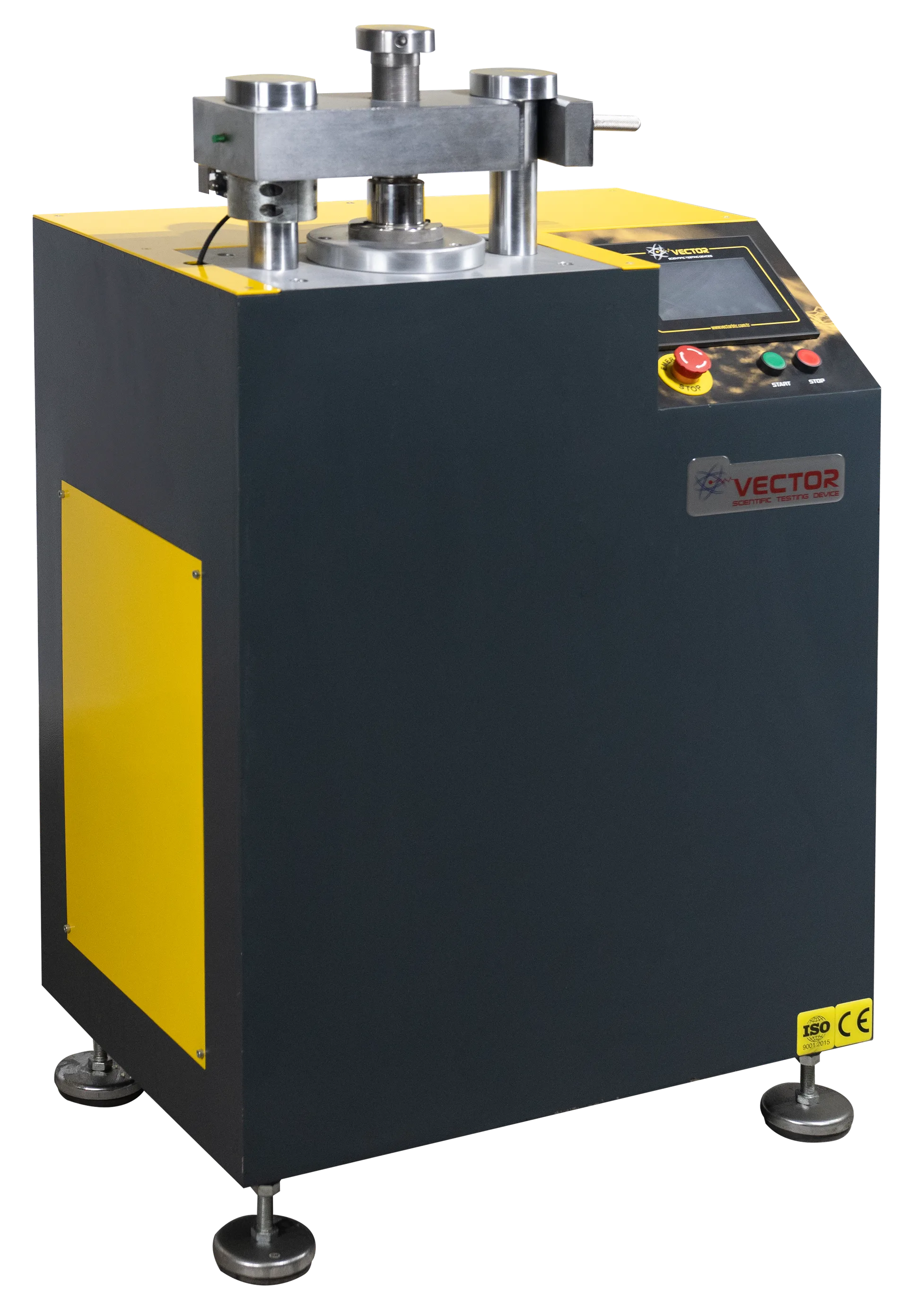
Vector designs and manufactures tablet press and XRF pellet press systems at its facility in Turkey. The VTR-1027 is a starting platform — capacity from 8 to 40 tonnes, program steps, die interfaces, and safety interlocks can be adapted to your binder strategy, sample type, and analytical method.
If you need heated platens, alternative die standards, or integration with downstream XRF or FTIR workflows, contact Vector to discuss a press configuration built around your requirements.
Application Areas
XRF pellet press / tablet press systems are widely used in:
-
Analytical laboratories
Standard-compliant pellet production for XRF, FTIR, and spectroscopic methods.
-
Material science
Sample preparation for R&D and characterization.
-
Pharmaceutical industry
Compacted samples for analytical and quality-control studies.
-
Mining and geology
Precise pelletizing for mineral composition by XRF.
-
Education and research
Academic labs teaching advanced sample preparation.
Summary
A tablet press and XRF pellet press provide repeatable sample geometry before spectroscopic analysis. The Vector VTR-1027 offers programmable hydraulic cycles, load maintenance, and broad accessory compatibility for analytical laboratories.
Vector can redesign and manufacture press capacity, software steps, and die interfaces to match your workflow — not just an off-the-shelf catalog item.
Typical pellet pressing workflow
Practical steps for repeatable XRF/FTIR pellets on an automatic tablet press.
Die and binder strategy
Choose diameter (5–40 mm) and any binder or flux approach suited to your method. Confirm die and piston faces are clean.
Weighing and loading
Weigh the target mass on a precision balance. Load powder evenly into the die; break agglomerates.
Select a program
Define ramp, target load, dwell, and maintain-load duration on the touchscreen — or recall a stored program.
Press and inspect
Run the cycle. Check the pellet for edge cracks or lamination; fine-tune program steps if needed.
Safety and maintenance
Use the safety lock. Clean die and piston after pressing; inspect the hydraulic unit and shut-off valve periodically.
Critical tip
Maintain load compensates for pressure drop as powder settles — tune hold time by sample type to improve density uniformity and reduce edge cracking in XRF pellets.
Resources
Product page, sample-preparation catalog, and related application notes — pointers instead of a datasheet.