



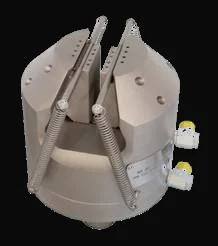
51-1287-100
Special hydraulic nonshift wedge grip
- Max. tensile load 100 kN
- Max. clamping force 200 kN at 315 bar
General principles for determining tensile modulus, strength, and strain of plastics using defined specimen types and test speeds. Supports comparative evaluation of thermoplastics, thermosets, and fiber-reinforced grades.
Scope: General principles for determining tensile modulus, strength, and strain of plastics using defined specimen types and test speeds. Supports comparative evaluation of thermoplastics, thermosets, and fiber-reinforced grades.
A dog-bone or bar specimen is strained under controlled speed while force and extension are recorded; modulus is typically taken in the initial linear region and strength at maximum load or break as specified.
Specimen type and thickness shall match the standard tab; conditioning prior to test is often required. Grips and tabs (if used) must prevent slippage; non-reinforced films may need special fixtures.
ISO 527 works with part 2 and part 3 documents that specify specimen dimensions for different plastic forms. For fibre-reinforced composites — isotropic, orthotropic, and unidirectional laminates — see ISO 527-4 / ISO 527-5 for tabbed specimen rules, modulus strain limits, and Class 1 extensometry requirements.
51-1287-100
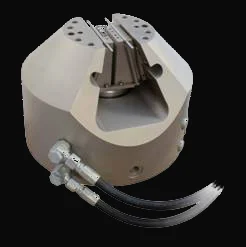
51-1287-250
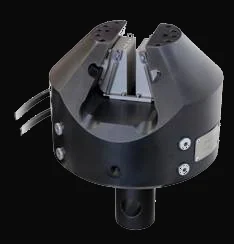
51-1287-300
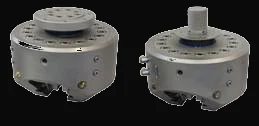
51-1287-600